



Lemelsen, Joachim, born 28-098-1888, in Berlin, 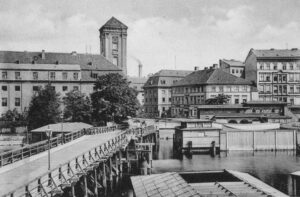 German Empire, joined the army of Imperial Germany as an Fahnenjunker (officer cadet) in the artillery and later participated in World War I.
 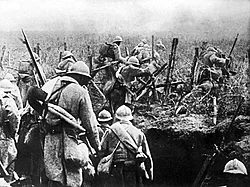 Serving in the Wehrmacht
  of Nazi Germany, he commanded the Artillery Lehr Regiment
  in 1934 and from the following year taught at infantry school. In March 1938, Lemelsen was given command of the 29th Infantry Division.
  During Operation Barbarossa,
 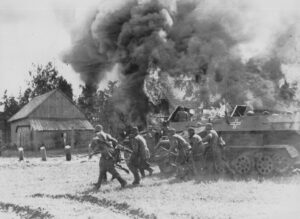 the invasion of the Soviet Union in 1941, troops of the XLVII Motorized Corps
  under his command executed the criminal Commissar Order, prompting Lemelsen to complain: “Soon the Russians will get to hear about the countless corpses lying along the routes taken by our soldiers (…). The result will be that the enemy will hide in the woods and fields and continue to fight–and we shall lose countless comrades”.
Lemelsen took part in the Invasion of Poland;  his division was involved in the Massacre in Ciepielów of 08-09-1939.
 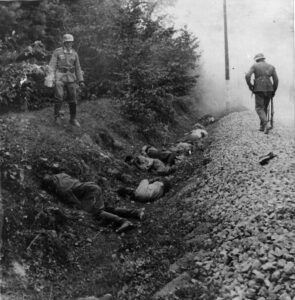 The Ciepielów massacre that took place on 08-09-1939 was one of the largest and most documented war crimes of the German Wehrmacht during its invasion of Poland. On that day, the forest near Ciepielów was the site of a mass murder of Polish prisoners of war from the Polish Upper Silesian 74th Infantry Regiment. The massacre was carried out by soldiers from the German Army’s 15th Motorized Infantry Regiment, 29th Motorized Infantry Division, under the command of Colonel Walter Wessel.
 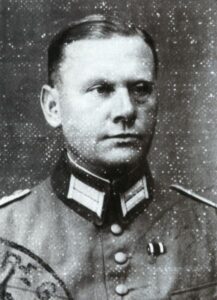 Wessel was killed in an car accident on 20-07-1943, age 51, near Morano, Italy.
This event has been described as the “most infamous” war crime committed by Germans during their invasion of Poland. The number of dead has commonly been estimated at 300, although more recent research suggests a revised number of “over 250” instead.
On 28-05-1940 Lemelsen was given command of the 5th Panzer Division  with which he participated in the Battle of Dunkirk.
 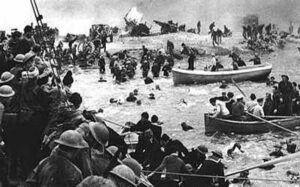 The Battle of Dunkirk was fought around the French port of Dunkirk (Dunkerque) during the World War II, between the Allies and Nazi Germany. As the Allies were losing the Battle of France on the Western Front, the Battle of Dunkirk was the defence and evacuation of British and other Allied forces to Britain from 26 May to 4 June 1940.
On 25-11-1940 Lemelsen was given command of the new XLVII Motorized Corps, which he led in the Battle of Smolensk and the Battle of Kiev. Lemelsen reported to the Wehrmacht High Command 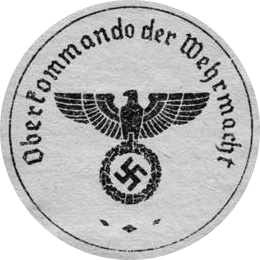 about the executions of Soviet prisoners of war during the early phases of Operation Barbarossa:
I am repeatedly finding out about the shooting of prisoners, defectors or deserters, carried out in an irresponsible, senseless and criminal manner. This is murder. Soon the Russians will get to hear about the countless corpses lying along the routes taken by our soldiers, without weapons and with hands raised, dispatched at close range by shots to the head. The result will be that the enemy will hide in the woods and fields and continue to fight–and we shall lose countless comrades.
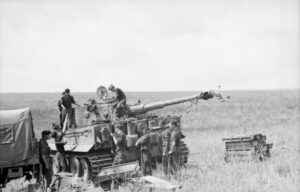
The Corps was designated a Panzer Corps in June 1942 and participated as such in anti-partisan operations and in the Battle of Kursk. Later, he temporarily commanded the 10th Army  in Italy for two months until the end of December 1943, where he succeeded Generaloberst Heinrich von Vietinghoff (1887–1952).

 Lemelsen was given command of the 1st Army, where he succeeded Generaloberst Johannes Blaskowitz (1883–1948)
  stationed near the Atlantic coast in France in May 1944. On 7 June, Lemelsen was transferred to Italy to take over command of the 14th Army
  to replace Generaloberst Eberhard von Mackensen
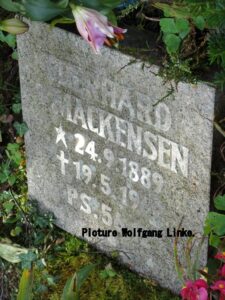 who the theatre commander Albert Kesselring “Smiling Albert”
 had dismissed. Lemelsen commanded the army in the Italian Campaign from June 1944 until mid October when he was given command of Germany’s other major formation in Italy 10th Army. In February 1945 he returned to the leadership of 14th Army
  until the end of hostilities in Italy in early May.
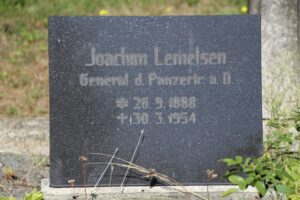
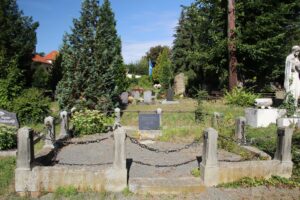
Death and burial ground of Lemelsen, Joachim.


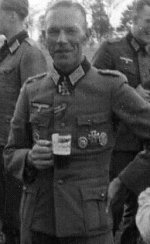
 Walter-von-Boltenstern is awarded his Iron Cross
  by General Joachim-Lemelsen.
Imprisoned by British forces after the war, Lemelsen in 1947 testified on behalf of his former commander, Field Marshal Albert Kesselring, during Kesselring’s war crimes trial before a British military court convened at Venice, Italy. Soon thereafter, Lemelsen was released. Lemelsen passed away 30-03-1954 (aged 65) in Göttingen, West Germany and is buried at the Marktfriedhof St. Blasii – BenediktiQuedlinburg, Landkreis Harz, Sachsen-Anhalt, Germany.




Leave a Reply