


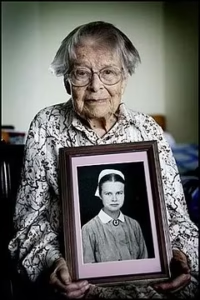
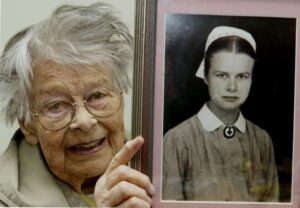
Flegel, Erna, born 11-07-1911 in Kiel 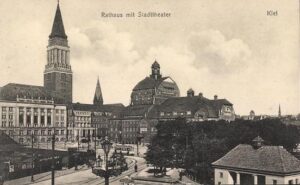 Germany. Public records provide scant details on her family origins or upbringing, reflecting her lifelong discretion about personal matters unrelated to her professional role. Flegel never married and had no known children, choices she attributed in later interviews to her dedication to nursing amid wartime demands, Her family was aware only of her general wartime nursing service in Berlin, unaware of her proximity to Nazi leadership until her rare public statements decades after the war.
Erna Flegel underwent nursing training at the Markisches Haus, a facility of the German Red Cross dedicated to preparing Krankenschwestern (Red Cross nurses),  situated at Scharnhorststrasse 3 in Berlin.
 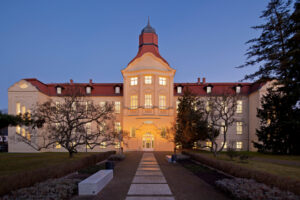 This program equipped her for roles in surgical nursing, as indicated by her subsequent professional identification. Specific dates for her enrollment and completion are not documented in available records, though given her birth year of 1911, training likely occurred in the interwar period prior to her wartime assignments. The German Red Cross training emphasized practical skills in medical care under the standardized apprenticeship model prevalent in the Weimar and early Nazi eras, though details tailored to Flegel’s cohort remain limited to institutional affiliation.
Erna Flegel completed her nursing training at the Red Cross Training School “Markisches Haus,” located at Scharnhorststrasse 3 in Berlin. As a qualified Red Cross nurse, she began her professional career as a surgical nurse at the University Hospital on Ziegelstrasse in Berlin,  a facility affiliated with the surgical clinic of the Charité. In this initial position, Flegel handled surgical duties amid wartime conditions, including a noted shortage of physicians in the city, which required nurses like her to maintain presence in air raid shelters during bombings. Her responsibilities there involved direct patient care in an environment increasingly strained by the demands of World War II, prior to her reassignment to higher-priority medical service.
During World War II, Erna Flegel served as a surgical nurse at the University Hospital on Ziegelstrasse in Berlin, where she assisted in operations amid a severe shortage of physicians caused by the war effort. Trained at the Red Cross facility “Markisches Haus” on Scharnhorststrasse 3, she handled routine medical duties including patient care during air raids, which occasionally required temporary relocation of hospital staff to safer locations such as the Reich Chancellery vicinity. 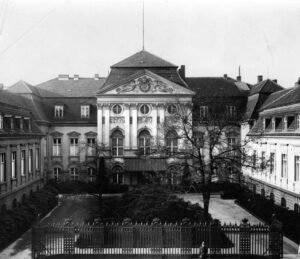 Flegel’s assignments extended to frontline medical support, including tending to wounded SS
  soldiers as part of her Red Cross obligations. Prior to her January 1943 transfer to Berlin’s central government facilities, she provided nursing care in Crimea during the German occupation of the region from 1942 onward, treating injured military personnel in field conditions. These roles reflected the broader mobilization of German nursing personnel to sustain the war machine, with Flegel operating under resource constraints typical of the Eastern Front campaigns.
From January 1943 until the end of World War II, including during the Battle of Berlin, 
 she served as a nurse in Hitler’s entourage. She worked with Dr. Werner Haase
 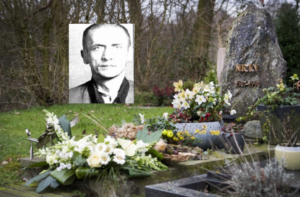 at the hospital of Humboldt University. At the end of April 1945, she was assigned to the Reich Chancellery. She worked in the basement of the Reich Chancellery above the Vorbunker and the Führerbunker.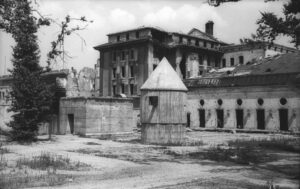
During her time in the Führerbunker, she befriended Magda Goebbels and sometimes helped out as a nanny for the Goebbels children. She once met with Dr. Werner Haase and Dr. Ernst-Günther Schenck 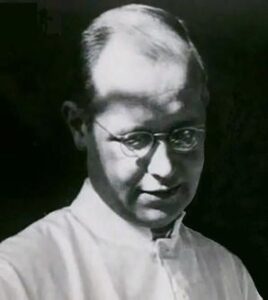 to see Hitler, who was advocating for the treatment of the wounded. Dr. Schenck survived the war and passed away on 21-12-1998 aged 94 in Aachen.
Together with Werner Haase, Helmut Kunz, 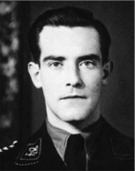 and Liselotte Chervinska, a nurse, she waited until they were arrested by the Red Army on May 2nd. Flegel was quickly released and stated that she was treated well by the Soviet troops. In November 1945, she was interrogated again by the Americans and then disappeared into anonymity until 1977, when the documents about her interrogation were released. After that, the media repeatedly showed interest in her.
Death and burial ground of Erna Flegel.
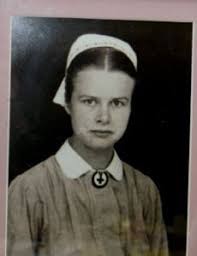
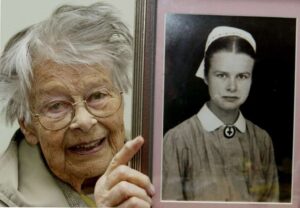
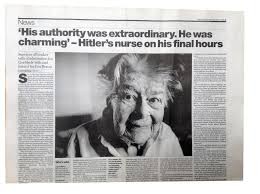
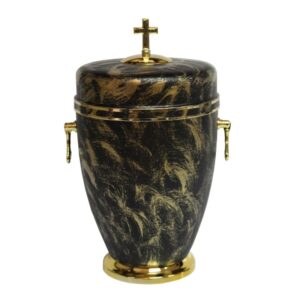
Following the end of World War II in Europe, Erna Flegel briefly continued her nursing duties under Soviet occupation, treating wounded Red Army soldiers for several months starting in May 1945. She was subsequently interrogated by the United States Strategic Services Unit in November 1945 regarding events in the Führerbunker, providing testimony on Adolf Hitler‘s death. Flegel resumed her professional nursing career in Germany after these initial post-war experiences. She also worked as a youth social worker, engaging in roles that involved supporting young people in social services. These positions allowed her to maintain employment in healthcare and welfare fields while living discreetly to avoid scrutiny over her wartime associations. In addition to her formal roles, Flegel traveled to remote regions including Ladakh and Tibet, activities that aligned with her professional background in nursing and outreach. She revisited Crimea in her nineties, a site connected to her earlier wartime nursing duties. Flegel never married and eventually retired to a nursing home in northern Germany, where she resided until her death on 16-02-2006, age 94, in Mölln, Schleswig-Holstein, in the nursing home, Haus Seeblick Pflegeheim. She was cremated in Mölln, Schleswig-Holstein, Germany.
Message(s), tips or interesting graves for the webmaster: robhopmans@outlook.com




Leave a Reply