

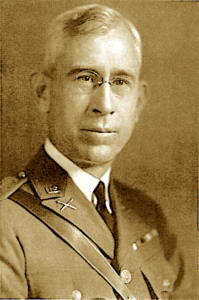
Danford, Robert Melville, born 07-07-1879 in New Boston, 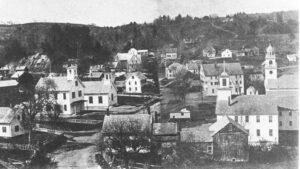 Illinois, United States, to Melville Cox Danford (1847–1921)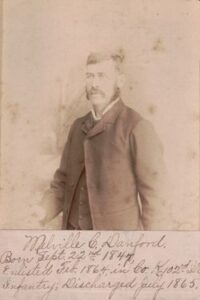
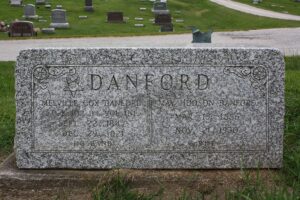 and his wife Dora, born Noble, Danford (1855–1894).
 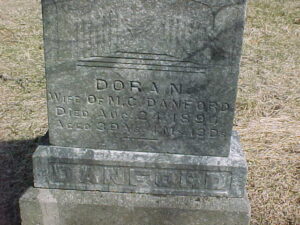 Robert had one sister and one brother, Florence “Flossie” Danford (1877–1881) and Thornton Noble Danford (1891–1977).
Robert on 07-10-1909 was married with Katherine Van de Carm born Hyde Danford (1888–1963) and the couple had one daughter, Janet VandeCarr, born Danford Wells (1915–1972).
After graduation in 1904, he received his commission as a Second Lieutenant with the Artillery Corps. From September 1904 to May 1907 he served at Fort Riley, Kansas. After graduation from the Mounted Service School there he was promoted to First Lieutenant. From June 1907 to August 1907, Robert was at the Presidio in San Francisco, California. 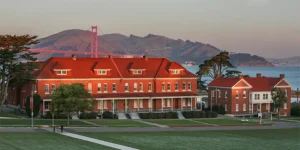 From September 1907 to April 1908 he was in the Philippine Islands. From March 1908 to June 1912, he returned to the Mounted Service School at Fort Riley, Kansas where he served as Secretary.
From July to December 1910, he was aide-de-camp to Brigadier General Frederick King Ward
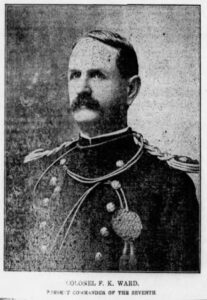
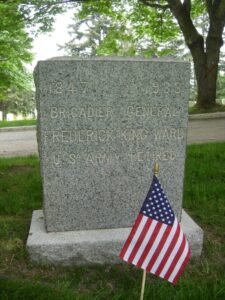 at Lexington, Kentucky where he made a special study of horses and horse breeding. From June to August 1911, he was at Fort Sill, Oklahoma. From September 1914 to December 1915 he was an Instructor at School of Fire for Field Artillery. Next, he served at Inspector-instructor with the Militia of Connecticut at New Haven, Connecticut. He was assigned to command the 10th Field Artillery, National Guard of Connecticut
  which consisted of six batteries with four of them composed of Yale students. He served as Professor of Military Science and Tactics at Yale University where he was awarded an honorary degree of Master of Arts in June 1917. Next, he was with the 15th Field Artillery at Syracuse, New York. He returned to Fort Sill, Oklahoma as an Instructor at School of Fire for Field Artillery. In August 1917 he was promoted to Major of Field Artillery and then Lieutenant Colonel of Filed Artillery. Danford was with the 42nd Division at the District of Columbia and then the 302nd Field Artillery at Plattsburg, New York. During World War I he was assistant to the chief of Field Artillery. At Camp Jackson, South Carolina, he organized and commanded the Field Replacement Depot. In 1919, he was with the A.E.F. in France
  and returned to the United States where he became Commandant of Cadets from August 1919 through July 1923. His awards included the Officer of the Crown from Belgium and the Distinguished Service Medal.
  The citation read, For exceptionally meritorious and conspicuous service. While on duty in the Office of the Chief of Field Artillery he displayed marked ability in planning the organization of field artillery replacement depots; he then proceeded to Camp Jackson, South Caroline., established this depot, and administered it during the remainder of the war with rare ability and judgment.
From 1923 to 1924, he was at the Command and General Staff School. After graduation he was assigned to the Office of the Chief of Field Artillery in the District of Columbia. From 1928 to 1929, he attended the Army War College and after graduation was assigned to the Hawaiian Department with the 13th Field Artillery.  From 1931 to 1935, he was the executive officer to the chief of Field Artillery. In March 1938, he was promoted to chief of Field Artillery. In 1938, over half of the artillery in the regular army was horse drawn. On his sixty-fourth birthday, 28-02-1942, he retired for age. He was the last chief of his branch. Nine days after his retirement the War Department abolished the Offices of Chief of Field Artillery, Infantry, Cavalry and Coast Artillery. These functions were transferred to General Headquarters and renamed Headquarters, Army Ground Forcers.
The War Department also closed the Office of the Chief of the Air Corps as that responsibility was held at Headquarters, Army Air Forces. The Field Artillery acquired its own aircraft in June 1942, after three and one half years of effort by General Danford. Control of aerial observation was important as it affected the primary mission, the accurate delivery of fire on the enemy. An additional award was Honorary Commander, Order of the British Empire.
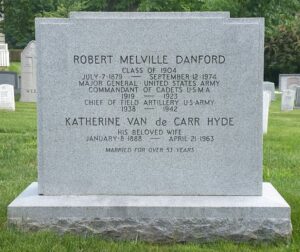
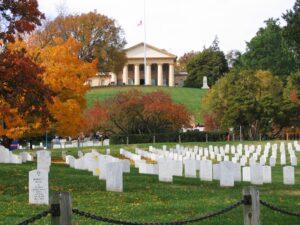
Death and burial ground of Danford, Robert Melville.
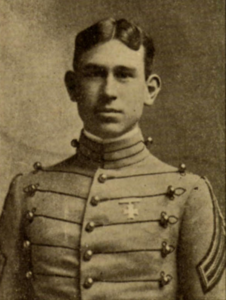
 Robert left,
  Danford (right) congratulates John Knowles Herr, who became the Chief of Cavalry on the same day Danford became Chief of Field Artillery
After retiring from the Army, Danford commanded the wartime civilian auxiliary of the New York City Police Department  until the end of World War II in 1945, and was active in West Point alumni affairs. He passed away 12-09-1974 (aged 95) in Stamford, Connecticut, United States and was buried at West Point Cemetery. Section II, Row A, Site 17.




Leave a Reply