





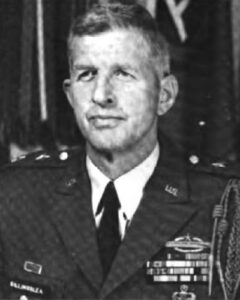
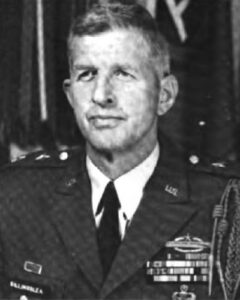
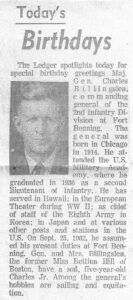
Billingslae, Charles “Chuck”, born on 16-05-1914 in Chicago, 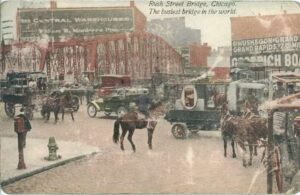 Illlinois, the son of Charles and Mabel Billingslea. Charles
 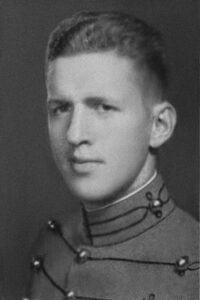 graduated from the U.S. Military Academy West Point
 with the Class of 1936 and was commissioned as a Second Lieutenant of Infantry in the U.S. Army.
  From 1936 to 1941, Billingslea served in various assignments in the United States and Hawaii. In 1942, Major (temporary) Billingslea served with II Corps at Allied Forces Headquarters in the United Kingdom. He then served for a short time at Headquarters U.S. Army Air Forces. During 1943 and early 1944, Lieutenant Colonel (temporary) Billingslea had a number of short assignments that included: 1st British Parachute Brigade;
  5th Army
 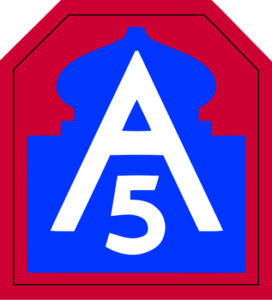 under command of Major General Clark, Mark Wayne “Contraband”
 in Morocco, Algeria and Tunisia; as Executive Officer of Pathfinder Parachute Brigade
 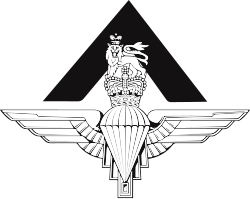 in Sicily and Italy; and as the Executive Officer, 504th Parachute Infantry Regiment,
 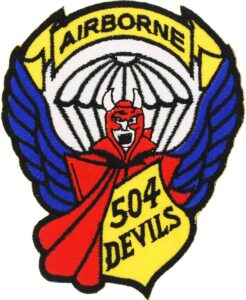 82nd Airborne Division
  in the United Kingdom and Italy. As a paratrooper during this period, he took part in assault landings with American Forces at Algiers and joined a British unit in airborne operations in Tunisia. His units made jumps into Sicily and Salerno and were involved in fighting at Naples, Volturno, Cassino and Anzio and later in operations in the Netherlands. From 22-08-1944 to 07-05-1945, Charles was Commanding Officer, 325th Glider Infantry Regiment,
  82nd Airborne Division in the United Kingdom, Central Europe and Berlin. During this command, Lieutenant Colonel “Çhuck” Billingslea’s heroic actions on 2-3 October 1944 earned him the Army’s second highest award for valor, the Distinguished Service Cross.
 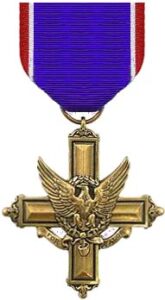 On 02-02-1945, now-Colonel (temporary) Billingslea’s actions against enemy forces again earned him the Distinguished Service Cross.
Charles was the executive officer with the 82d Airborne Division and participated in some of the fiercest fighting in Europe. His units made jumps into Sicily and Salerno and were involved in fighting at Naples, Volturno, Cassino and Anzio and later in operations in the Netherlands.
“During the fighting by the 82nd Airborne Division in the Nijmegen area from September 17 to October 4, 1944, he distinguished himself by performing outstanding acts of courage, resourcefulness, and loyalty. In doing so, he repeatedly demonstrated extraordinary dedication to duty and great perseverance, and in every respect served as a highly commendable example and an inspiration to all during those glorious days.”
He then served as Chief of Staff, 82nd Airborne Division until 1946. After reverting to the permanent rank of Captain, his next assignment was with Planning Staff, Army Field Force at Fort Monroe, Virginia, 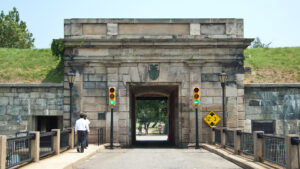 until 1949.
He was assigned to the staff and faculty, Command and General Staff College in Fort Leavenworth, 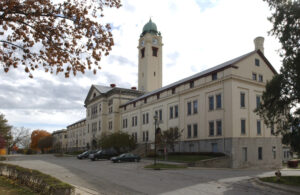 Kansas, from 1949-1951 and then assigned to the Operations Research Office in Korea and Washington, DC, in 1951-52, with the temporary rank of Colonel. From 1953 to 1956, (now with the permanent rank of Colonel) he was Chief of Plans, Supreme Headquarters Allied Powers Europe (SHAPE) in Paris, France. He then served as Deputy Chief European Region in the Office of the Assistant Secretary of Defense for International Security Affairs (OSD/ISA) in Washington, DC. During the years 1961-62, Billingslea served as Deputy Chief of Staff, 8th US Army in Korea and was then assigned to Headquarters, 2nd Division
 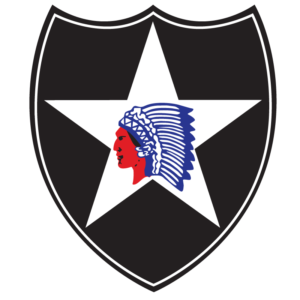 at Fort Bragg,
 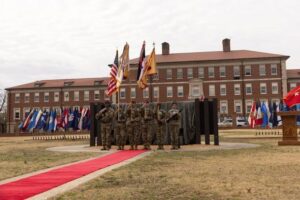 NC.Major General Billingslea served as Commanding General, 2nd Infantry Division at Fort Benning, Georgea, from 1962-64. In late September of 1962, he was ordered to mobilize Army units and federalized Mississippi National Guardsmen in Oxford, Missessipi, as efforts were made to enforce desegregation at the University of Mississippi and enroll James Howard Meredith
 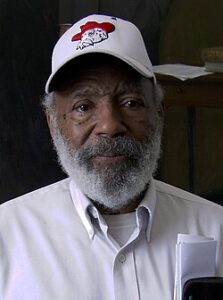 as a student, Meredith an American civil rights activist, writer, political adviser, and United States Air Force veteran who became, in 1962, the first African-American student admitted to the racially segregated University of Mississippi
In May 1963, Billingslae was sent to Birmingham Alabama, where troops were stationed as Dr. Martin Luther King Jr. led five weeks of demonstrations to end segregation.His final assignment before retirement was Deputy Commanding General, U.S. Army Combat Developments Command at Fort Belvoir, Virginia.Major General Billingslea retired from active service in 1966 due to a disability.
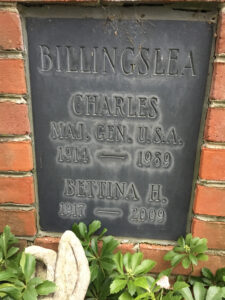
Death and burial ground of Billingslae, Charles “Chuck”.

Billingslae, Charles “Chuck”, passed away 14-03-1989, age 74, in (Oxford-Talbot/Maryland and is buried at the Church of the Holy TrinityOxford, Talbot, Maryland, United States.


Leave a Reply