


Weber, Karl-Heinz Weber “Benjamin”, born 30-01-1922, in Heringsdorf, 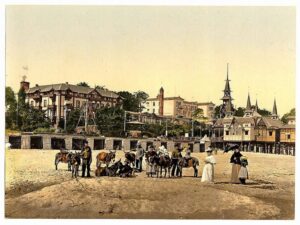 Germany, the son of a Reichsbahn-Sekretär, in the province of Pomerania, a Free State of Prussia. A pre-war glider pilot, he volunteered for military service in the Luftwaffe in late 1939. Leutnant Weber was posted to 7. Staffel (7th squadron) of Jagdgeschwader 51 (JG 51—51st Fighter Wing)
  under command of Oberst Theo Osterkamp,
 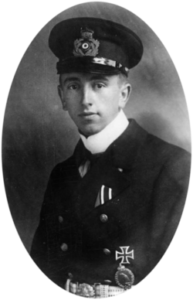 on 01-10-1940. Weber was credited with 136 aerial victories—that is, 136 aerial combat encounters resulting in the destruction of the enemy aircraft. All his victories were claimed over the Eastern Front in over 500 combat missions. Osterkamp survived the war and died 02-01-1975 (aged 82) in Baden-Baden, Baden-Württemberg, West Germany.
In June 1941, Jagdgeschwader 51 and the majority of the Luftwaffe were transferred to the Eastern Front in preparation for Hitler’s Operation Barbarossa, the invasion of the Soviet Union. There, Weber claimed his first aerial victory on 24 June 1941 over a Tupolev SB-2 bomber. On 6 July, for his achievements to date he was awarded the Iron Cross 2nd Class (Eisernes Kreuz zweiter Klasse). 
During the Battle of Rzhev on 03-02-1942, The Battles of Rzhev were a series of Red Army offensives against the Wehrmacht between 08-01-1942 and 31-03-1943, on the Eastern Front of World War II.
Weber claimed a Petlyakov Pe-2 twin-engined, known as “Peshka” (Pawn), 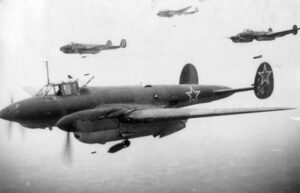 dive bomber shot down in combat southwest of Sychyovka. Later that day, the airfield at Dugino came under Soviet bomber attack, during its defense, Karl-Heinz was shot down and wounded
  in his Messerschmitt Bf 109 F-2
 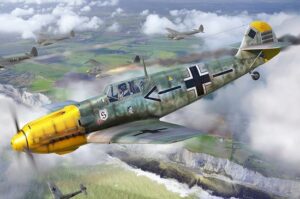 northwest of Dugino. While Weber was recovering from his injuries, III. Gruppe (3rd group)
  under command of Hauptmann Hans “Assi” Hahn
 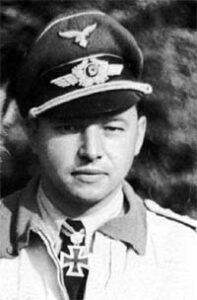 was relocated to Jesau, near Königsberg in East Prussia for conversion to the Focke-Wulf Fw 190 A-2 and A-3.
Hauptman Hahn survived the war and died 18-12-1982 (aged 68) in Munich, Bavaria, West Germany.
On 19-11-1942, Soviet forces launched the Velikiye Luki offensive operation. During this operation, Weber claimed a Mikoyan-Gurevich MiG-3 fighter east-southeast of Zubtsov on 15-01-1943. Operating from the airfield at Oryol-West, equipped with heated hangars and buildings, III. Gruppe was tasked with operating in the airspace south and east of Oryol. On 23 February, in the area north of Oryol and east of Zhizdra, Weber claimed a Lavochkin-Gorbunov-Gudkov LaGG-3 fighter and an Ilyushin Il-2 ground-attack aircraft shot down. The following day, in combat northeast of Zhizdra, Weber claimed two Petlyakov Pe-2 bombers shot down. On 16 March, he was awarded the German Cross in Gold (Deutsches Kreuz in Gold) 
On 13-08-1943 Weber was then officially appointed Staffelkapitän (squadron leader) of the Staffel. The day before, he had been credited with his 100th aerial victory. He was the 49th Luftwaffe pilot to achieve the century mark.
On 01-04-1944, 7. Staffel relocated to an airfield at Terespol. On the first mission from this airfield, the Staffel escorted Heinkel He 111 bombers on a mission to Kovel. Northwest of Kovel, the Staffel intercepted 15 Il-2 ground-attack aircraft. In the aerial encounter, 7. Staffel pilots without loss of their own claimed eight Il-2s shot down, including two by Weber. In April 1944, III. Gruppe began re-equipping with the Bf 109 G-6 with 7. Staffel making the transition in early May at an airfield at Dęblin–Irena. On 28 May, III. Gruppe of Jagdgeschwader 51 received orders to transfer one Staffel to the west in Defence of the Reich. The Gruppenkommandeur (group commander) Hauptmann Diethelm von Eichel-Streiber 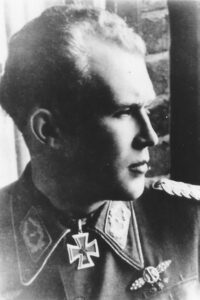 selected Weber’s 7. Staffel which was then subordinated to the II. Gruppe of Jagdgeschwader 1 (JG 1—1st Fighter Wing).
Hauptmann Diethelm von Eichel-Streiber survived the war and died 13-05-1996, age 81, in Bonn/Noord-Rijnland-Westfalen, Germany.
Following the transfer west, Weber was appointed Gruppenkommandeur of III. Gruppe of Jagdgeschwader 1 on 3 June, succeeding Major Hartmann Grasser 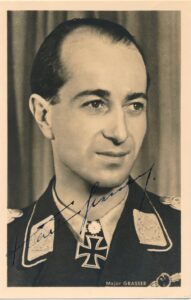 in this capacity. Grasser survived the war and died 02-06-1986, age 71, in Cologne, Köln, Nordrhein-Westfalen,
Death and burial ground of Weber, Karl-Heinz “Benjamin”.
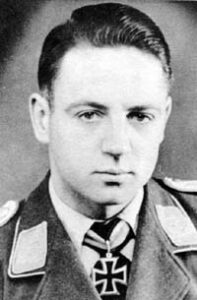
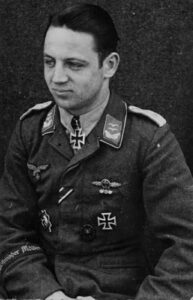
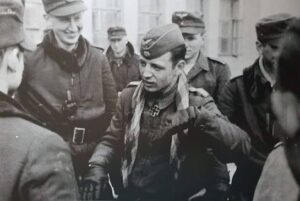
Only four days later, on 7 June, Weber led III. Gruppe of JG 1 from Beauvais–Tillé against Allied fighters south of Rouen on his first mission over the Invasion Front. He was reported as missing in action. It is assumed that he was shot down and killed in his Bf 109 G-6/AS by P-51 Mustang fighters from No. 315 Polish Fighter Squadron. 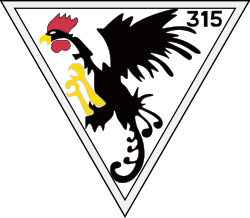
Following Weber’s death, command of III. Gruppe was temporarily given to Haupmann Alfred Grislawski
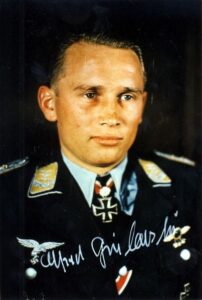
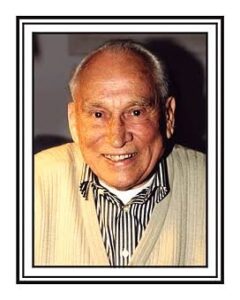 who had led 8. Staffel of JG 1. Grislawsky also survived the war and died age 82, on 19-09-2003.
Weber’s body was never recovered. He was posthumously awarded the Knight’s Cross of the Iron Cross with Oak Leaves (Ritterkreuz des Eisernen Kreuzes mit Eichenlaub). 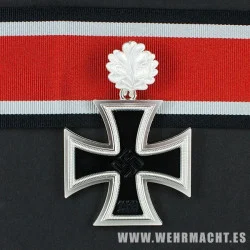 He was the 529th member of the German armed forces to be so honored. On 14-11-1952, Weber was declared dead as of 31-12-1945 by the Amtsgericht, an official court, in Stade.
Weber was credited with 136 aerial victories. Gunther Prien, 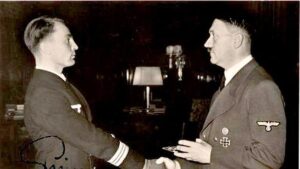 Peter Rodeike, Ernst Obermaier and Spick also list Weber with 136 aerial victories claimed in over 500 combat missions. All of his aerial victories were claimed on the Eastern Front.


Leave a Reply