


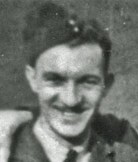
Boer, Gerrit, resistance name “Willy”, born 26-07-1923, in Meppel, 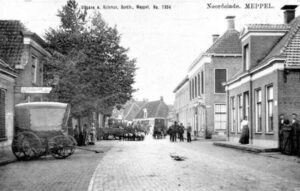 Netherlands, the owner of a shoe store at Hoofdstraat 39 in Meppel.
 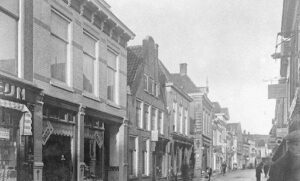 Gerrit was a member of the resistance group of Jan Gunnink (“Ome Hein”).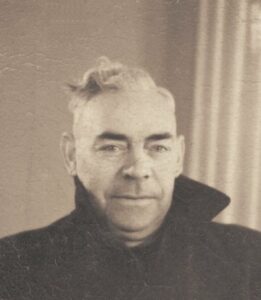
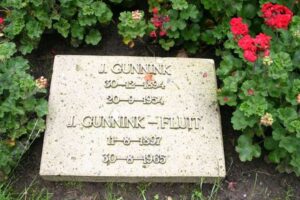 Gunnink became a farmer in Staphorst after the war and founded the Gront Mij “In de Staphorster Maten” there. He was married to Jentje Fluit and had three sons and two daughters with her. He passed away, age 59 in Meppel, on 20-09-1954.
After the war, persistent rumors circulated in Meppel for years that in 1945, municipal workers had unearthed the bodies of murdered Jews in the garden of Gunnink’s former residence in Meppel. In 2015, this was confirmed: it turned out to be the Jew Joseph Troostwijk  from Zwolle, who had been murdered and buried by Gunnik. Troostwijk had presumably become a nuisance to the resistance as a fugitive and thus a potential danger.
In 1941, “Ome Hein” had gathered a number of young people to resist the German occupier. They got in touch with Wim Pieter Speelman, 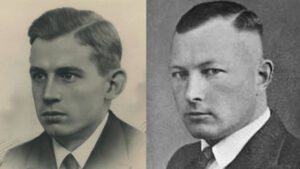
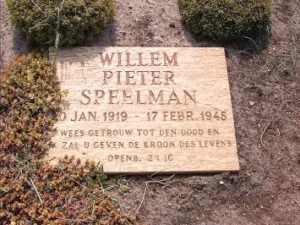 who was involved with the resistance newspaper Vrij Nederland (later Trouw) and was the organizer of the distribution.In January 1943, there was a call in the Algemeen Politieblad in which the Sicherheitsdienst (SD)
  requested the detection and arrest of De Boer. In response, he went into hiding at various addresses but continued his resistance activities. He formed a new resistance group after the strikes in April and May 1943, with Albert Rozeman (“Victor”),
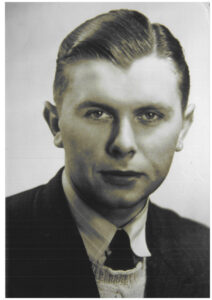
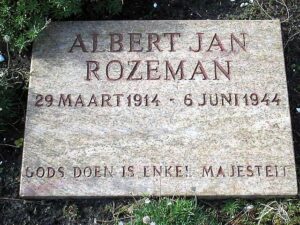 Jan Naber (“Nico”), Fokke Jagersma,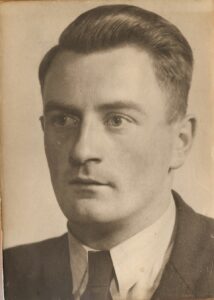
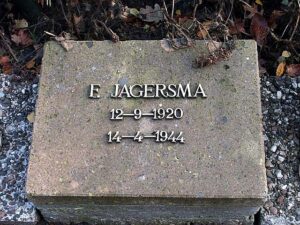 Henk Potman, and the three sons of Jan Gunnink, Klaas, Hendrik, and Gerrit, as its core.
In November 1943, Fokke Jagersma and Henk Potman traveled to ‘s-Hertogenbosch where they managed to steal a large batch of revolvers from the police station there. With this, the group of “Ome Hein” could be armed, making it possible to raid distribution offices to steal ration cards 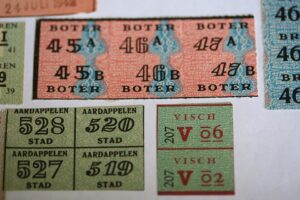 and to sabotage railroad lines. In August 1944, De Boer and his group joined the Knokploeg Meppel as part of the National Knokploegen. Gunnink became the commander of the KP-Meppel.
Already in the summer of 1940, Albert van Spijker established a department of the Order Service. The OD’s objective was to maintain order after the German capitulation, but in the region, they decided not to wait for that. Van Spijker’s group engaged in military espionage for the English and soon expanded its activities. In 1941, he appointed Willem Frederik Jonkman, resistance pseudonym “Van Douwen”, 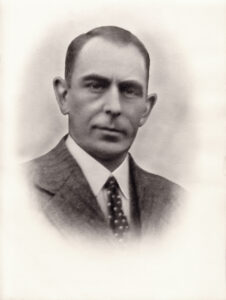 and Hendrik “Toon” Thalen as district commanders. Jonkman was arrested by the Germans in 1944 and transported to the Buchenwald concentration camp where he succumbed at the end of the war. in Buchenwald, on 20-03-1945, age 51. Toon Thalen was buried in Meppel on 02-01- 2007, age 87..
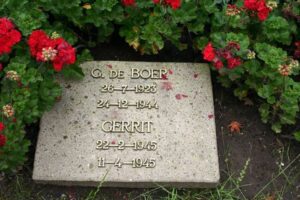
Death and burial ground of Boer, Gerrit” resistance name “Willy”.
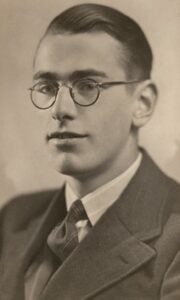 On 18-12-1944, seven resistance fighters were arrested and imprisoned, interrogated, and tortured by the SD at the police station in Meppel due to betrayal from their immediate surroundings. One of them, the famous pilot helper Peter Jan van den Hurk,
 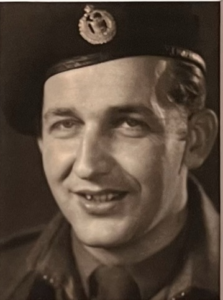 managed to get a note for help outside thru a friendly police officer, in which he asked the Knokploeg for a rescue raid. On 24-12-1944 at 6 PM, “Ome Hein’s” group stormed the police station, and a gunfight broke out. One of the shots hit De Boer in the neck. Another shot hit the on-duty police officer Jacob Petter,
 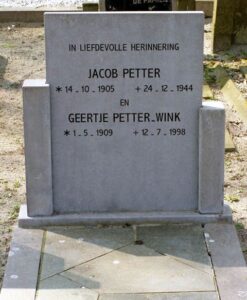 who was killed instantly. A number of prisoners were freed and managed to escape, but De Boer collapsed on the steps of the police station in the arms of “Uncle Hein.”
When the occupiers discovered that the dead man was Gerrit de Boer, they arrested his father Jan, his brother Gerard, and his fiancée Anna Tigelaar. Gerard and Anna were released, but Jan de Boer, age 49, remained imprisoned. Until he was executed on 04-04-, 1945, on the Staphorsterweg at Lankhorst, together with four other resistance fighters, by members of the SD. Probably as a reprisal for an attack on the Meppel-Zwolle railroad line.
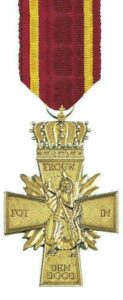
On 27-12-1944, Gerrit De Boer was buried at the General Cemetery in Meppel, where his grave can still be visited – Section M, number 393. Posthumously after the war, his family received the Resistance Cross 1940-1945 on 23-01-1953. Gerrit was also posthumously awarded the Resistance Memorial Cross. 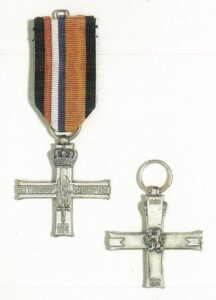




Leave a Reply