

Telstad, Elmer Leroy, born 24-11-1924 in Madison, Dane County,  Wisconsin, United States, to father, Elmer Rudolph Tilstad,
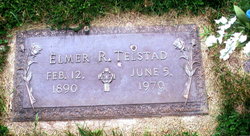 who was 34 and his mother, Mary Ann “Mamie”, born Bigham,
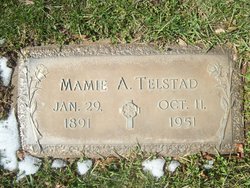 who was 33. Elmer lived in Burke, Dane, Wisconsin, United States in 1930. Elmar was their youngest child. He had one brother, Ralph, and three sisters, Lucille C., Luella M., and Lois R. Telstad.
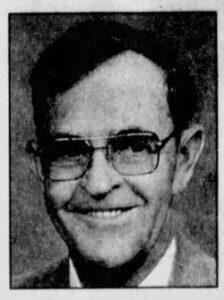
His brother Ralph Telstad (1922-1997, age 75) 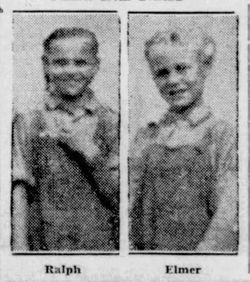
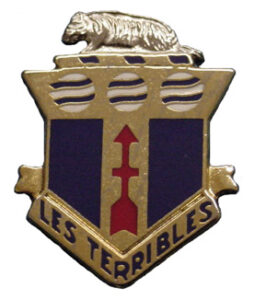
 served with the 32nd Infantry Division “Les Terribles”
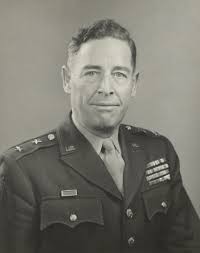
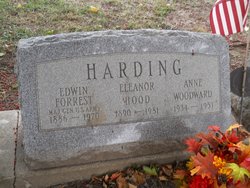
 under command of Major General Edwin Forest Harding
 in the South Pacific for nearly three years during WWII.
Elmar registered for the draft in Wisconsin on 16-02-1942. Before joining the service, he had worked for Reynolds Transfer Co. He was also once a carrier for the Wisconsin State Journal.
Elmer entered the service on 13-04-1943, and completed basic training at Camp Robinson, Arkansas,  from April to August 1943. He then received paratrooper training at Fort Benning, Georgia,
 from August to November 1943. He joined the 506th Easy Company, under command of Colonel Robert Frederick “Bounding Bob” Sink,

 while they were training in England in December 1943.
Private Elmer Telstad was part of Lieutenant Thomas Meehan III’s 
 stick, Easy Company’s
 commander, on the C-47A, numbered #42-93095.
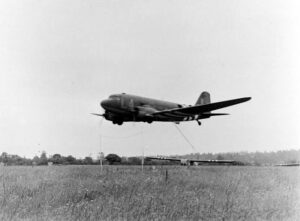
Elmer was a passenger on C-47A which was part of the 91st Troop Carrier Squadron, 439th Troop Carrier, Group,  U.S. Army Air Force during World War II.
Elmer was “Killed In Action” when this C-47A was believed to have been shot down by German anti-aircraft fire during the Normandy invasion and crashed at Beuzeville-au-Plain, Manche, France.
Private Elmer Leroy Telstad, member of “E” Company, 506th PIR 101st Airborne Division, took off from Uppottery, UK on a combat drop as part of Operation Albany. While over Sainte-Mere-Eglise the plane was hit by Anti Aircraft fire, causing one of the engines to burst into flames. The pilot tried to land the plane in a field by the RN13, Route Nationale 13, near Carentan, but it clipped a hedgerow and exploded, killing everyone aboard. The wreck burned for three days. No bodies were ever found and vegetation hasn’t grown on the crash site to this day. Carentan was the junction through which the RN13 ran. The access road (part of the RN13) was renamed Purple Heart Lane due to the intense German shelling and heavy American casualties. Among other events, the famous bayonet charge led by Lieutenant Colonel Robert George Cole 
 of the 3rd Battalion, 502nd Parachute Infantry Regiment,
 101st Airborne Division,
 took place here. Because artillery and mortar fire did not eliminate the German reinforcements at Ingouf Farm, Cole ordered a rare bayonet charge (Cole’s Charge).The outcome: Cole led his men through heavy fire into the German positions for hand-to-hand combat.
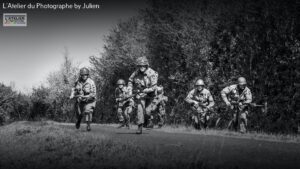
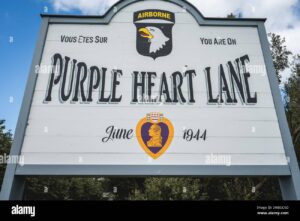 The action was bloody – about 67% of the battalion was wounded or killed – but it broke the German defense and opened the way for the capture of Carentan.
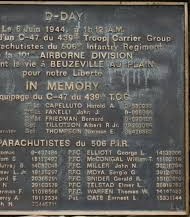
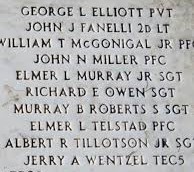
On 6 June 1944 he was a paratrooper passenger on the C-47A Skytrain #42-93095 from the 439th Troop Carrier Group when they were hit by German Anti-Aircraft fire over Beuzeville-au-Plain, approximately two miles south of the town of Sainte-Mere-Eglise.  This was on the morning of the D-Day invasion. The aircraft crashed near Beuzeville-au-Plain and exploded, killing all on board. The entire crew of 5 men and 17 paratroopers from the 101st Airborne Division were killed.
Death and burial ground of Telstad, Elmer Leroy.
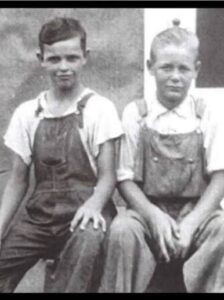
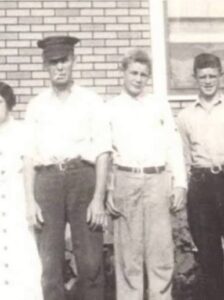
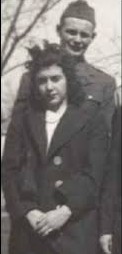
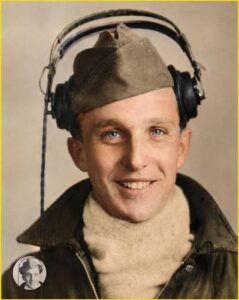
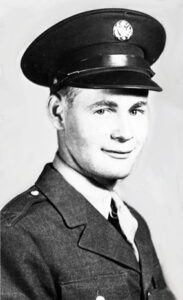
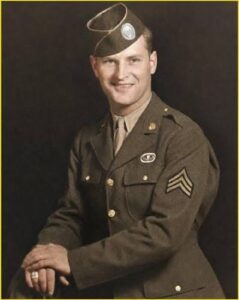
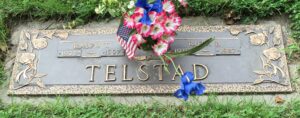
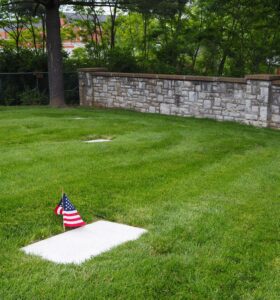
Elmer Leroy Telstad was originally interred overseas and was later repatriated here on 27-03-1951 and or memorialized at Jefferson Barracks National Cemetery, Lemay, St. Louis County, Missouri. This is a National American Cemetery administered through the Department of Veteran’s Affairs. Due to the severe crash and fire, the victims could not be individually identified at the time. After the war, the remains were repatriated to the United States. Location: As a result, he shares a joint group gravestone with his fallen comrades. You will find this memorial site in Plot 84, Grave 25-31.
Private Telstad’s family learned of his death on 11-11-1944, the day Elmar’s teenage years would have ended, and he would have turned 20.
Since it was impossible to identify which paratroopers perished in the crash individually, their remains were initially buried together in one grave at the St. Martin Cemetery. Later, the remains of the men were reburied at Sainte-Mère-Église #2 in 1945. In 1947, their remains were exhumed and carefully examined in an attempt to identify them individually. The examination revealed that the remains consisted of 21 individuals, but due to their fragmented condition, all efforts to establish individual identities were unsuccessful. Only the pilot of the plane was identified separately, and he was buried at a different cemetery from the other crash victims. 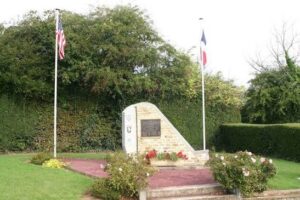
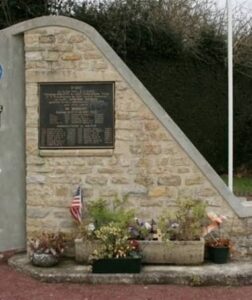
In 1950, they were again disinterred for reburial in the USA, at Jefferson Barracks National Cemetery in Lemay, St. Louis County, Missouri, on 27-03-1951. On 06-06-2000, a memorial was established at the Beuzeville-au-Plain church, dedicated to the American paratroopers killed when their plane was shot down.


Leave a Reply