

Racovitză, Ioan Mihail, born 07-03-1889 in Bucharest, 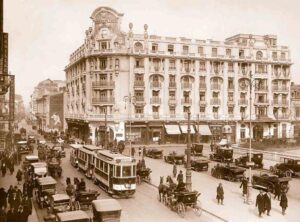 Romania. In 1906, Ioan was admitted to the cavalry officer training program. After the first year, he was sent to Germany, to the military academy in Hanover, where he spent another two years and graduated in 1909.
He made his debut as a second lieutenant in the 2nd Roșiori Regiment (from Bârlad), 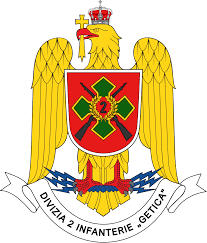 with which he participated in the Bulgarian campaign of 1913.
He returned to Germany in 1910 to attend the Riding School in Pandeborn, where he graduated in 1911. In the same year, he was promoted to lieutenant and in 1916 to captain. In 1917, he was promoted to major, like most Romanian officers.
After the war, Major Mihail Racoviță was admitted to the Higher War School, where he graduated in 1921. In 1923, he became a lieutenant colonel, and in 1928, a colonel. In 1936, he was promoted to Brigadier General. Four years later, he was a divisional general.
In 1941, he was appointed commander of the Cavalry Corps, a position he held for the first two years of the war. During this period, he reached the eastern coast of the Black Sea, in the Caucasus. The troops under his command crossed the Dniester and pursued the retreating Soviet forces, capturing 12,783 prisoners, 450 vehicles, and 70 tanks. General Racoviță was awarded the Order of “Mihai the Brave” 3rd class 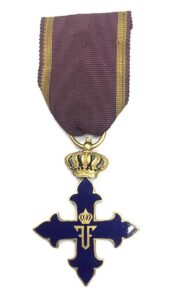 on 17-10-1941, “for the exceptional skill, courage, and determination with which he organized and led the action of the Cavalry Corps, breaking thru the fortified line along the Dniester and for the way he organized and led the pursuit of the enemy, managing to inflict heavy losses and seize a rich supply of war material.”
In 1942, Ioan was promoted to corps general and led the cavalry corps during the campaign in the Caucasus, on the eastern coast of the Black Sea, where he advanced to the Taman Peninsula and participated in the conquest of the ports of Anapa and Novorossiysk.
Between 01-01-1943, and 30-10-1943, he was the commander of the Bucharest garrison. On 01-11-1943, he took command of the Mechanized Corps. Between 25-01-1944, and 31-07-1944, he took command of the 4th Army, 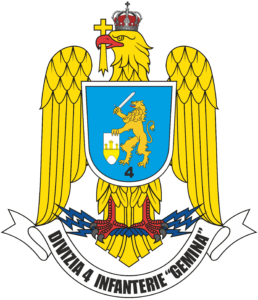 which he led in the defensive battles of that summer. He was the last Romanian officer to be awarded the Knight’s Cross.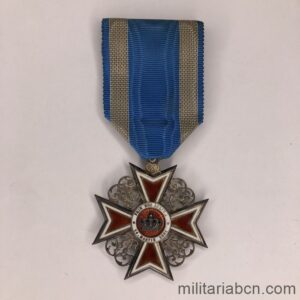
At the start of Second Jassy–Kishinev offensive on 20-08-1944, he was in command of the 4th Army (part of the Army Group Otto Wöhler), 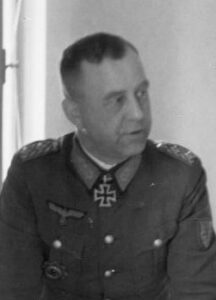
 facing Rodion Malinovsky‘s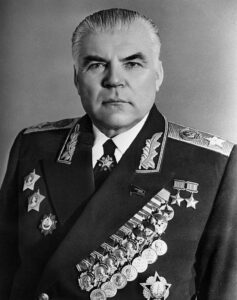
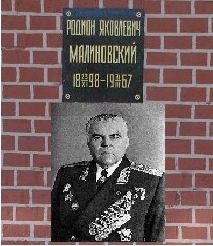 2nd Ukrainian Front west of Iași. Racoviță’s forces fell back towards Bacău, and he was replaced three days later by General Ilie Șteflea.
 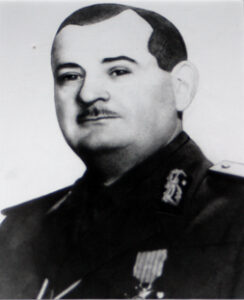 During the 23 August coup d’état he played an important role, alongside the communist activist Emil Bodnăraș
 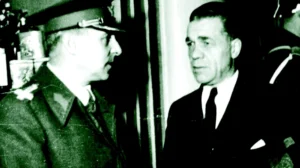 and generals Dumitru Dămăceanu
 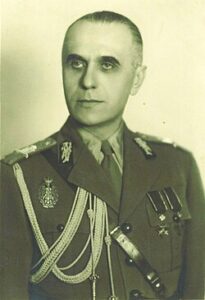 and Aurel Aldea.
 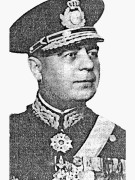 That same day, he was appointed Minister of Defense in the new pro-Allied government of General Constantin Sănătescu.
 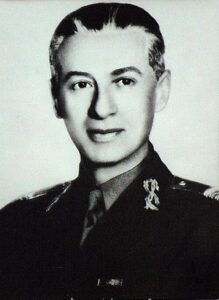 He remained in this position until 05-11-1944, when he was named General Inspector of the Cavalry.
Between 20-05-1945, and 20-05-1946, he was the commander of the General Army Inspection No. 3. On 01-05-1946, he was promoted to army general and appointed commander of the 1st Army, 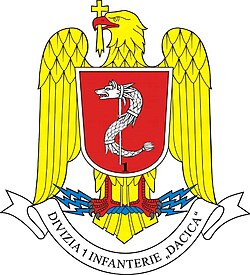 where he remained until 30-6-1947.
Ioan Mihail Racoviță successfully commanded various military corps that fought alongside German troops in the attack on the USSR 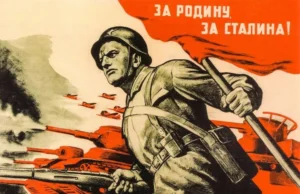 and was decorated for these achievements.
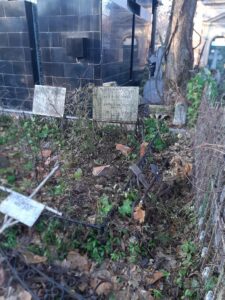
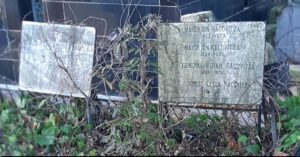
Death and burial ground of Racovitză, Ioan Mihai.
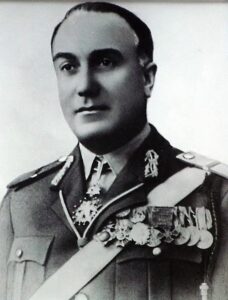
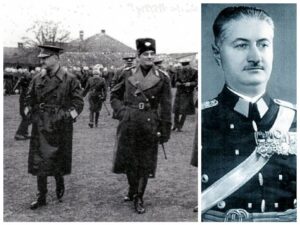
On 01-09-1947, he was transferred to the reserves, and in June 1950, he was arrested and imprisoned in Sighet, 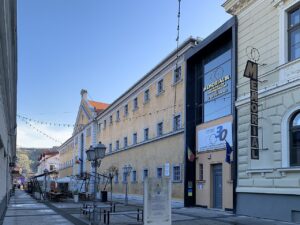 where he died on 28-06-1954, age 65. The Sighet Prison, located in the city of Sighetu Marmației, Maramureș County, Romania, was used by Romania to hold criminals, prisoners of war, and political prisoners. It is now the site of the Sighet Memorial Museum, part of the Memorial of the Victims of Communism.
Daniel Ion Vlad (Drăganu commune, Argeș county, Romania) sent me the photo of Racovitză’s grave, with much thanks.
Message(s), tips or interesting graves for the webmaster: robhopmans@outlook.com


Leave a Reply