

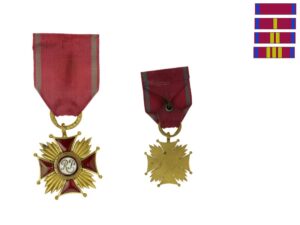
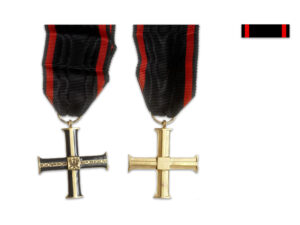
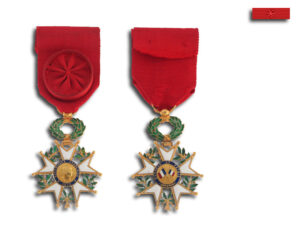

Rowecki, Stefan Pawel “Grot”, born 25-12-1895, in Piotrków Trybunalski, 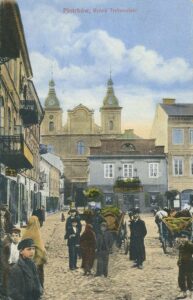 Congress Poland. In his home town he was one of the organizers of a secret scouting organization. During World War I he was conscripted into the Austro-Hungarian army
 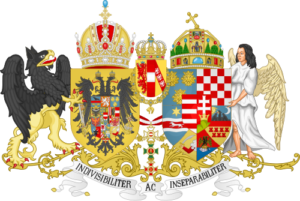 and later into the First Brigade of the Polish Legion.
 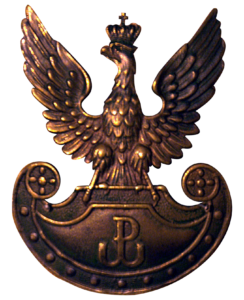 He was interned in August 1917 after the majority of his unit had refused to pledge loyalty to the Emperor of Austria. In February 1918, he was released from the internment camp in Beniaminów and joined the Polska Siła Zbrojna”Polish Wehrmacht) – the armed forces of the Kingdom of Poland from the Act of November 5. After the establishment of the newly independent Poland, he joined the Polish Army.
Rowecki fought in the Polish–Soviet war (1919–1920). After the war, he remained in the army and organized the first military weekly periodical (Przegląd Wojskowy), a Polish military magazine 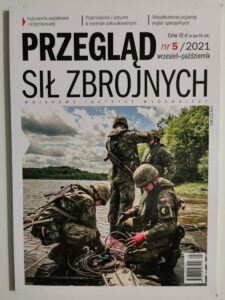 with an independence profile, which has been published in Lviv since May 1914 by the joint forces of all Polish military organizations. From 1930 to 1935, he commanded the 55th Infantry Regiment in Leszno.
From June 1939, Rowecki organised the Warsaw Armoured Motorized Brigade (Warszawska Brygada Pancerno-Motorowa, 7TP, TKS tanks) a motorized unit of the Polish Army during the interbellum period. On 01-09-1939 the Nazi-German Army invaded Poland after the Gleiwitz incident. Although Rowecki’s unit did not reach full mobilization, it did, however, take part in the defense of Poland. The Gleiwitz incident, was a false flag attack on the radio station Sender Gleiwitz in Gleiwitz (then Germany and now Gliwice, Poland) staged by Nazi Germany on the night of 31 August 1939. Along with some two dozen similar incidents, the attack was manufactured by Germany as a casus belli to justify the invasion of Poland. 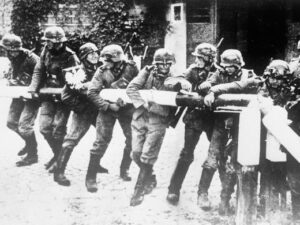 Despite the German government using the attack as a justification to go to war with Poland, the Gleiwitz assailants were not Polish but were German SS officers wearing Polish uniforms.
After the Polish defeat, Rowecki managed to avoid capture and returned to Warsaw. In October 1939, he became one of the leaders, then in 1940 commander, of the Union of Armed Struggle (ZWZ).  In 1941, Rowecki organized sabotage in the territories east of the Polish pre-war borders Wachlarz. From 1942, he was commander of the Armia Krajowa (Home Army).
As commander of the Home Army, Rowecki instituted policies favorable to Jews. In February 1943, he ordered the Home Army to help the Jewish underground seeking to mount ghetto uprisings. In particular, Rowecki authorized aid to the Jewish underground in the Warsaw Ghetto before and during the Warsaw Ghetto Uprising 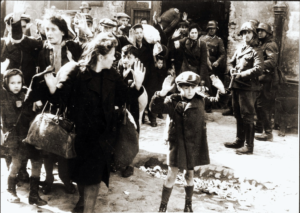 by providing arms and mounting diversionary attacks.
On 30-06-1943 he was arrested by the Gestapo  in Warsaw and sent to Berlin. Rowecki was arrested due to his betrayal by Ludwik Kalkstein “Hanka”, Eugeniusz Świerczewski “Genes”
 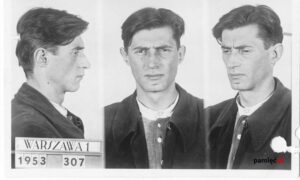 and Blanka Teresa Kaczorowska “Sroka”
 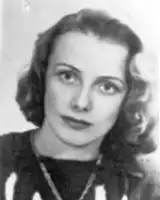 who were Gestapo agents.
After the war sentenced to death for treason by the Polish underground state and killed by a unit led by Stefan Jan Ryś, codename “Józef.” 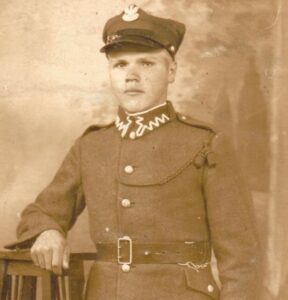 His execution took place by hanging in the basement of Krochmalna Street 14, where he had been lured by soldiers of the Security and Counterintelligence Department of the Home Army headquarters. Before his execution, he was interrogated, during which he confessed to betraying Lieutenant Colonel Marian Drobik,
 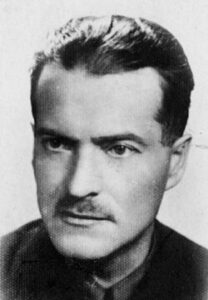 codename “Dzięcioł” (arrested with members of his family) and Major Otto Adam Pawłowicz, codename “Siostra” (arrested with his liaison Anna Krajewska, codename “Hanka”), but denied betraying Stefan “Grot” Rowecki.
All of them were members of the Home Army but in fact collaborated with the Gestapo. Swierczewski, Kalkstein and Kaczorowska were sentenced to death for high treason by the Secret War Tribunal of the Polish Secret State. The sentence on Eugeniusz Swierczewski was carried out by troops commanded by Stefan Rys (“Jozef”). Swierczewski was hanged in the basement of the house at 74 Krochmalna Street in Warsaw. Kalkstein received protection from the Gestapo and was not harmed. He fought in a Waffen SS  unit during the Warsaw Uprising of 1944 under the name of Konrad Stark. After the war, he worked for the Polish Radio station in Szczecin and was later recruited as an agent by the Urząd Bezpieczeństwa.
  In 1982, he emigrated to France; he died in 1994. Blanka Kaczorowska also survived the war. Her death sentence was not carried out because she was pregnant. After the war, she also worked as a secret agent for the Urząd Bezpieczeństwa and later for the renamed Służba Bezpieczeństwa.
 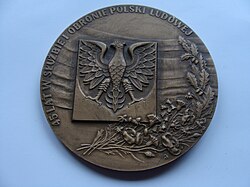 Blanka Kaczorowska survived the war, emigrated to France in 1971. where she passed away on 25-08- 2002. age 79.
Death and burial ground of Rowecki, Stefan Pawel “Grot””Spearhead”.
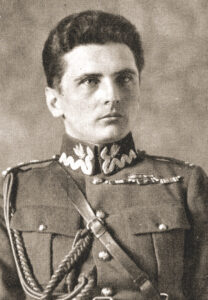
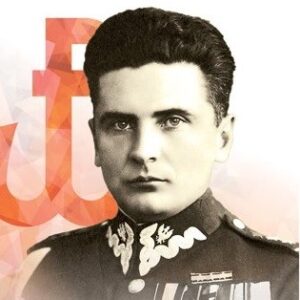
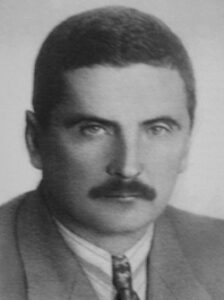
In Berlin Stefan was imprisoned at Oranienburg and was questioned by many prominent Nazi officials (including Ernst Kaltenbrunner, 
 Heinrich Himmler
 and Heinrich “Gestapo “Muller Müller).
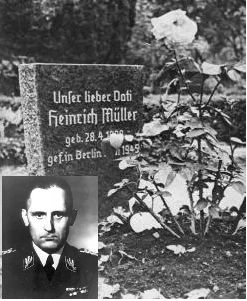 He was offered an anti-Bolshevik alliance, but refused. He was likely executed in 02-08-1944 (aged 48) in Sachsenhausen. His execution was ordered by Heinrich Himmler.
There have been claims that the arrest of Rowecki on 30-06-1943 was a result of a wider intelligence operation against the Polish Underground State with the goal of eliminating top commanders and political leaders of the Polish resistance. During the same period, the Gestapo arrested the commander of National Armed Forces (NSZ), 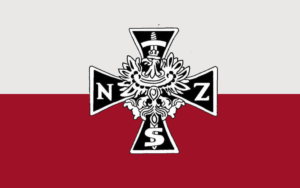 Colonel Ignacy Oziewicz
 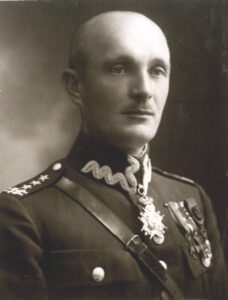 on 09-06-1943. On 04-07-1943, General Władysław Eugeniusz Sikorski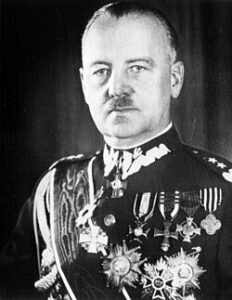
 died in a plane crash under mysterious circumstances. Within a period of two months, the Polish Army had lost three top commanders
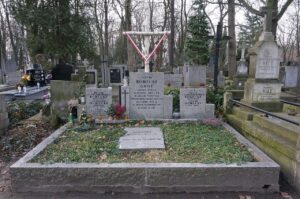
Rowecki, Stefan Pawel “Grot””Spearhead” is buried at the Polish War Graves Cemetery Powązki, Poland.


Leave a Reply