

Leus, Herman, born 18-12-1917, in Hengelo, Netherlands,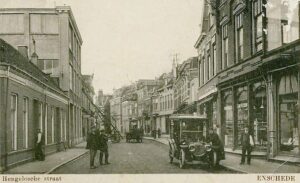 , the youngest of six boys in a Roman Catholic family. From his youth, Herman was a very religious person.
In January 1943, Captain Jan Marginus Somer 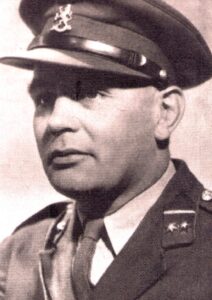 was charged with training and deploying agents to the occupied Netherlands at the BI. After assessing the problems, Somer decided to improve the reception of Englandvaarders in Madrid. In the Netherlands, Englandvaarder
 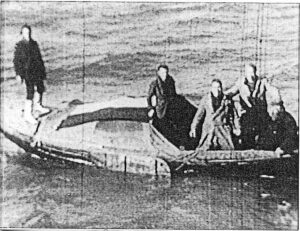 is the honorary title for all men and women who managed to escape from occupied territory during the Second World War (1939-1945), after the capitulation of the Dutch armed forces on 15-05-1940 and before the Allied invasion of Normandy on 6 June 1944 (D-Day), with the intention of joining the Allied forces in England or other Allied territory to take an active part in the fight against the enemy (Germany, Italy, Japan).
The BI opened a branch in Madrid. Mr. Henri Peter (Harry) Linthorst Homan (1905-1989) 
 was put in charge of the Madrid Outpost. Jan Somer was married to Geesje Strating from 1922 to 1946, with whom he had two daughters and a son. After their divorce, he was married to Weia Tabitha van Altena from 1946 until his death. They had three sons. Somer died at the age of 79 in.Bussum, on 03-04-1979.
Herman Leus trained in London, as an agent with the BI. The Bureau Inlichtingen (BI) was a Dutch military intelligence agency responsible for Dutch espionage during World War II and It worked closely with the British Secret Intelligence Service (SIS).  After the liberation of the Netherlands, the Bureau Inlichtingen was disbanded. After training as a radio operator/coder, he was ready to be parachuted into the occupied Netherlands.
Herman Leus was part of the BI Radio Service Transmitter Group. His assignment, as a radio operator, was to maintain radio contact between the Council of Resistance (RVV)  and the BI, and the Dutch government in London.
Return to the Netherlands Herman Leus, along with Jan Faber (1917-2001), was parachuted  into the vicinity of Rijsbergen in the early morning of 11-04-1944. He was destined for the BI Radio Service Transmitter Group.
The first address the agents visited after landing was the “Spartanen” in Princenhage. The first port of call was the bicycle and motorcycle shop of the Van Nunen Brothers (Henk, Rinus, and Wim). The business was recognizable by a sign hanging on the front. It advertised the “Sparta” brand. Both the alias of the contact person and the password to access the family’s home were “Spartanen.” After landing, he was met by agents Josephus “Sjef” Adriaansen 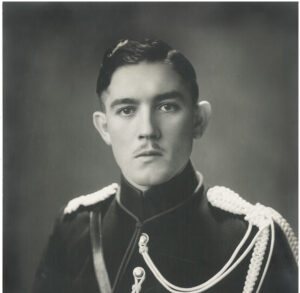
 and Jacobus Eugène “Jac” van Loon in Princenhage at the “Spartanen.” Adriaansen was arrested on 14-07-1944, aged 25, in Hoeven by the Sicherheitsdienst (SD) and executed on 05-09-1944 at the Execution Site in Camp Vught.Jacobus van Loon survived the war and died 26-04-2012, age 93.
Jan Faber provided him with his own radio set, and Sjef Adriaansen and Jacques van Loon helped him obtain transmitter crystals. With the help of Adriaansen and Van Loon, Herman Leus set up his first signal box in Bergen op Zoom. Andreas Wilhelmus Maria “Dre” Ausems 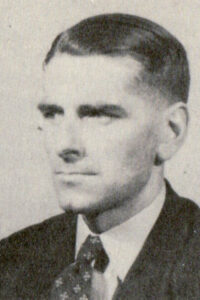 established contact with the RVV (Royal Netherlands Air Force) for him. During radio contacts with the BI, he used the code names Gerard, Jacob, and Weerink. During his contacts “in the field,” he used the alias Jan Willem Wiemers. “Dre” Ausems survived the war and passed away age 50, in Zaandam, 31-05-1955.
After the liberation of North Brabant, Leus moved his signal post over the major rivers. He went to work in the municipality of Langbroek, north of Utrecht (city). To maintain radio contact between the RVV (Royal Netherlands Air Force) and the BI (National Intelligence Service) in London, he moved his work area to Ermelo. In Ermelo, Leus set up a signal post with the help of a forest ranger. The signal post was located in a bunker near a watchtower.
Death and burial ground of Leus, Herman.

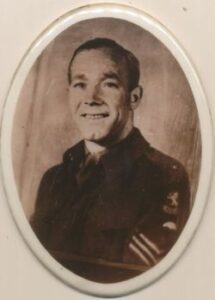
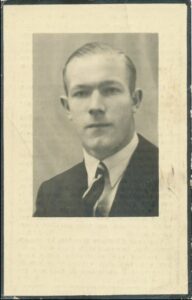
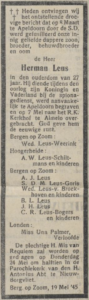
In mid-December 1944, Herman Leus, along with his radio operator Corneille “Kees” du Corbier, fell into German hands. The Sicherheitsdienst (SD)  had targeted his hiding place following betrayal by resistance leader Berend Dijkman
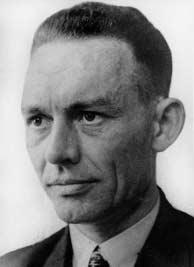
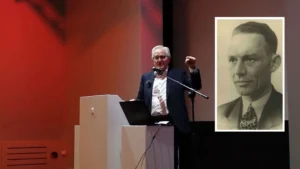
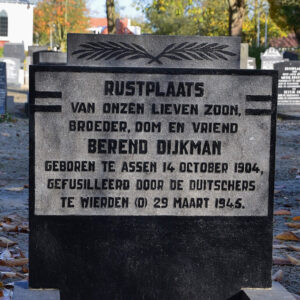 Leus, age 27, attempted to escape but was shot in the leg. He was arrested and interrogated by the SD. On March 08-03-1945, Herman Leus was executed along with 116 resistance fighters at the Woeste Hoeve
 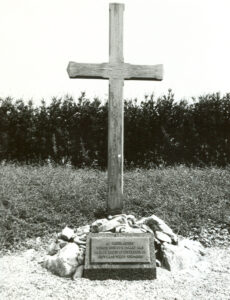 on the Arnhemseweg near Beekbergen (municipality of Apeldoorn) in a wave of reprisals following the attack on Rauter, Johan Baptist Albin “Hanns SS Obergruppenfuhrer and the highest SS and Police Leader in the occupied Netherlands.
 that had taken place there. This was a reprisal for a robbery carried out by the resistance two days earlier at the same location. During this robbery, Higher SS and Police Leader Hanns Albin Rauter had been seriously injured. They straight from the prison were shot in groups of twenty victims. A monument has been erected at the site of the execution, at the “Woeste Hoeve,” in memory of the victims .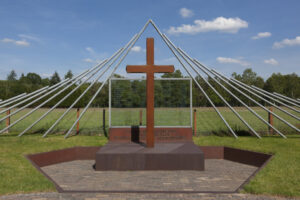
As a result of betrayal by the arrested resistance leader Berend Dijkman, the Germans had learned of this location. They set up an ambush at a nearby bunker set up for resistance activities. Of the three resistance fighters who approached the bunker, one was immediately shot dead. At the Born family home, Leus and Corbier, along with several other people in hiding and family members, were arrested. “Kees” Corbier tried to escape and jumped from the truck, but was shot in the stomach. He died 10 weeks later in the Kriegslazarett (war hospital) in Apeldoorn on 28-02-1945 Kees is buried at the Loenen War Cemetery.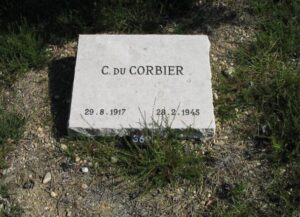 Section Nr B/369.
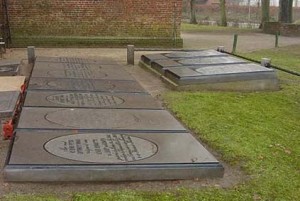
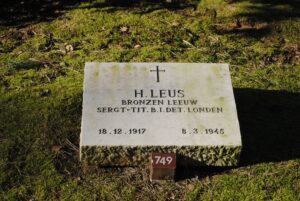
Herman Leus is buried at the Nationaal Ereveld Loenen, Loenen, Apeldoorn Municipality, Gelderland, Netherlands. Groenendaalseweg 64, 7371 EZ Loenen. Section A 749




Leave a Reply