

Dijkman, Berend, born 14-10-1904, in Assen, Netherlands, 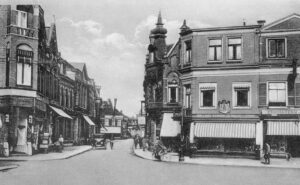 the youngest son of the national police officer Adolf Dijkman, (1874-1965) and his wife Arentien, born Smit. (1874-1965). Little is known about Dijkman’s youth. After leaving school, he initially worked as an office clerk in Leeuwarden, and in June 1932 Berend was appointed as a national police officer in Amsterdam. In Amsterdam he met a teacher with whom he had a daughter. The relationship between him and his partner deteriorated during the war years. In 1935, Dijkman was transferred to Ermelo. There he was promoted to senior sergeant four years later. In 1941 he transferred to the Marechaussee Corps.
  The Royal Marechaussee (KMar) is a Dutch armed forces branch alongside the Royal Navy (KM), the Royal Netherlands Army (KL) and the Royal Netherlands Air Force (KLu). The Royal Marechaussee is a gendarmerie, a military service that carries out police duties.
In 1942, Dijkman was sentenced by the German occupiers to 21 months in prison for anti-German statements and black market trading. His sentence was shortened by six months for good behavior. He was free again at Christmas 1943. Because of his conviction, he could forget about a job with the police; instead, he first worked at the distribution service in Nijkerk.
After his release he became involved in the organised resistance and quickly made a “career”. Dijkman belonged to the top of the Council of Resistance, together with the Order Service and the National Organisation for Assistance to People in Hiding, one of the three largest organisations. It is likely that his background as a policeman had helped him to be quickly accepted by the other resistance leaders, and not so much his political convictions. Until September 1944 Dijkman was commander of the Veluwe brigade, which included the districts of Ede, Kampen, Apeldoorn and initially also Hilversum and Het Gooi. In September 1944 the Dutch government under Pieter Sjoerds Gerbrandy 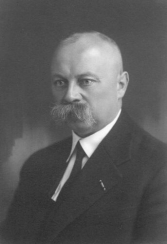
 in London expressed the wish that all resistance organisations should be absorbed into the Home Forces, which came under the command of Prince Bernhard von Lippe Biesterfeld. Dijkman
  thus became district commander in region VI, Harderwijk. The Veluwe suddenly became the hinterland of the front area after the British landings from 17 September at Arnhem, as part of Operation Market Garden.
 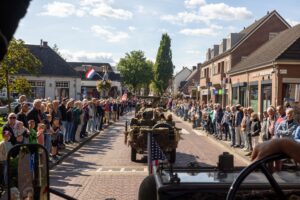 The resistance movement was to hinder the movement of German troops towards the front. On 23 September, Dijkman ordered a resistance group in Putten to carry out an attack on a German car or courier on the highway between Amersfoort and Harderwijk. In the night of 30 September to 1 October 1944 a failed attack took place on a German passenger car with four soldiers in it. The attack failed and the next day the Germans surrounded Putten and held a raid. The Putten Raid took place in the village of Putten in Gelderland.
  On 1 October 1944, the German occupiers carried out a raid as a reprisal measure. The majority of the male working population was taken to various concentration camps. A total of 552 men died.
Six hundred men and boys were taken to Germany, most of whom did not return. Dijkman himself was also initially arrested. He was released after he could prove that he did not come from Putten. A week after the raid, Dijkman asked his commander Jan Thijssen 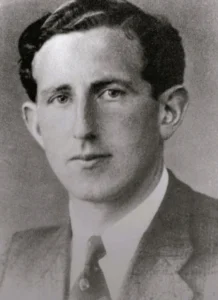
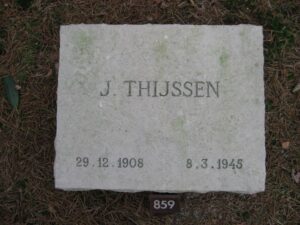 for a replacement. The reorganisation of the various resistance groups that were all absorbed into the Binnenlandse Strijdkrachten had cost him a lot of time and, according to him, had led to total chaos. Instead of replacing him, Thijssen sent him on leave for two weeks. It was decided to split up the Veluwe section. Derk Wildeboer,
 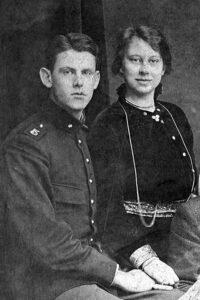 head of the Home Guard in Ede, declined the honour. He was busy enough in Ede. He referred Dijkman to Piet Cornelis Kruijff,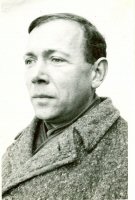
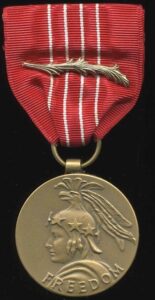 the resistance leader from Arnhem. Dijkman became the BS commander of the western Veluwe area, while Kruijff became responsible for the eastern Veluwe. Kruijff known by the nickname Piet van Arnhem survived the war and died in East Orange (New Jersey America), on 17-12-1963, age 54.
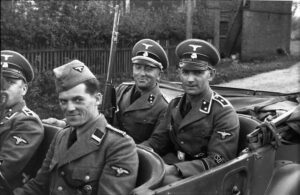
Dijkman was in hiding in a room behind Harm Drost’s bakery at Stationsstraat 40 in Ermelo. 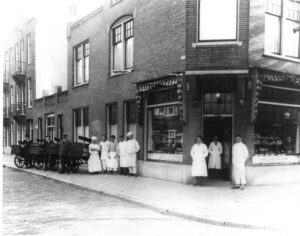 On 08-11-1944, Thijssen was arrested by the Germans. Dijkman’s headquarters were therefore no longer considered safe and he was ordered to move to new accommodation in the hamlet of Drie. However, Dijkman was in no hurry. On 14-11-1944, a meeting was held at Drost’s. Normally, Dijkman hid his archive in the local swimming pool in Ermelo. That did not happen that evening, because it was raining very hard.The next morning, the Apeldoorn branch of the Sicherheitsdienst
 raided Drost’s. They had found out the address via Antonius “Don” Lucas Ansems,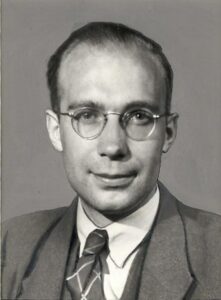
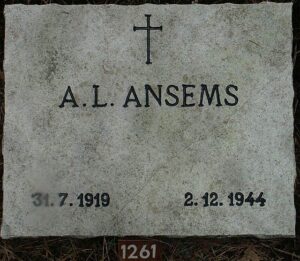 a courier of Dijkman, whom they had arrested the day before. In addition to Dijkman, the deserter German Helmut Blüncke, Harm Drost and his wife and Johannes Balk,
 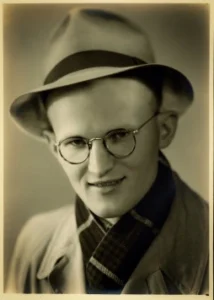 an employee of Dijkman, and executed 02-12-1944 in Apeldoorn, age 22, were arrested. Dijkman’s entire archive also fell into the hands of the Germans. All detainees were taken to the King Willem III barracks in Apeldoorn,
 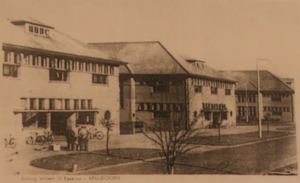 where Drost’s pregnant wife was released. Dijkman’s archive consisted of the last messages and orders from the RVV, Raad Van Verzet, Council of Resistance
  lists of names and meeting reports. After his arrest, Dijkman was mentally broken. It took his interrogators little effort to get the information out of him. As a first measure, illegal PGEM telephone lines, through which the resistance was in contact with liberated areas, were cut off. From 18-11-1944, the Sicherheitsdienst raided numerous locations. Several of the captured resistance members had to pay for their arrest with their lives.
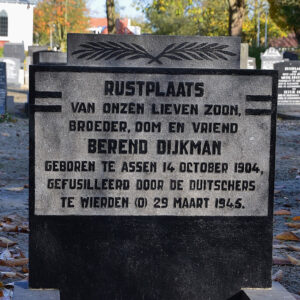
Death and burial ground of Dijkman, Berend.
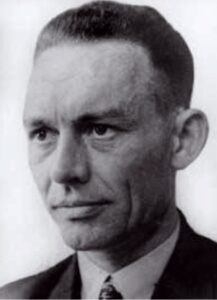 During the rest of his captivity, Dijkman was treated relatively well. That did not prevent him from being executed on 29-03-1945, age 40. General Friedrich Christian Christiansen,


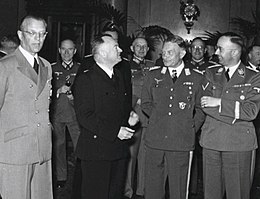 head of the Wehrmacht in the Netherlands, demanded that twenty Toteskandidaten be shot as a reprisal for the death of several members of the Wehrmacht near Almelo.
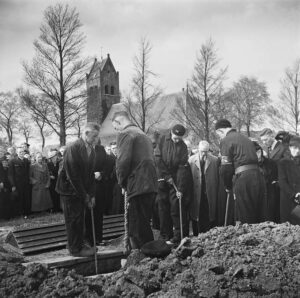
 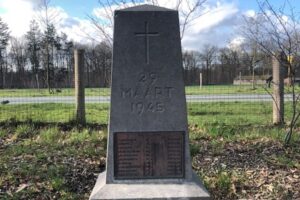 Dijkman was one of them. He was first buried in a mass grave in Wierden, in 1946 he was reburied in Huizum.
  After the war, Dijkman was accused of being very careless. He was particularly blamed for the fact that his archive fell into the hands of the Germans, which allowed many resistance fighters to be arrested. The former OD man Theodoor Alexander Boeree
 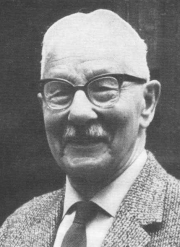 stated that Dijkman was a “pleasant comrade” with whom everyone enjoyed working, but he had no good words for his leadership skills. The Ordedienst (OD)
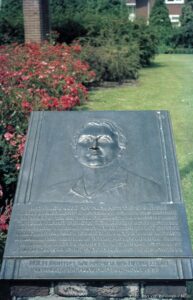
  was an important illegal organisation in the Netherlands during the Second World War. Until 1942, when the illegal National Organisation for Assistance to People in Hiding (LO) was formalised, it was most likely the largest secret anti-German organisation in the Netherlands, although exact figures are lacking. The LO is the National Organization for Assistance to People in Hiding. The organization was founded at the end of 1942 by Helena Kuipers-Rietberg (‘Aunt Riek’)
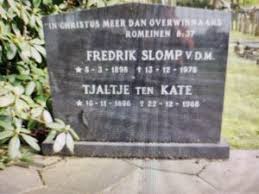
 and Reverend Frits Slomp (‘Frits de Zwerver’)
 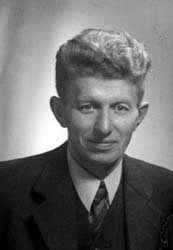 .
.  They merged existing groups into one organization.


Leave a Reply