


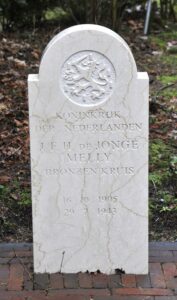
Jonge Melly, Johan Frederik Henry de, born 16-10-1905 in Amsterdam  Netherlands. Johan was a first lieutenant of infantry at the outbreak of World War II in the Netherlands on May 10th 1940, with a deatly bombardment on the city Rotterdam.
 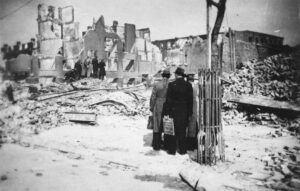 In the bombing itself, 711 innocent people were killed. Later research revised the total number of deaths in the city due to war violence upwards.
After demobilization, Johan is part of both the resistance organization Ordedienst (OD) 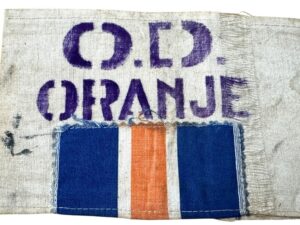 and the network of Peter Tazelaar, Peter, “the Zeeuwse Soldier of Orange”,
 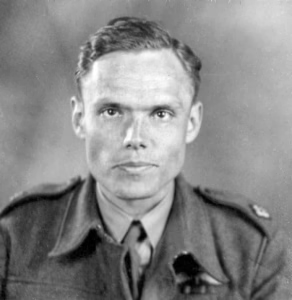 also an aide-de-camp to Queen Wilhelmina

 Gerard Adrianus Dogger,
 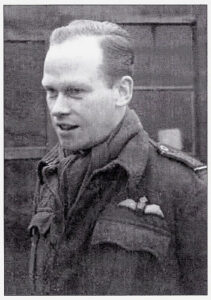 Chris Krediet,
 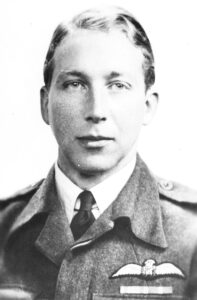 and Siebren Erik Hazelhoff Roelfzema. on the left
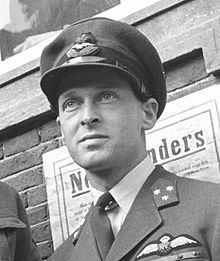
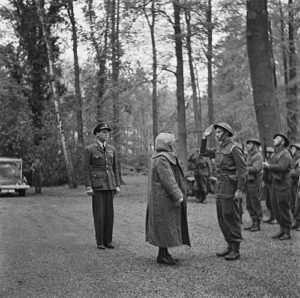

Gerhard Adrianus Dogger survived the war and passed away, age 65, in Oxted, Tanganyika, 09-03-1985.
Chris Krediet also survived the war and dies as a result of an illness on 21-07-1975, age 60, in Delfstrahuizen. In 1950, Chris had married Ellen (1915-1992), the sister of Siebren Erik Hazelhoff Roelfzema.
De Jonge Melly lives in Bussum, commits sabotage at Soesterberg airfield, 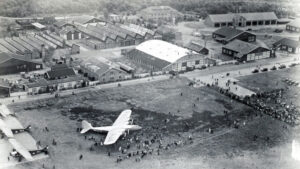 and has taken weapons from heavily guarded depots. As part of Plan Contact Holland. Plan Holland devised by Abraham Lamertus (Bram of Bob) van der Stok,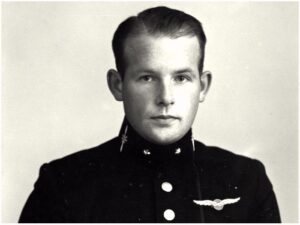
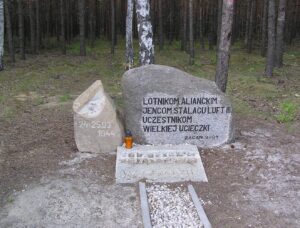 was a British invasion plan from 1942. Secret agents were dropped by the British and Dutch to organize the resistance. This ended in disaster. The Germans intercepted the agents and used their transmitters to lure the British into a trap (the Englandspiel).
Bob van de Stok survived the war and passed away at Virginia Beach, Virginia, United States, on 08-02-1993, age 77.
Peter Tazelaar, along with De Jonge Melly, formed a ‘reception committee’ on 20-12-1941, to welcome Erik Hazelhoff Roelfzema on the beach of Scheveningen. He was to be landed there to pick up the SDAP politician Herman Bernard Wiardi “Stuuf” Beckman 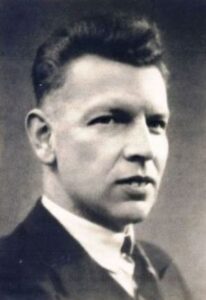
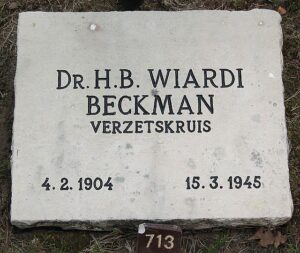 and take him to England. The Social Democratic Workers’ Party (SDAP)
  was a Dutch political party that existed from 1894 to 1946. The party aimed to improve the position of workers thru parliamentary means.
Death and burial ground of Jonge Melly, Johan Frederik Henry de.
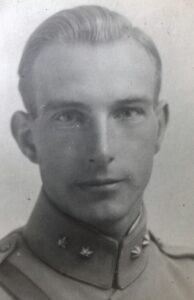
The members of the reception committee are all wearing tuxedos to pose as partygoers. However, it is not possible to get in touch with Hazelhoff Roelfzema. During a trial against captured OD members, De Jonge Melly is sentenced to death by a German court. He was executed by a German firing squad 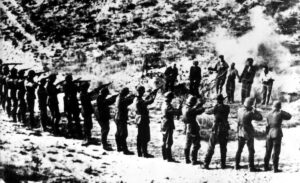 on 29-07-1943, age 34, on the Leusderheide, along with 15 resistance fighters.
The resistance group, in addition to Johan Jonge Melly, consisted of the following fighters: Christiaan Frederik van den Berg, 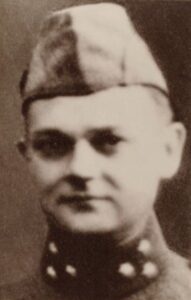
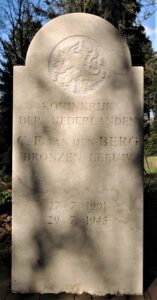 Anton Willem Marie “Ton” Abbenbroek,
  Adrianus Aloijsius Felix “Lex” Althoff,
 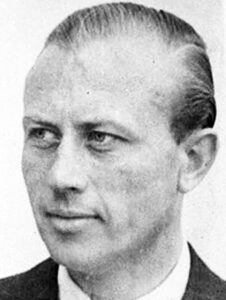 Jhr. Willem Theodoor Cornelis (Pim) van Doorn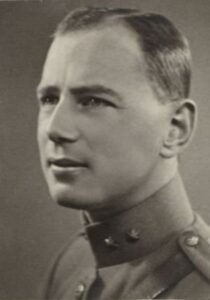
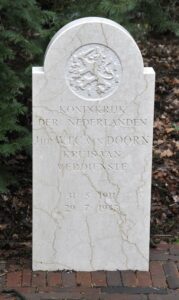 , Fritjof Dudok van Heel,
 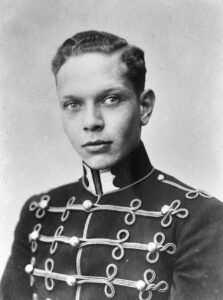 Rudolf Hartogs,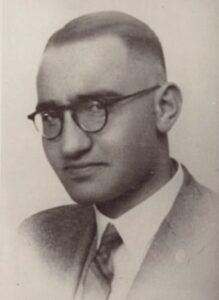
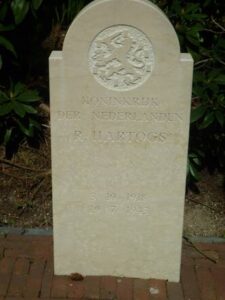 Willem Hendrik Hertlij,
 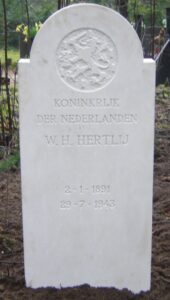 , Eduard Alexander Latuperisa,
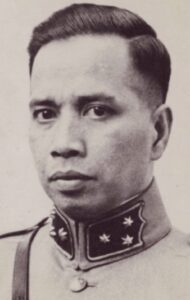
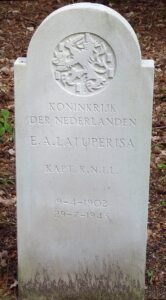 Adrien Lambert Jacques Emile Marie ‘Broer’ Moonen,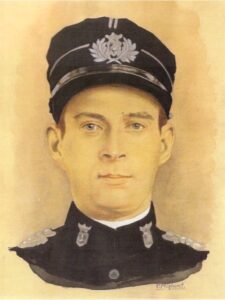
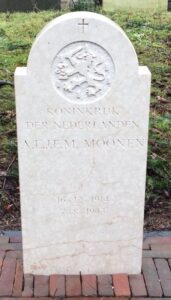 Willem Mulder,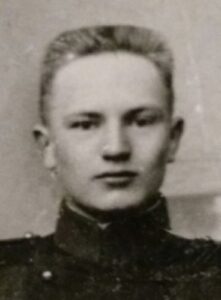
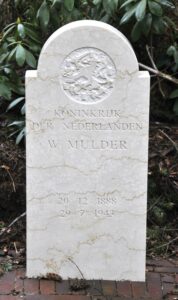 A.C.Th. van Rijn, Johan Schimmelpenninck ‘Uncle Alexander’,
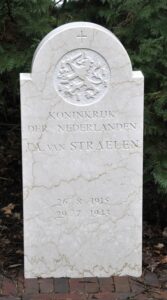
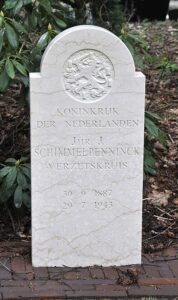 Johannes Aloysius “Jan” van van Straelen,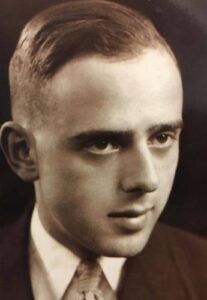
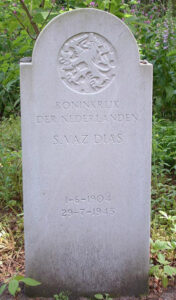
 Sieg Vaz Dias “Sieg”,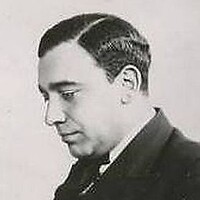
 Gerard Joannes Franciscus “Gerhard” Vinkesteijn,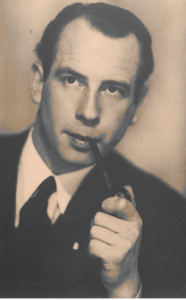
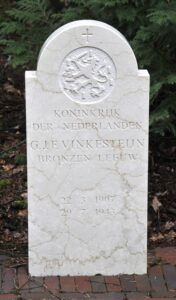 and Abraham “Bob” Wijnberg.
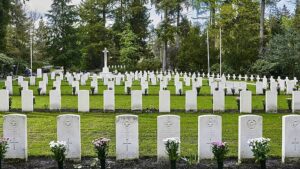
 They are buried at the Dutch Honorary Cemetery, Cemetery Rusthof, in Leusden
At the military graves of the Dutch Honorary Cemetery, Cemetery Rusthof lie 150 Dutch victims, including resistance fighters, political prisoners, hostages, and people in hiding. They perished in the notorious Amersfoort camp.
In Camp Amersfoort, a true reign of terror prevailed, where especially the Jews suffered. Some prisoners had to dig their own graves at the camp and were then executed. At the execution site next to the Appelweg, a monument has been erected in memory of the victims. 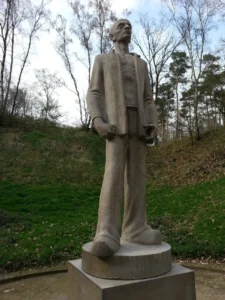 The then Prime Minister Willem Drees
 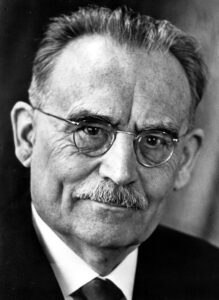 unveiled this monument in May 1953.
From the Amersfoort camp, 20,000 people were sent on to concentration camps. The approximately 600 men who were arrested in Putten in October 1944 as a reprisal were also transported thru this camp to Germany, where they succumbed to hardships and forced labor. In the other Dutch war graves rest fallen soldiers and forced laborers.


Leave a Reply