


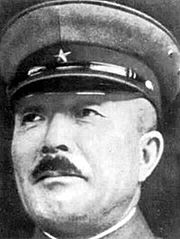
Itagaki, Seishirō, born 21-01-1885, in Morioka, Iwate, 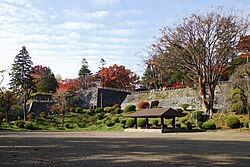 Japan, into a former samurai
 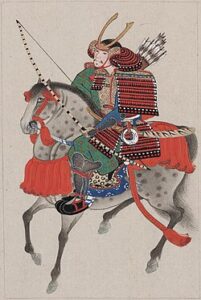 family that had served the Nanbu clan
  of the Morioka Domain. Itagaki’s father, Masanori Itagaki, served as mayor for Kesen District and as a headmaster for a girls school. Itagaki was raised in a Nichiren Buddhist family belonging to the Nichiren-shū sect. Itagaki attended the junior high school in Morioka (at the same time Kyōsuke Kindaichi,
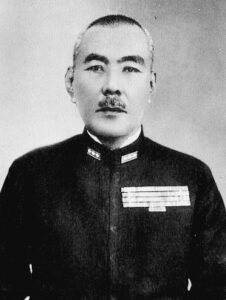
 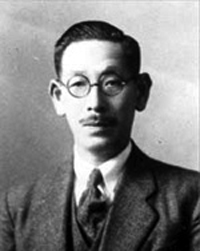 Koshirō Oikawa,
  and Kodō Nomura,
 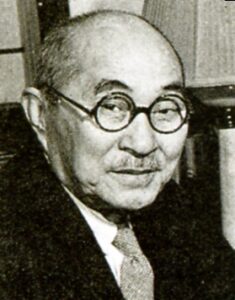 the Japanese novelist and music critic) before attending the regional military school in Sendai.
Itagaki Seishiro joined the Japanese Army in 1904. During the 1930s he served in China, where he worked closely with Ishihara Kanji 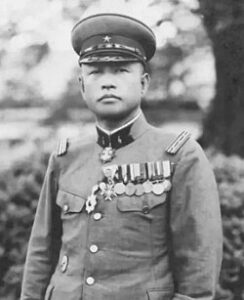
 to help stage the Mukden Incident that led to Japanese seizure of Manchuria. At one point, Itagaki allowed a subordinate to threaten the Japanese Consulate-General with a sword when the latter insisted on trying to settle the incident through diplomatic channels. Itagaki later helped instigate the First Shanghai Incident, in 1931. In 1931, a dispute near the Chinese city of Mukden (Shenyang) precipitated events that led to the Japanese conquest of Manchuria. In response, U.S. Secretary of State Henry Stimson
 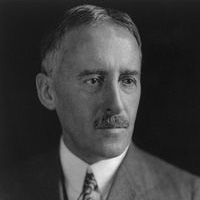 issued what would become known as the Stimson Doctrine, stating that the United States would not recognize any agreements between the Japanese and Chinese that limited free commercial intercourse in the region.
Made commander of the elite 5 Division in 1937, Itagaki was ambushed and badly defeated by Communist guerrillas at Pingsinkuan in September 1937. He was serving as War Minister at the time of the Changkufeng Incident of July-August 1938, a border skirmish near the Manchuria-Russia-Korea junction that ended in stalemate. Itagaki was dressed down by the Emperor for escalating the fighting, and the Emperor insisted that not a single soldier was to be redeployed in the future without Imperial consent. However, Changkufeng was followed by the battle of Nomonhan in May-July 1939, where Japanese forces were badly mauled by the Russians. Disgraced by the defeat, and by his failure in secret negotiations with Chiang Kai-shek 
 in August 1940 to end the China Incident on terms favorable to Japan, Itagaki was put in command of Korea Army, a backwater post, until April 1945, when he was sent to Malaya to command 7 Area Army. Here he unsuccessfully attempted to persuade Count Hisaichi Terauchi
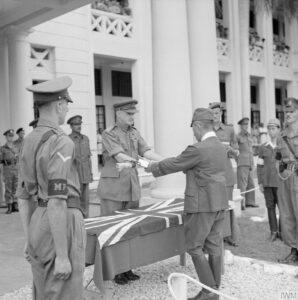
 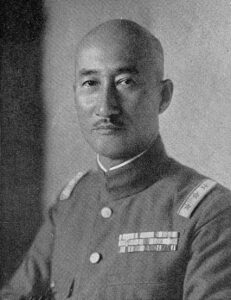 to refuse to submit to the Emperor’s order to surrender (Allen 1984). On 10-04-1945, Terauchi suffered a stroke when he received the news about the losses in Burma. He did not recover from the subsequent stroke and therefore could not attend the general surrender ceremony of the Japanese forces in Singapore. He surrendered to the British Army leader Lord Louis “Dickie” Mountbatten

 on 30-11-1945. On 12,-06-1946, Hisaichi Terauchi, age 65, died in a prisoner of war camp.
We are still unaware of His Majesty’s real intentions. While this is so, should we not continue to fight with everything we have?
Itagaki also delayed informing his command of the Japanese capitulation for four days to allow time to destroy evidence of Japanese war crimes.
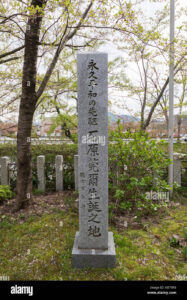
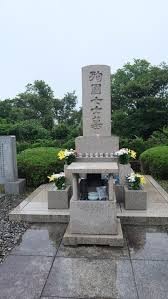
Death and burial ground of Itagaki, Seishirō.
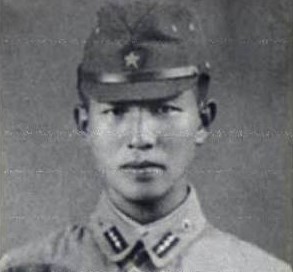
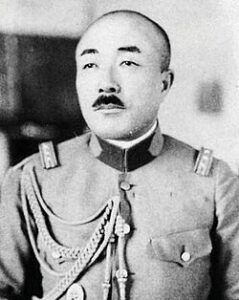
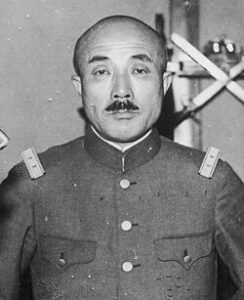
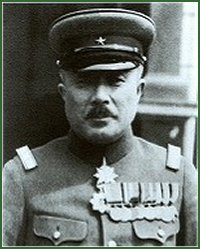
Itagaki was hanged as a war criminal for mistreatment of prisoners of war and internees while commander of 7 Area Army,  on 23-12-1948, age 63, at Sugamo Prison in Tokyo. One of the charges against him was that he requested that 2,000 Allied prisoners of war be sent to Korea so that they could be publicly humiliated for the purpose of improving civilian morale. In response, a thousand British and Australian prisoners were sent to Pusan from Singapore. One of the prisoners later testified that, after being robbed of watches and wedding rings by the Kempeitai,
 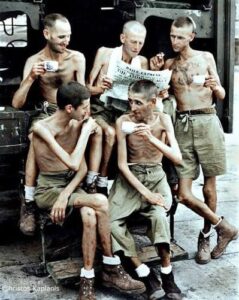 all the prisoners, including those who were sick, were made to fall in, in columns of four, and were marched round the streets of Fusan [Pusan] between the marshalled Korean inhabitants fo the city, with a Japanese officer at the head of the column on horseback and Japanese guards on either side. The march went on all day under a hot sun with only two halts in the playgrounds of two schools where the children were allowed to come close up to the prisoners to jeer and spit at them. The prisoners were then transported to Seoul where the performance was repeated. Itagaki was reputed to be “a born organizer.” However, he was also reputed to be not especially bright.
Seishirō Itagaki’s body was cremated after the excecution and the ashes mostly scattered either in Tokyo Bay or the Pacific Ocean. And there is commemoration monument at Sugamo Prison in Tokyo.


Leave a Reply