

Fitzthum, Josef Joschi , born 14-09-1896 in Engelhartstetten,  Gänserndorf Bezirk, Lower Austria, the son of the administrator Josef Fitzthum and his wife Elisabeth, born Bäumle. Both were originally from Mogolzen, Bischofteinitz (Western Bohemia). Austria.
From August 1916, he participated in the First World War as a lieutenant in the 3rd regiment of the Tyrolean Kaiserjäger. On 01-08-1917, Fitzthum was promoted to first lieutenant. He then went on to work in the civil service. From 01-04-1920 to 30-04-1920, Fitzthum worked at the Vienna timber company, after which he worked as a secretary at the Staatlichen Wiener Kunstgewerbeschule. He held this position from 01-05-1923 to 05-08-1933. On 03-08-1930, Fitzthum became a member of the National Socialist German Workers’ Party. 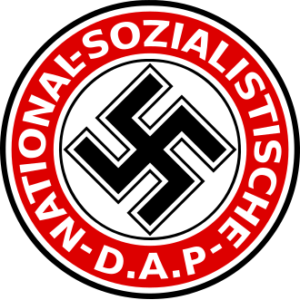
Josef Fitzthum enlisted in the Austro-Hungarian Army  in 1916 and was deployed to the Italian front. In January 1919 he was dismissed from the army, and from 1923 to 1933 he worked as a secretary at the Vienna School of Applied Arts.
  Fitzthum joined the Nazi Party in 1931 (membership number 363,169) and in 1932, the SS
  (membership number 41,936). In April 1932 he joined the XI SS Standard, under command of SS Obergruppenführer Theodor “Papa” Eicke

 in Vienna, which he led from September 1932 for six months. Fitzhum served time in prison for embezzlement and illegal Nazi activities. After his expatriation from Austria, starting in March 1936, Fitzthum was appointed a full-time SS-Standartenführer.
  In May 1936 he was posted to the SS Germania.
From October 1937 to March 1938, he was involved in Sicherheitsdienst (SD) under command of Reichsführer Heinrich Luidpol Himmler 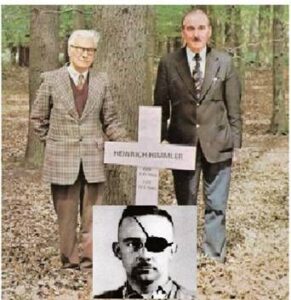

 activities. Following the Austria Anschluss
 he was appointed deputy chief of police in Vienna from 12-03-1938 to March 1940. In March 1938, Fitzthum was involved in several high-profile meetings and public ceremonies with Heinrich Himmler, SS Oberstgruppenführer Kurt Max Frans Daluege,
  SS Obergruppenführer Wolff, Karl Friedrich Otto “Karele” “Wolffie”,
  SS Obergruppenführer Heydrich, Reinhard Tristan Eugen, “The Blonde Beast”
  and Chief of the Reichssicherheitshauptamt (RSHA, Reich Main Security Office Ernst Kaltenbrunner

 reviewing Austrian police forces in Vienna. However, in 1940 he was removed from this post following accusations of corruption. At the April 1938 parliamentary election, he was elected as a deputy to the Reichstag from Ostmark and retained this seat until his death. In 1940, Fitzthum was transferred to the Waffen-SS
  and appointed as an infantry commander in the SS-Totenkopfverbände.
  Between mid-April 1942 and May 1943, he was in the Netherlands as a commander for the establishment of the Aufstellung von Freiwilligen-Verbänden der Waffen-SS (voluntary associations of the Waffen-SS).
From October 1943 to 01-01-1945 Fitzthum was appointed Special Representative of the Reichsführer-SS  by Heinrich Himmler to act as his personal plenipotentiary in Albania. As a former Vienna police chief Fitzthum’s main stated task was to rebuild the Albanian police force. However, he soon conceived the idea of raising an Albanian Legion as the Austrians had done here during World War I but within the Waffen-SS. Consequently, from April to June 1944 Fitzthum organized the recruitment and training of the 21st Waffen Mountain Division
  of the SS Skanderbeg (1st Albanian).
Inside Albanian wartime politics, he was a vocal opponent of collaborating with the Zogist / Royalist faction. An experienced political infighter, Fitzthum rapidly monopolized both the Reich powers in Albania (usurping even those of the German Foreign Ministry) and the local Albanian political systems of administration. In August 1944 he was promoted to SS-Gruppenführer  und Generalleutnant der Waffen-SS and granted very broad powers. In September 1944, he directly appointed a three-man “control committee” for Tirana including Prengë Previzi
  (an obscure collaborating politician), the formal head of the Albanian secret police under the Nazis, and General Gustav von Myrdacz
  (an Austrian military officer who had retired to Tirana after World War I). The Communist partisans of Enver Hoxha
  captured and tried von Myrdacz in the Special Court of Spring 1945 as a “pro-Fascist” and “enemy of the people”. He was executed on 11-07-1945, age 70.
Death and burial ground of Fitzthum, Josef Joschi.


“Regular army officers decried Fitzthum’s rash of arrests as well as the transporting of some 400 Albanian prisoners out of Albania, directly contravening existing agreements.” By 02-10-1944, when the Germans decided to formally evacuate Albania, Fitzthum was perhaps the most powerful man in the entire country. During the withdrawal, Fitzthum helped Xhafer Deva  set up, arm and equip a local administration and defence force in Kosovo. Upon returning to Nazi Germany he was posted to the 18th SS Volunteer Panzergrenadier Division Horst Wessel


 as a commander from 3 to 10-01-1945, when Fitzthum, age 48, was killed in a car accident in Wiener Neudorf. Fitzthum was buried in Vienna at the Friedhof/Cemetery Grinzing, Grinzing, Wien Stadt, An den langen Lüssen 33, 1190 , Vienna, Austria.




Leave a Reply