

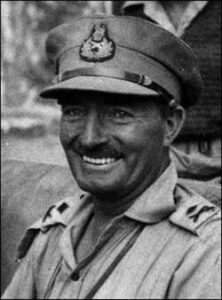
Erskine, Sir George Watkin Eben James “Bobby”, born 23-08-1899, in Hascombe, 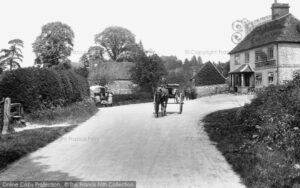 Surrey, England, the son of Major General George Elphinstone Erskine
 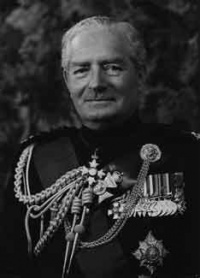 by his second wife Eva Constance Sarah, daughter of Canon Ebenezer Wood Edwards. Brother of Catherine Constance Selina (Erskine) Dunn [half]. He was a descendant of the noted 18th-century jurist John Erskine of Carnock.
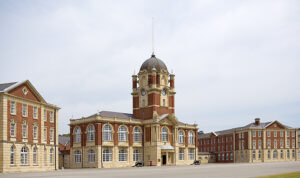
 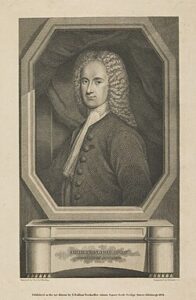 Erskine was educated at Charterhouse School and later entered the Royal Military College, Sandhurst,
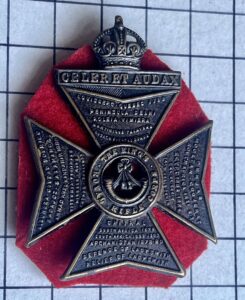
  and was commissioned as a second lieutenant into the King’s Royal Rifle Corps (KRRC)
  in 1918. He served during the First World War in France and Belgium and attended the Staff College, Camberley, from 1929 to 1930. During the 1930s he served in India but returned to Britain in 1937 to become Deputy Assistant Quartermaster General at Eastern Command.
In 1939 Erskine became a General Staff Officer for 1st London Division of the Territorial Army (TA).  The Territorial Army (TA) is a part-time military reserve force. In countries like India, it lets working professionals serve as soldiers or officers without quitting their day jobs. Volunteers train for about two months each year. They are called to active duty only during national emergencies or military operations. Under command of General Sir Walter Kirke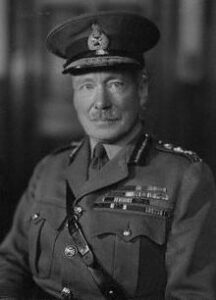
In 1941 George was appointed commanding officer of the 2nd Battalion, KRRC, which was then part of the 69th Infantry Brigade, and was sent to North Africa, where he was awarded the Distinguished Service Order  in November 1942. He served as Brigadier General Staff (BGS) of XIII Corps, commanded by Lieutenant General William Henry Ewart “Strafer” Gott,
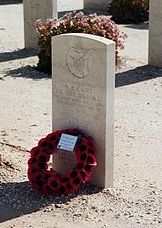 a fellow officer of the KRRC, then Sir Brian Gwynne Horrocks
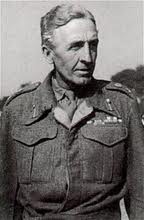
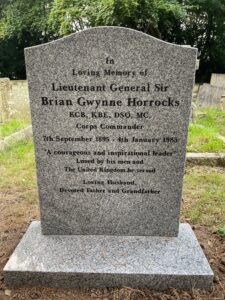 and Miles Christopher “Lucky” “Bimbo” Dempsey
 in 1942.
He was then promoted to acting Major General on 24-01-1943 and was appointed General Officer Commanding (GOC) 7th Armoured Division. 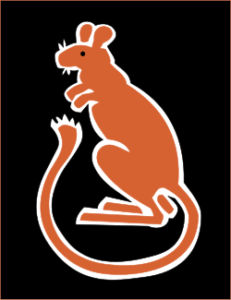 He served with the division in North Africa, Italy and Normandy between 1943 and 1944.
During the Battle of Normandy “D Day” in June and July 1944, the British Second Army commander, Lieutenant General Miles Dempsey, was unimpressed with the performance of the 7th Armoured Division and the VIII Corps commander, Lieutenant General Richard Nugent O’Connor, 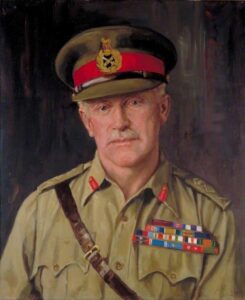
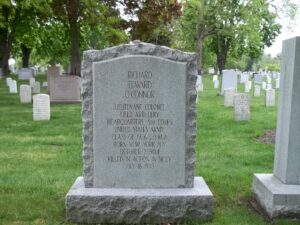 considered Erskine’s direction of the division during Operation Goodwood excessively cautious. Shortly afterwards, in the difficult bocage country during Operation Bluecoat, the 7th Armoured Division failed to gain its objectives and Erskine was sacked and replaced by Major General Gerald Harry George Lloyd-Verney.
 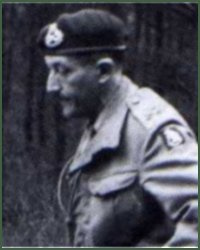 In spite of his indifferent performance as a field commander, Erskine had qualities which suited him to other roles and this episode proved only a temporary setback to his career. He became Head of the Supreme Headquarters Allied Expeditionary Force Mission to Belgium in 1944 and then GOC 43rd (Wessex) Infantry Division
  in 1945.
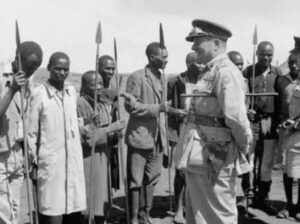
After the war, Erskine was Commander of British Forces in Hong Kong in 1946, Director General of the Territorial Army 1948 to 1949 and GOC British Troops in Egypt in 1949. Returning to the United Kingdom, he became GOC-in-Chief, Eastern Command in 1952. In 1953 he was appointed GOC-in-Chief, East Africa Command where he had command of all security forces, including the colonial police. He was responsible for overseeing the response to the Mau Mau rebellion in Kenya, 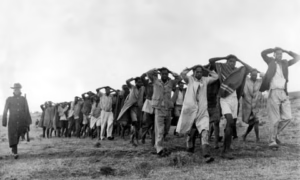 and led Operation Anvil in Nairobi in April 1954.
Upon taking command, Erskine issued an order that read: “I will not tolerate breaches of discipline leading to unfair treatment of anybody,” and ordered that “every officer… should stamp on at once any conduct which he would be ashamed to see used against his own people.” This did not stop Erskine from concealing incidents such as the Chuka massacre, though he also took steps to prosecute Major G.S.L. Griffiths, the officer responsible for the latter incident.[10] Erskine was GOC-in-Chief, Southern Command from 1955 to 1958, when he retired. The Chuka massacre, which happened in Chuka, Kenya, was perpetrated by members of B Company, 5th Battalion, 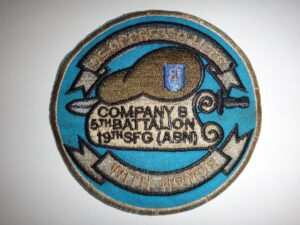 King’s African Rifles (KAR) in June 1953 with 20 unarmed people killed during the Mau Mau uprising.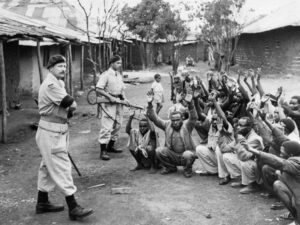
In a letter to the British government, not made public until 2005, Erskine described his direct knowledge of atrocities committed by the security forces during the suppression of the uprising, including instances of torture and murder: “There is no doubt that in the early days… there was a great deal of indiscriminate shooting by army and police. I am quite certain prisoners were beaten to extract information. It is a short step from beating to torture and I’m now sure… that torture was a feature of many police posts.” According to historian Fabian Klose, Erskine made extensive use of forced resettlement and mass internment to “break the back of the insurgency.”
Erskine was appointed Knight Commander of the Order of the British Empire (KBE) in 1950, a Knight Commander of the Order of the Bath (KCB) in 1952 and a Knight Grand Cross of the Order of the Bath (GCB) 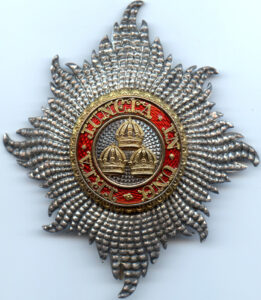 in 1955.
Erskine was an Aide-de-Camp General to the Queen from 1955 to 1965. From 1958 to 1963 he was Lieutenant Governor and Commander-in-Chief of Jersey. Erskine married Ruby de la Rue, daughter of Sir Evelyn de la Rue, 2nd Baronet, in 1930. They had two sons and one daughter
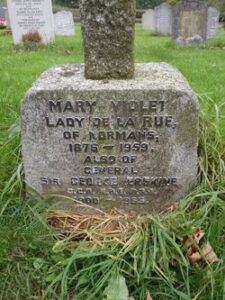
Death and burial ground of Erskine, Sir George Watkin Eben James “Bobby”.
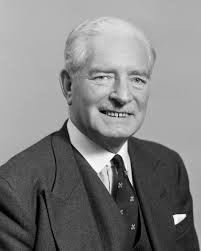
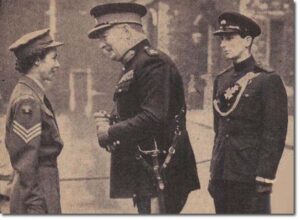
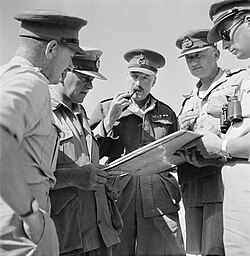
Sir George Watkin Eben James “Bobby” Erskine passed away age 66 on 29-08-1965, in Rusper, West Sussex, United Kingdom and is buried at Saint Mary Magdalene Churchyard, Rusper, Horsham District, West Sussex, United Kingdom.


Leave a Reply