

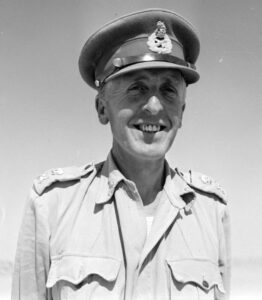
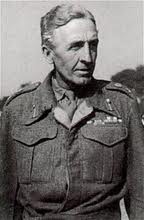
Horrocks, Sir Brian Gwynne, born 07-09-1895, in Ranikhet, Almora District,  Uttaranchal, Britsh Indien, the only son of Colonel Sir William Heaton Horrocks, a Lancashire born doctor in the Royal Army Medical Corps (RAMC),
  and his wife, Minna, born Moore, Horrocks who he married 27-09-1894 in Christ Church, Mussoorie, Dehradun, Uttarakhand, India.
On his return to Britain, Brian was educated at Bow School, Durham, later Uppingham School, Rutland, 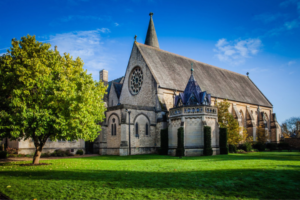 he later wrote that as his life was devoted almost entirely to sport he had very little aptitude for hard work.It has been a long and interesting life, full of variety, a life of service to his country. He entered the Royal Military College, Sandhurst in October 1912,
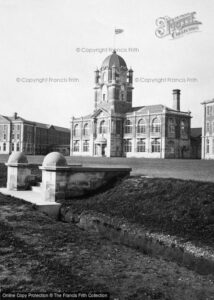
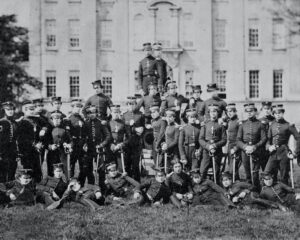 Horrocks’s timeat Sandhurst was, by his own admission, not very distinguished. An unpromisingstudent he might not have received a commission at all but for the outbreak of the First World War. He was commissioned though as a second lieutenant into the Middlesex Regiment on 08-08-1914 where he joined the 1st Battalion. Horrocks was not to last long in battle, as on 21 October, at the Battle of Armentieres, his platoon was surrounded, and Horrocks, received a bullet wound
 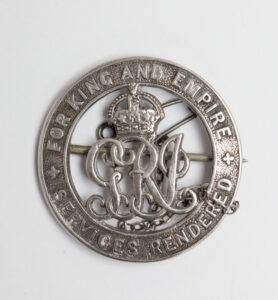 through the lower abdomen and upper thigh, and was taken prisoner.
He was eventually placed in a compound for Russian officers, in the hope that the language barrier would hinder his escape attempts; Horrocks used the time to learn the Russian language. Years later, working in the House of Commons, he startled Nikita Sergeyevich Khrushchev 
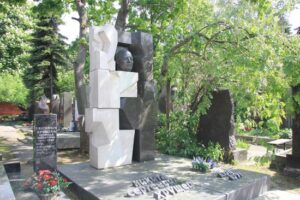 and the prominent Soviet politician, Nikolai Aleksandrovits Bulganin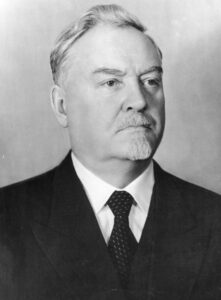
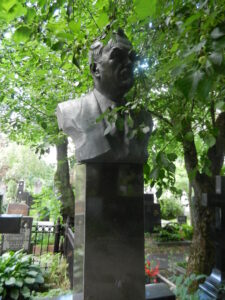 by greeting them in their native tongue. His resistance in captivity would earn him the Military Cross. Repatriated at the end of the war, Horrocks managed to spend four years of accumulated back-pay in six weeks. Soon after release he had volunteered for dangerous duty in Russia as part ofthe Allied intervention in the Russian Civil War.
  During the years of peace he tookup the modern pentathlon competing successfully and was picked for the British Olympic team for the 1924 Paris Olympics, where he finished 19th out of 38. In 1928, Horrocks married Nancy Kitchin,
 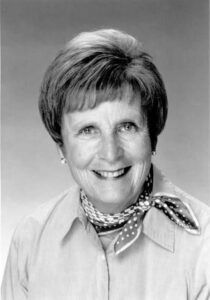 daughter of an architect for the Local Government Board. They had one child, a daughter named Gillian, who sadly died in 1979. At the outbreak of the World War II, Lieutenant Colonel Horrocks was at the Staff College where he had been an inspiring teacher who had communicated enthusiasm and a passion for efficiency to many students who would benefit from those lessons and pass them on.
Horrocks shortly afterwards took command of the 2nd Battalion of the Middlesex Regiment 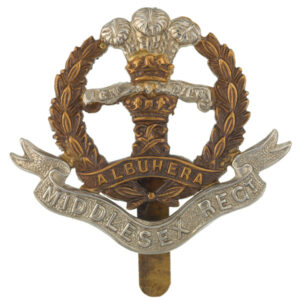 in France under General Bernard Law “Monty” Montgomery
 commanding 3rd Division.
 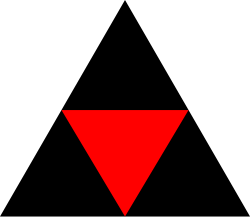 He clearly made a good impression as 17 days later he was promoted to temporary Brigadier and given command of 11 Brigade
 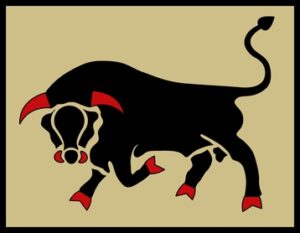 and later 9 Brigade.
  Further promotions followed until he found himself commanding 13th Corps in North Africa
  again under Montgomery.
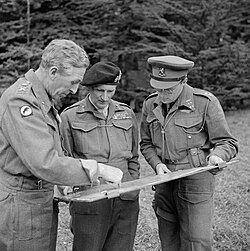
 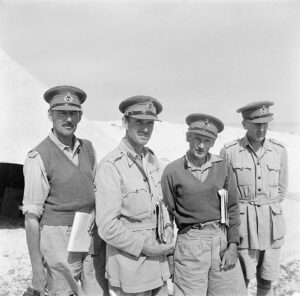 Lieutenant-General Bernard Montgomery in North Africa, late 1942 with his three corps commanders, from left to right: Lieutenant-General Sir Oliver Leese, GOC XXX Corps, Lieutenant-General Herbert Lumsden,
  GOC X Corps, Lieutenant-General Montgomery, Lieutenant-General Brian Horrocks, GOC XIII Corps. The USS New Mexico,
 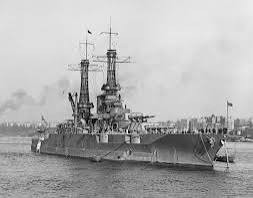 while supporting the pre-invasion shelling of Lingayen Gulf, was hit by a Japanese kamikaze on the bridge killing not only her commanding officer, Captain Robert Walton Fleming
 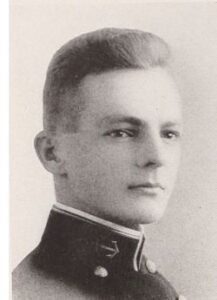 , age 50, but also 29 others including Lieutenant General Herbert Lumsden.
After the decisive victory at El Alamein, 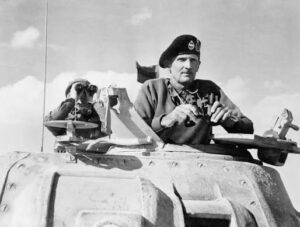 he continued through North Africa and eventually accepted the surrender of the remnants of the Africa Korps,
  under command of General Erwin Johannes Eugen Rommel
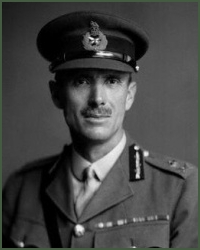
 in Tunisia. He had shown himself to be a dashing, fearless and successful Commander of troops in battle. In June 1943 he was injured in an air raid receiving wounds to his chest and abdomen which put him in convalescence for about a year. In 1944 Lieutenant General Brian Gwynne Horrocks had assumed command of 30 Corps
  in France, after taking Antwerp and securing the deep water port he moved East where Field Marshal Montgomery initiated Operation Market Garden,
 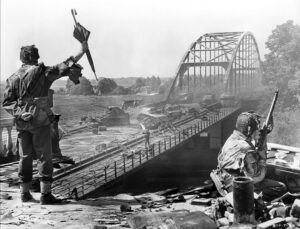 the effort to take bridges along the advance culminating at the Bridge in Arnhem and fortunly the United States 101 Airborne Division
  to liberated my hometown of Eindhoven.
 Though ultimately the operation failed to meet its main objective, Lieutenant General Horrocks wasn’t blamed. Indeed the American Brigadier General James Maurice “Slim Jim” Gavin
 whose US 82nd Airborne Division
  came under Horrocks’ command, later wrote ‘He was truly a unique general officer and his qualities of leadership were greater than any I have ever seen. In lecturing at the American service school I stated frequently that General Brian Gwynne Horrocks was the finest general officer I met during the war, and the finest corps commander.’
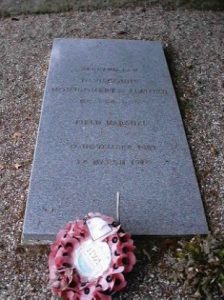
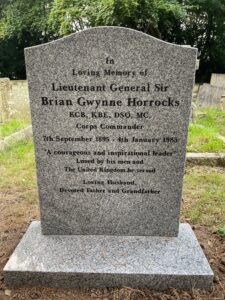
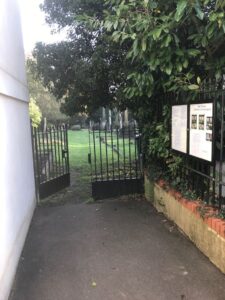
Death and burial ground of Horrocks, Sir Brian Gwynne.
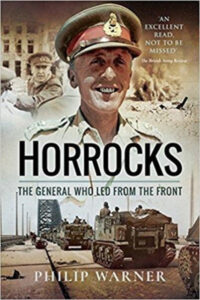
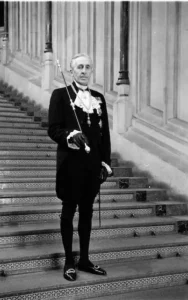
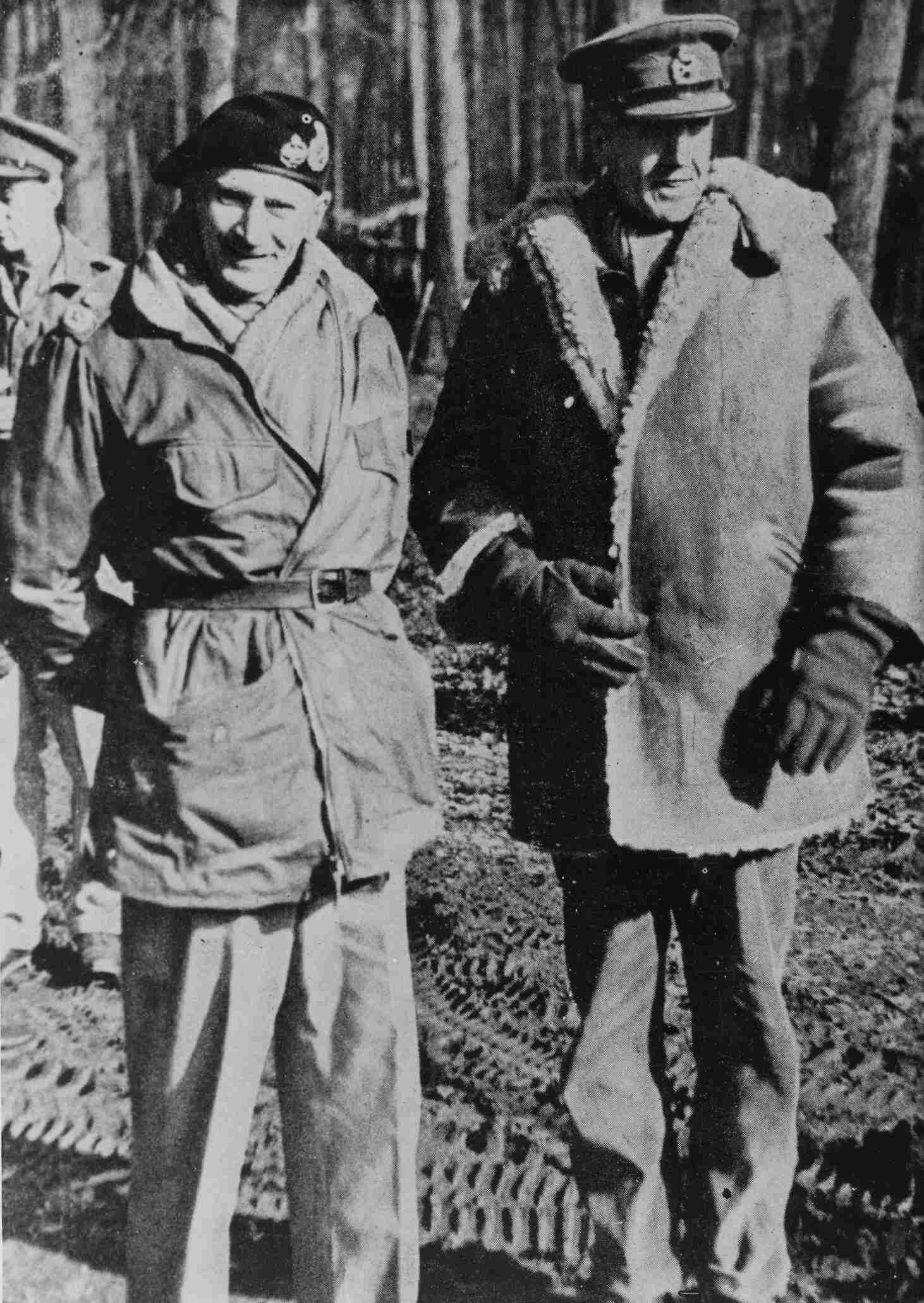
After the War he continued in the army where had done much to rehabilitate the defeated enemy and then, after forced retirement in 1949 due to the injuries he received in North Africa, he accepted the important post of Black Rod whose duties he performed with efficiency and distinction. Because the Black Rod had to remain in place during long debates, Horrocks relieved his boredom on occasions by completing football pools coupons. This had the advantage of looking like note- taking to the assembled lords. Horrocks held the post of Black Rod until 1963.He had achieved national fame as a television presenter and in the process given much pleasure and interest to millions. Even while doing this he had been an active director of a large construction company and made a valuable contribution. Finally, he made a success of writing, in newspaper, articles. in books.
Horrocks, Sir Brian Gwynne, passed away 04-01-1985, age 89, in Fishbourne, Chichester District, West Sussex, Engeland and is buried at the St. Paul’s Churchyard in Mill Hill, London Borough of Barnet, Greater London, the Ridgeway, London NW7 1QU, Engeland.




Leave a Reply