

Driel, van, Arie “Aaike”, born 22-06-1905, in Werkendam, 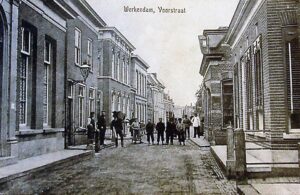 Werkendam, Noord-Brabant, Netherlands, the son of Wouter van Driel and Jakoba Grandia. Aaike marries Elisabeth Sauer on 11-05-1938, in Rotterdam.
When the Biesbosch comes to lie between the lines of the advancing Allies and the Germans from 06-11-1944, Arie dedicates himself as a ‘line-crosser’. Together with twenty others, he transports refugees and intelligence from the occupied north of the Netherlands to the liberated south and, in the opposite direction, medicines and weapons, using two different routes.
De Biesbosch (‘forest of sedges’ or ‘rushwoods’), 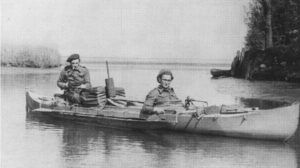 is one of the last freshwater tide areas in Europe. The Biesbosch consists of a rather large network of rivers and smaller and larger creeks with islands. During the war much went on in the Biesbosch.The Dutch felt safe in this maze, the Germans didn’t. Resistance spygroup “Albert” was formed and sended messages from the Biesbosch to London until september 1944. From 06-11-1944 on the Biesbosch was between the Germand and Allied lines and 21 resistance fighters became ” linecrossers”. Via two routes, people, goods, information and medication where transported from free to occupied Netherlands and vice versa.In total 370 crossings were made.
On 18-03-1945, Van Driel, as one of these line-crossers, made his 54th crossing, this time to transport three agents from the Bureau of Intelligence. At the confluence of the Nieuwe Merwede and the Amer, his rowboat was intercepted by the Germans; the occupants were captured and taken to the prison in Rotterdam.
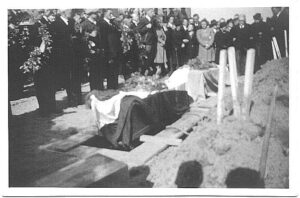
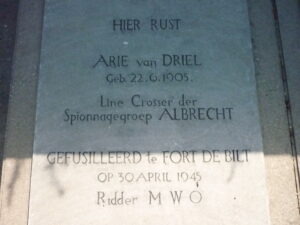
Death and burial ground of Driel, van, Arie “Aaike”.
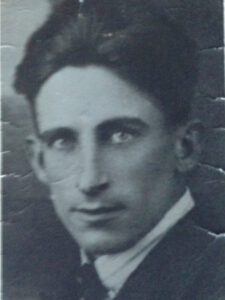
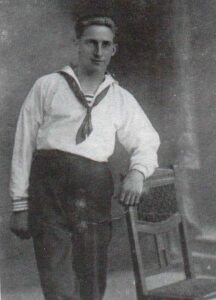
Later, Van Driel, age 39, was transported to the prison at Wolvenplein in Utrecht. There, he was interrogated and mistreated together with fellow line-crosser Sande, van de, Kornelis Pieter “Kees”, 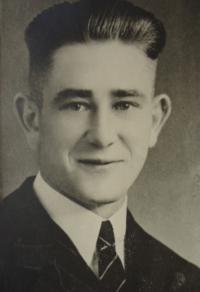
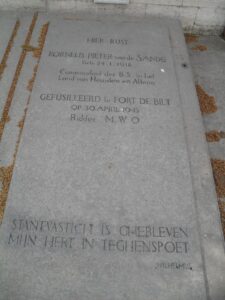 who had been arrested in his home in Sleeuwijk on 30-03-1945. They were executed on 30-04-1945 along with five other resistance fighters at Fort De Bilt.
On 30-08-1948 he was posthumous awarded with the Militaire Willems orde, the highest Dutch decoration (like the Victoria cross or Medal of Honor). Their graves can be found at the Protestant Cemetery of Werkendam.
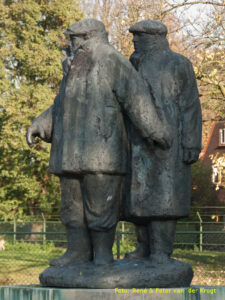
Near Hank (on the A27), a memorial stone depicting these two resistance heroes was unveiled by Prince Lippe Biesterfeld, Bernard Leopold Friedrich Eberhard Julius von 
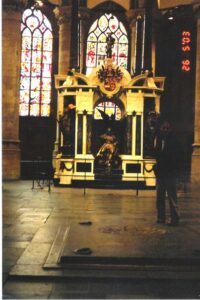 on 09-10-1960. Their names are also on the memorials in Fort De Bilt.
  Van Driel worked together with Piet van den Hoek (1921 -2015)
 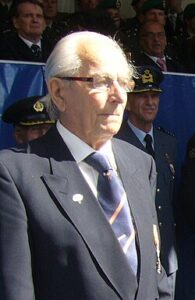 from Werkendam. Henk Boender,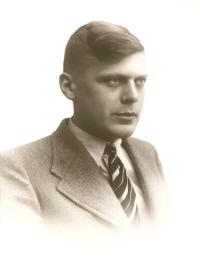
 the municipal secretary of Giessen, is also in custody. He forged identity cards and arranged hiding addresses. Then there is Kees van der Sande from Sleeuwijk, commander of a resistance group and Koos Hoogerheiden,
 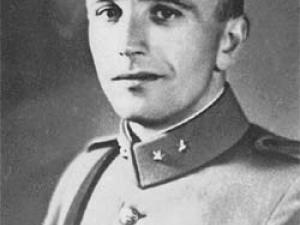 a former soldier from Limburg who was in hiding in Meeuwen and Giessen.
The resistance fighters who are betrayed or discovered by the Germans face a long ordeal. Stays in one of the prisons, such as the Oranjehotel in Scheveningen 
 or the SD-Polizeigefängnis in Haaren,
 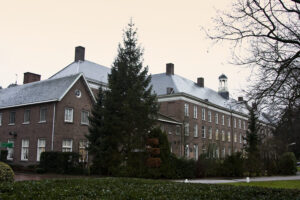 are in most cases followed by transport to the camps. Many resistance fighters, along with conscientious objectors, other political opponents, and – separated from these groups – Jews, end up in Vught or Amersfoort before being deported to the German concentration camps. Thousands of prisoners, including nearly six hundred Brabanders, die there from exhaustion, illness, hunger, mistreatment, or execution.




Leave a Reply