


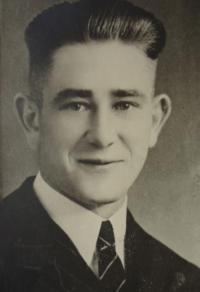
Sande, van de, Kornelis Pieter “Kees”, born 24-01-1918, in Tholen  Netherlands, the son of Johannes van de Sande and Jacoba, born Scherpenisse. Kees grew up in a family with three sisters. As a conscript, he was called up in October 1938 and assigned to the Motorized Hussars Regiment with the rank of sergeant. In May 1940, he was stationed in The Hague with the cavalry depot troops, where he contributed to the defense of Fortress Holland.
 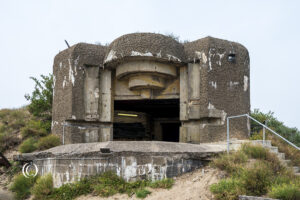 On 01-07-1940, he went on extended leave.
During the German occupation, Kees became active in the resistance. When he was appointed inspector with the Crisis Control Service (CCD) in December 1941, he had the opportunity to expand his resistance work. The Central Crisis Control Service (CCCD), later renamed the Crisis Control Service (CCD), was a Dutch government agency established in 1934 that continued to exist, under various names, until 1954. Its primary function was to oversee the trade in scarce goods. During the German occupation of the Netherlands in World War II, the agency’s tasks included combating the widespread black market.
“Kees” joined the National Support Fund (NSF), the Albrecht group, and Natura, which worked to provide food for people in hiding. In these activities, he used the aliases Cornelis Burgers and Cornelis Snel, among others.
In 1942, he married Jo van der Vlies in Oud-Vossemeer. Their son was born the following November.
As a result of increasing German repression, the resistance in the Netherlands grew steadily from 1943 onward. Kees, now living in Sleeuwijk, joined the Knokploeg (KP) 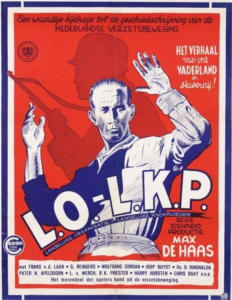 and the National Organization for Aid to People in Hiding (LO) in the Land van Heusden en Altena. He was well known in the Biesbosch, which from 06-11-1944, lay between the German and Allied lines: the Biesbosch thus became a border across which smuggling took place. People, goods, information, and medicines were transported via various routes by rowboat or canoe from occupied to liberated Netherlands, and vice versa. A total of 21 people, acting as line-crossers, made an estimated 400 crossings through the Biesbosch. Van de Sande himself made the journey as a line-crosser 22 times.
He became district commander on September 05-09-1944 (“Dolle Dinsdag”). “Crazy Tuesday” 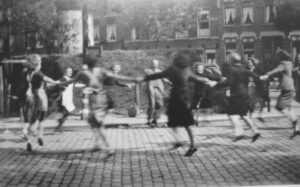 is a term from World War II, coined by writer Willem van den Hout,
 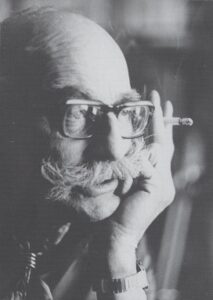 to refer to Tuesday, September 5, 1944. On that day, emotional scenes unfolded throughout the Netherlands in response to reports that the country could be liberated from German occupation at any moment. This was because the Allies had rapidly gained ground in the preceding days. During September and October 1944, the southern part of the Netherlands was liberated.
After the liberation of southern Holland, he became a crosser for the Albrecht Group, nickname for resistance man Hendrik Geert de Jonge (Albrecht) 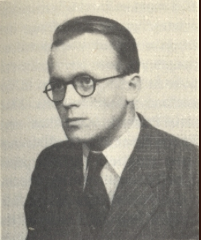 and the Intelligence Bureau and made 22 crossings through the Biesbosch. During these crossings through the front line passengers and intelligence were transferred and on the way back they mainly took back weapons, medicine and food. Henk Geert de Jonge was a member of the resistance in England and later, back in the Netherlands, founded the Albrecht spy ring,
 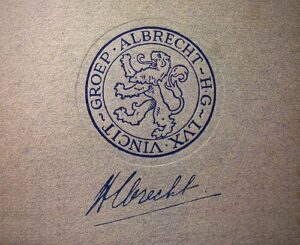 Hendrik survived the war and passed away, 12-12-2010, age 93, in Capelle aan den IJssel.
On the night of 03-03-1945 during a nightly manhunt throughout the Land of Heusden and Altena, Kees was arrested at home in Sleeuwijk. He was locked up in the prison at the Wolvenplein in Utrecht. 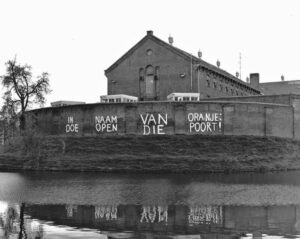 There he was reunited with fellow crosser Arie “Aaike van Driel.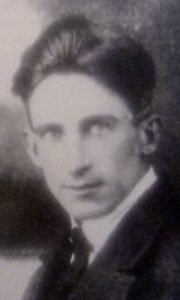
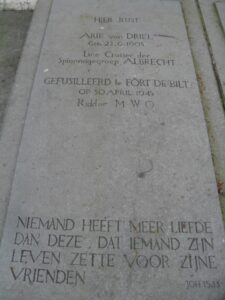 and where they were interrogated and assaulted. On 30-04-1945, they were executed by firing squad at Fort de Bilt. Aaike was 39 years old and was posthumously awarded the Military Order of William, 4th class,
 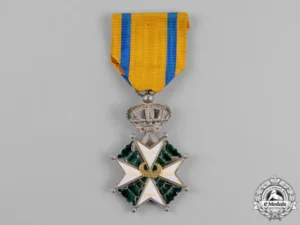 for his work in the resistance. A street in Werkendam is named after him.
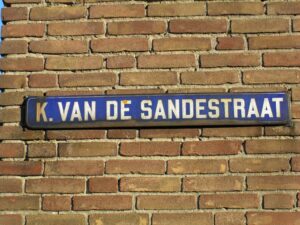
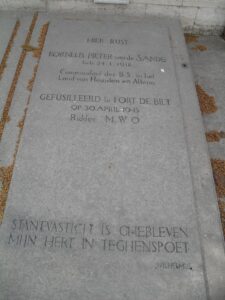
Attempts were made to free him but despite the Germans’ promise to spare them, Kees van de Sande was executed at Fort de Bilt 5 days before the end of the war along with three others, including his fellow crosser Arie “Aaike” van Driel. He was 27 years old at the time. They were executed along with five other resistance fighters, by a drunken German. On 11-05-1945, Kees and Aaike made their final journey. Accompanied by Reverend Van Wieringen 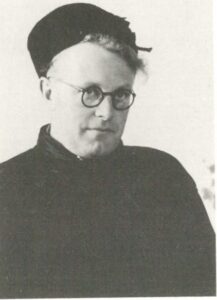 from Werkendam, their bodies were brought from Utrecht to Werkendam amid great interest. There they were buried side by side a day later. By Royal Decree No. 8 dated 30-08-1948, “Kees” was posthumously appointed Knight Military Order of William fourth class too. In his birthplace of Nieuw-Vossenaar, in Sleeuwijk and in Werkendam streets are named after him. Kornelis Pieter “Kees” van de Sande,
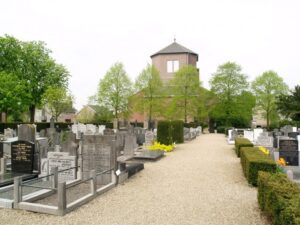
  and his mates are buried at the Algemene Begraafplaats in Werkendam/Werkendam Protestrant Public Cemetery.
Message(s), tips or interesting graves for the webmaster: robhopmans@outlook.com


Leave a Reply