

Drape, Wilhelm Heinrich Friedrich Adolf “Henk”, born on 02-01-1908, in Argestorf, a village in the heart of Germany. 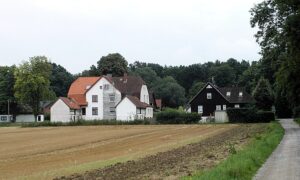 A year later, his parents moved with him and his two sisters to South Limburg, Netherlands where two more sons were later born. The children grew up as ordinary Dutch people as few of 52.000 Rijkduitsers, Reichs Germans, people with a German passport who lived and worked here and almost no one noticed they were from Germany. Heinrich, who was always called Henk by his Dutch friends, was athletic. His gymnastics achievements regularly made headlines. At school, he first earned his MULO B diploma and two years later his teaching certificate.
Like everyone else, Henk Drape heard the news from Germany, where the Nazis  were in power. The propaganda appealed to him. On 01-05-1936, he applied for membership in Adolf Hitler‘s party, the National Socialist German Workers’ Party.
 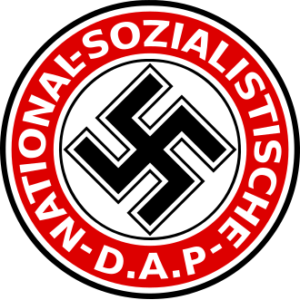 He was admitted and received membership number 336.831. Because he was a teacher, he also became a member of the National Socialist Teaching Union.
 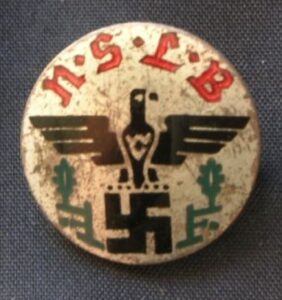 In 1938, he started working at the German school in Venlo.
Henk also joined the Hitler Youth,  first as a member, later as a leader. In Venlo, he rose to the rank of Head of the Nazi youth organization, becoming Ortsgruppenhauptstellenleiter (local group leader).
 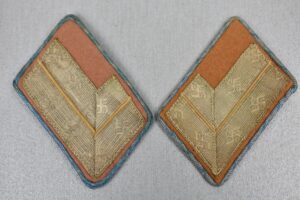 In 1941, Drape became a teacher at a new German school in Helmond. Here, too, he was put in charge of the Hitler Youth. The newspaper “Zuid-Willemsvaart” of 11-06-1942, features an article about sporting events involving the Hitler Youth and the Bund Deutscher Mädel (German Girls’ Union).
  The Bund Deutscher Mädel (BDM, BdM) and the parallel Jungmädelbund were the Hitler Youth and Deutschen Jungvolks (German Youth) organizations intended for girls between the ages of ten and eighteen. From 1937 to 1945, Jutta Rüdiger
 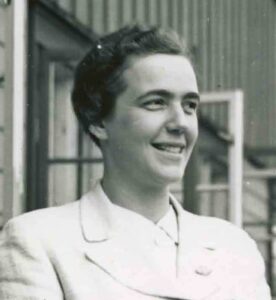 headed this organization. Drape is giving a speech, and the newspaper mentions in passing that he has been called up for military service and must therefore leave. Jutta Rüdiger, age 90, died 13-03-2001 in Bad Reichenhall (Bavaria) from Parkinson’s disease.
A week later, Drape reports as a recruit in Zeven, northern Germany, where he trains as a naval artilleryman. After three months of training, real life as a soldier begins. Heinrich, who has long since abandoned his Dutch first name, Henk, is assigned to the 2nd Batterie Marineartillerieabteilung 262 in Brest, France. A key German naval port is located there, and it must be defended against Allied attacks. Drape is assigned to a group of soldiers operating 7.5 cm guns. Later, he is placed in the unit’s command post.
Meanwhile, many things were happening in the Drape family. Most importantly, their youngest son, Otto, was killed in action in October 1942. He wasn’t a Nazi, but because of his German passport, he was forced into military service. He enlisted in 1942 and trained as a flight operator on a
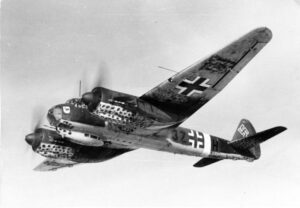
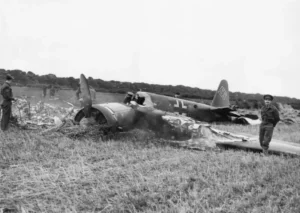 Things went wrong on his very first operational training flight, when the aircraft crashed near Finsterwalde on 23-10-1942.
His brother’s death likely had a profound impact on Heinrich. He had never been ill before, but now he was constantly ill. From November 1942 (a month after the accident) until January 1944, Heinrich spent almost all his time in military hospitals in France and Germany. In January 1944, he was finally able to return to his unit in Locmaria-Plouzané in the southwestern tip of Brittany. But not for long, because in June 1944 the Allies landed in Normandy  and a few months later the war was over for him.
Heinrich Drape was captured by the Americans on 18-09-1944, the same day of the beginning of Operstion Market Garden. Operation Market Garden was an Allied offensive against Nazi Germany on 18-09-1944, toward the end of World War II. My hometown Eindhoven was liberated then,  by the 101 Airborne Division “Screaming Eagles”
  under command of Major General Maxwell Davenport Taylor
  The operation, characterized by a large deployment of airborne troops to capture strategic bridges on Dutch territory, was ultimately a failure because the crucial bridge at Arnhem
  could not be held. He was given the number 31G626144 and initially spent time in three camps in France. On April 08-04-1945, he was shipped to America, where Drape spent three months in POW camps in Mississippi and Indiana. After those three months, the Americans handed him over to the British. In Great Britain, he was shuffled from one camp to another—nine different ones in two years. He was demilitarized on March 8, 1948, and released nine months later in Münster. The war was now truly over.The German settled in Hannover and the surrounding area, married, and returned to teaching.
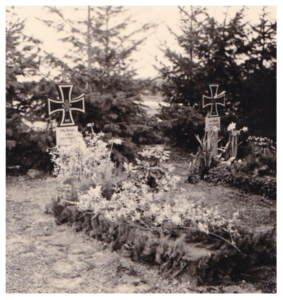
Death and burial ground of Drape, Wilhelm Heinrich Friedrich Adolf “Henk”.

Wilhelm Heinrich Friedrich Adolf “Henk” Drape died on 23-01-1985, age 77, without ever having returned to the Netherlands.


Leave a Reply