

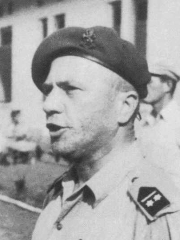
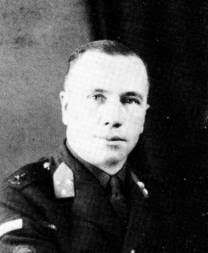
Borghouts, Johannes Josephus Franciscus, (resistance name Peter Zuid), born 05-12-1910 in Bergen op Zoom, North Brabant, 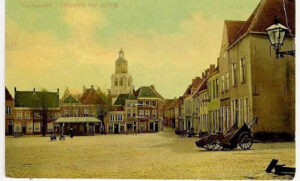 Netherlands, to Henricus Martinus Borghouts and Wilhelmina Catharina, born Wanrooij. Johannes was married with Wilhelmina Johanna Hendrika van Veen. From this marriage, one son and three daughters were born. His son was Harry Borghouts,
  the Queen’s Commissioner in North Holland for Groen Links.
In 1930, Borghouts took his final exams at the Roman Catholic Higher Commercial School in Bergen op Zoom,  after which he fulfilled his military service. Already at the end of the following year, he got a position as a temporary clerk at the employment office in his hometown. A bureaucratic career seemed to be in store for Borghouts: first, from October 1934, he was the deputy head of the municipal social services office in Hillegersberg, and then, since the end of April 1941, the head of General Employment Mediation at the National Employment Office in Bergen op Zoom. Various circumstances that had little to do with this bureaucratic work, however, forced him to give up this position: on 05-06-1943, he would go into hiding.
After the German invasion, he had been deployed as a reserve first lieutenant with the 26th Infantry Regiment at the Maas-Waal Canal – Borghouts had become involved in the resistance movement. Under the pseudonym ‘Peter Zuid,’ he soon played an important role in it, alongside figures such as Cornelis “Kees” Bastiaan Ninaber van Eijben 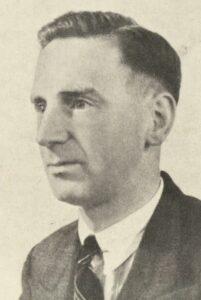 and his fellow townsman Johannes Arnlodus van Bijnen (‘Frank’).
 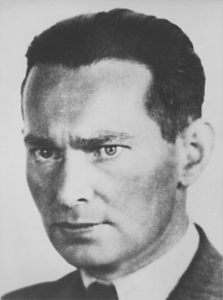 Van Eijben “Kees” was subsequently transferred to concentration camp Bergen-Belsen, where he died of dysentery on 06-03-1945, age 46. Anne Frank

 died in in Bergen Belsen.
Van Bijnen (‘Frank’) fell during the preparation of an attack on the then Willem III Barracks in Apeldoorn. This was named after him after the war: Frank van Bijnen kazerne. Van Bijnen was severely injured. The Germans took him to a hospital, where he succumbed to his injuries a few days later on 01-12-1945, age 34.
Initially, Borghouts had limited himself to administrative sabotage; gradually, within the framework of the activities of the National Organization for Assistance to Hiding Persons, he had increasingly focused on searching for hiding addresses in eastern North Brabant and Limburg. Gradually, his interest, as well as that of ‘Frank’, increasingly shifted towards the work of the action squads. Both thus became involved in the sabotage work. In May 1944, Borghouts drafted extensive concept plans for subversive activities, which were then further developed by ‘Frank’.
In the summer of 1944, Borghouts became the regional sabotage commander in the so-called third region—comprising the provinces of Zeeland, North Brabant, and Limburg—of the National Sabotage Teams, which were led by ‘Frank’. In September of that year, after the liberation of my hometown Eindhoven, 
 Borghouts was appointed commander of the Assault Troops of the Interior Forces south of the major rivers. He held this position until December 1944, after which he was assigned to the staff of Prince Bernhard,
  the Commander of the Dutch Armed Forces.
Since the liberation of the rest of the Netherlands was taking its time, Borghouts was given a new task in January 1945. He then departed for Great Britain for parachute training, after which he was dropped two months later at Benthuizen in the still-occupied South Holland. Soon, he met the commander of the Interior Forces, 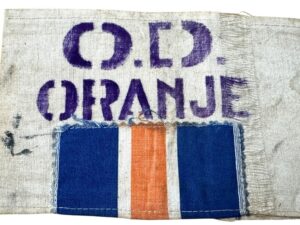 reserve Colonel Henri Koot,
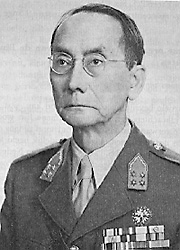
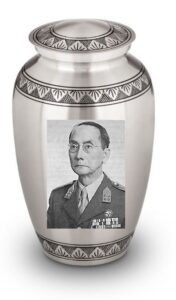 and in accordance with the order of Prince Bernhard, he acted as the commander of the Combat Section of this troop unit and as the general deputy of Koot. In carrying out sabotage activities, Borghouts would, in principle, be directly under the command of Prince Bernhard, bypassing Koot.
Precisely this task was intensified in the final months of the war until 27-04-1945, when Reichskommissar Arthur Seyss-Inquart,


 in negotiations with the resistance, was willing to make some concessions regarding food supply. In the final days of the occupation, Borghouts managed to secure the release of captured members of the Interior Forces as soon as possible from the Sicherheitsdienst
  in The Hague on May 3, and on the night of May 4 to 5, he obtained from Lieutenant General Paul Reichelt,
 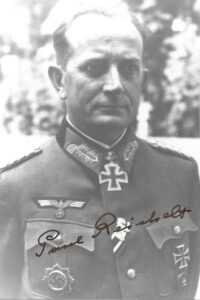 the chief of staff of Commander-in-Chief Johannes Albrecht Blaskowitz,

 that the German troops would remain calm during the surrender. Reichelt survived the war and died age 83, on 15-07-1981 in München, Germany.
After the liberation, Borghouts remained in Dutch East Indies for an extended period. By now having risen to the rank of reserve lieutenant colonel, he served there for a time as the deputy chief communications officer of the Royal Netherlands Army 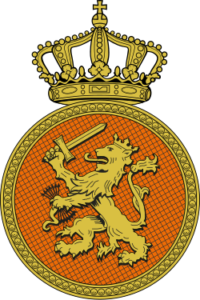 and subsequently as the head of the Army Liaison Service.
 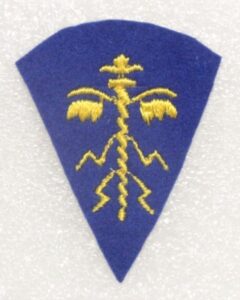 From March 1949 to June 1950, he commanded the Special Forces Corps, an elite unit engaged in counter-guerrilla operations. Under Borghouts’ leadership, the ‘Grens’ operation was carried out in West Java, among other places, in April and May 1949, resulting in 93 deaths on the enemy’s side and 4 on his own corps.
After returning from India, Borghouts initially continued to work for the Royal Netherlands Army. In January 1951, he transferred to the military aviation branch and held various positions in the personnel and training sector; since November 1961, he had been the head of the personnel care section of the Air Force staff. 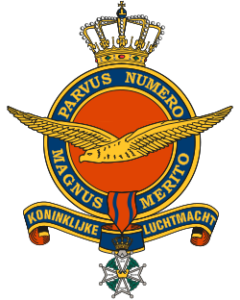 In 1962, Borghouts received the rank of colonel, and in the same year, he became a career officer. In April 1964, he finally became the head of the personnel department of the Royal Air Force. In these positions, he strongly advocated for a scientific approach to the selection and training of flying personnel.
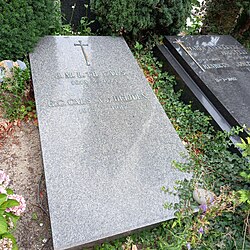
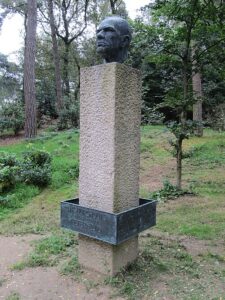
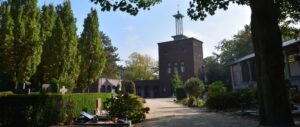
Death and burial ground of Borghouts, Johannes Josephus Franciscus, “Jan” (resistance name Peter Zuid).
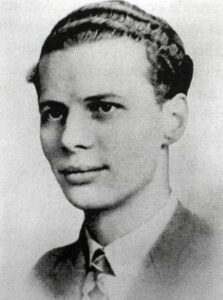
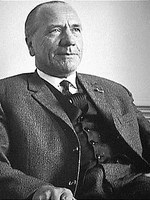 On 12-07-1965, Borghouts, as State Secretary for Defence, joined the Cals cabinet,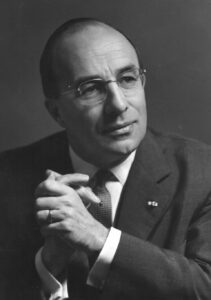
 primie minister Jozef Maria Laurens Theo “Jo” Cals, where he was responsible for matters concerning the Royal Netherlands Air Force. In connection with this appointment, he registered as a member of the Catholic People’s Party (KVP).
  Shortly after accepting his new position, however, Borghouts was struck by a serious illness from which he never recovered. Despite his poor health, he still spoke during the discussion of the defence budget in the House of Representatives
 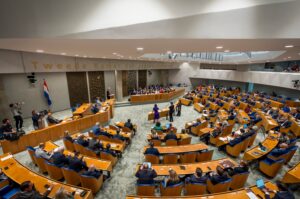 in early December 1965. Two months later, he passed away 05-02-1966, age 55, in Rotterdam, Netherlands.
Borghouts consistently displayed great tenacity and perseverance. He defended his principles with conviction, but did not fall into rigidity. As a military officer, he gave many lectures in order to promote the spiritual order of the 4th class. Minister De Jong characterised him at the memorial in the House of Representatives after his death as a man of integrity, completely incorruptible, capable, and imbued with deeply honest human feelings. 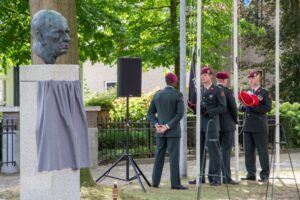
Johannes Josephus Franciscus, “Jan” Borghouts (resistance name Peter Zuid) is buried at the Roman Catholic cemetery Saint Laurentius on Nieuwe Crooswijkseweg in Rotterdam, Netherlands.


Leave a Reply