

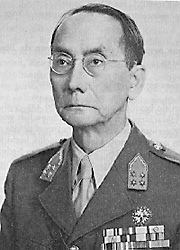
Koot. Henri, born 29-12-1883 in Singaradja  in Bali, Nederlands-Indië, to Alexander Wilhelm Koot, technical draftsman at the colonial administration in the Dutch East Indies, and Alexandrina, born Kien, who was of Chinese descent. Henri was the sixth of a total of eleven children of Alexander Koot, an architect at the Department of Water Management in the Dutch East Indies. It was Koot senior’s second marriage. When Koot was four years old, the family moved to Surabaya. Koot attended elementary school and the HBS (Higher Civic School) here. On 16-09-1901, when he was seventeen years old, he began at the KMA in Breda, as a “cadet for the Infantry Corps in the Dutch East Indies.” In 1902, he was promoted to corporal, and in 1903 to sergeant. Koot married on 11-16-1923 to Maria Cornelia Fritz (1880-1986), a milliner. This marriage remained childless.
On 22-07-1904, he took the officer’s exam; he passed as the third best of his year and was appointed the same day as a second lieutenant in the Infantry Corps in the Dutch East Indies. Because he could not return to the Indies immediately, he was also appointed as second lieutenant à la suite of the Colonial Recruitment Depot in Harderwijk, 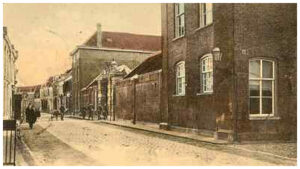 a purely administrative appointment. While awaiting his departure to India, Koot settled in The Hague for some time. By decree of 21-02-1905, he was assigned to Surabaya. He departed on March 11 and arrived in Surabaya on April 15. Until 1907, he was part of military expeditions to Ceram and Ambon. In 1908, Koot departed for Timor.
By Royal Decree of 23-07-1908, he was promoted to first lieutenant, and by decree of August 29, he was, with retroactive effect from March 1908, appointed as the civil authority over Amfoeang-Timahoe, Amfoeang-Naiklioe, Tahaip, Tefnei, and Benoe, all regions in Central Timor. As of 12-05-1909, he was honorably relieved of his duties. Koot was transferred to Bandung. 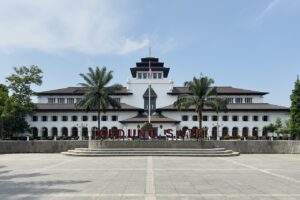 After three months, he was transferred to Tjimahi.
On 20-11-1911, Koot departed for the Netherlands again on the SS Willem I, where he began a course at the Higher War School (HKS) in The Hague on November 1. Henri would never return to the Indies again. When World War I broke out in 1914, he stayed in The Hague with G.J. Sieburgh. The other eight KNIL soldiers returned to the Indies. Koot was appointed to section IV of the general staff (GSIV). He specialized in decoding intercepted radio messages. In 1918, he was promoted to captain. In the same year, he was awarded the Silver Medal for Diligence and Ingenuity 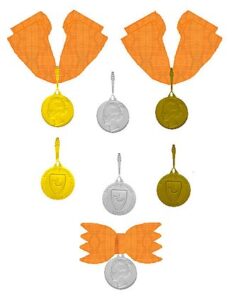 by Queen Wilhelmina
 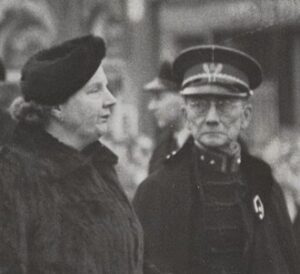 for his services to the Dutch intelligence services. When in 1919 the cipher department of the general staff became an independent department (GSIIIc), Koot became the head of this department. In 1920, he transferred from the KNIL
 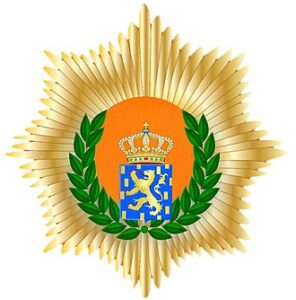 to the Royal Netherlands Army. Koot was now appointed head of the Cryptographic Bureau. This newly formed bureau fell under the Ministry of Foreign Affairs, but it was an interdepartmental bureau that had to provide the diplomatic service, the army, and the navy with coding resources. Koot’s new position bore the elegant title of Director of the Cipher. In 1927, he studied the Enigma coding machine for two months; at the end of that year, or early 1928, he reported his findings. According to Koot, a message encrypted using the Enigma could not be decoded without knowledge of the key.
In addition to his work for the Cryptographic Bureau, Koot also gave lectures on cryptology and espionage at the Higher War School. In 1929, he was also appointed lecturer in the practice of Malay at the University of Utrecht. He delivered his speech on October 28. In 1930, Koot was promoted to reserve major. Meanwhile, on 16-11-1923, he had married Maria Fritz, a three-year-older milliner, in Apeldoorn. The couple settled in The Hague. At the end of 1932, Koot received a letter in which he was dismissed as head of the Cryptographic Bureau effective 01-01-1933. According to his wife, this came as a complete surprise to Koot. As a reason for the dismissal, it was stated that his position was being eliminated due to budget cuts. Koot would receive a severance payment and would continue as head of GSIIIc from the date of his dismissal.
Due to the resignation letter, he fell into a deep personal crisis. Thru the mediation of anti-revolutionary statesman Hendrikus “Hendrik” Colijn, 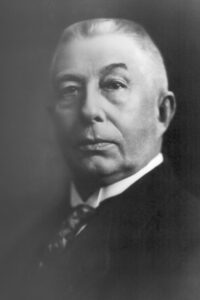
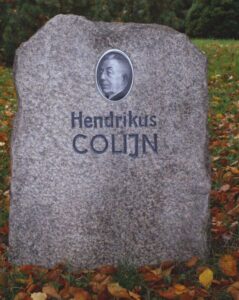 whom he still knew from India, Koot took a cruise to the Caribbean to recover. He visited, among other places, Jamaica and Puerto Rico. In 1934, he was promoted to reserve lieutenant colonel, and in 1937 to reserve colonel. In 1939, Koot trained many personnel for a new listening and surveying service, and for the communications service. He also designed a new code system, but there was no time left to implement it before Germany’s attack on the Netherlands. He had resigned from his professorship at the start of the mobilization.
During the mobilization and the war days in May 1940, Koot worked closely with Jan Marginus Somer, 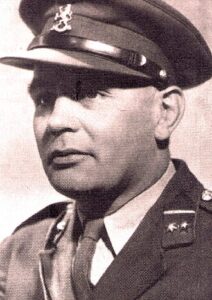 a captain in the KNIL and, until the outbreak of the war, a lecturer at the KMA, who worked at GSIIIa. After the capitulation of the Netherlands, Koot became chief of staff of the Reconstruction Service in July 1940. In September, he was arrested and held in pre-trial detention in the penal prison in Scheveningen (Oranjehotel).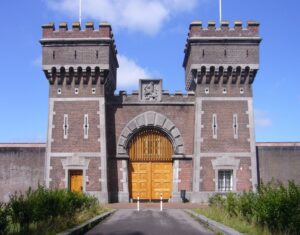
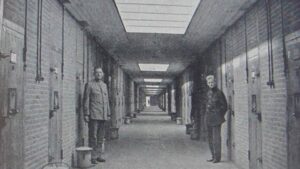 The Germans wanted him to decipher coded messages from the secret agent Lodewijk Anne Rinse Jetse (Lodo) van Hamel,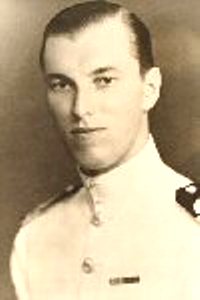
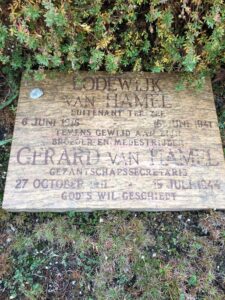 who was arrested on October 14, and on 16-06-1941, age 26, at the Bussumerheide (near the camp Crailo) was shot. Koot claimed he was unable to decode the messages. He was released again in December 1940. From January 1941 to December of that year, he worked at the secretariat of the Dutch Union. He did not engage in resistance activities because he felt he was being watched too closely. From August 1942, he led a relief effort that distributed food packages to Dutch prisoners of war in Germany. Initially, this was a private initiative; from May 1943, he held the same position for the Red Cross.
  At the end of April 1944, he was arrested again. This time he was imprisoned for three weeks due to an anti-German demonstration.
In the course of 1944, the resistance was consolidated into the Interior Forces (BS). The Ordedienst (OD), the Raad van Verzet (RVV), 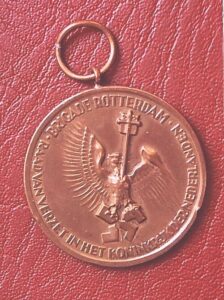 and the Landelijke Knokploegen (LKP) were to be unified under one command, initially called the Driehoek and later the Delta-commission. After retired General Izaäk Herman Reijnders

 and Lieutenant Colonel V.E. Wilmar
  had declined the honor, Koot took command of the BS. He insisted that he be allowed to establish his headquarters in Amsterdam because he believed that people in The Hague were too loose-lipped. As chief of staff, he recruited M. de Boer, a captain from the OD who worked at the Nederlandse Spoorwegen.
Koot considered himself a referee between the various opposing factions within the Dutch resistance. In practice, the Ordedienst had a lot of influence on him. He implemented a centralized command structure with the knowledge of the Dutch Prince Lippe Biesterfeld, Bernard Leopold Friedrich Eberhard Julius von,

 granting significant power to the former military personnel of the OD. Thunderous quarrels with the LKP and the RVV were the result.
End of the warIn April 1945, Koot was involved in the surrender negotiations with the Germans in the Netherlands. Because the German Lieutenant General Paul Reichelt 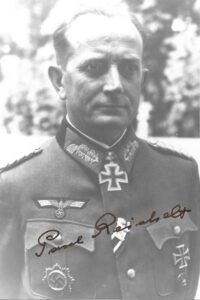 only wanted to speak with someone of equal rank, Koot was temporarily promoted to reserve Major General. It was mainly thanks to Koot that the German capitulation in the Netherlands did not end in a bloodbath. At the beginning of June, Koot relinquished his command, and on August 29, he was awarded the Military William Order.
 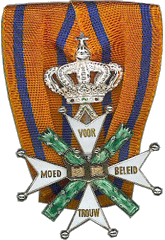 An offer to become head of the new Bureau of National Security was declined by him. In July 1945, he had become the chairman of a purging committee for officers of the Royal Army who had not been prisoners of war. He remained in this position until July 1947.
On October 1 of that year, Koot left military service. By the end of 1946, he had become Chancellor of the Dutch Orders and thus Chairman of the Chapter of the Military William Order, an honorary position he took very seriously. The very meticulous and methodical Koot meant a lot for the Dutch orders of knighthood and the Museum of the Chancellery that was established during his term. On the day before his 75th birthday, he resigned from this position.
It is written about Koot that he was exceptionally gifted, but that his great erudition and language knowledge, he spoke several languages of the Indonesian archipelago fluently, remained unknown to many because he was “the most silent of the silent.” It was a great disappointment for Koot that after the war he was not involved in the policymaking for the Dutch East Indies.
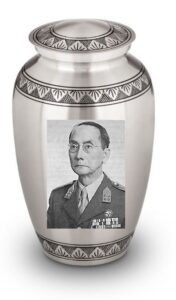
Death and burial ground of Koot, Henri.
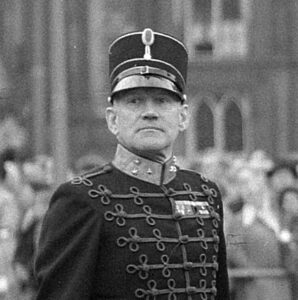
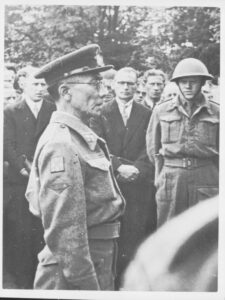
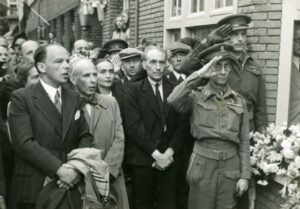
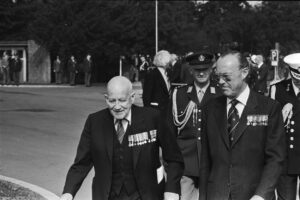
Henri Koot passed away on 18-01-1959 at the age of 75 in The Hague after a heart attack. On 21-01-1959, he was cremated at the Velsen Crematorium in Driehuis, 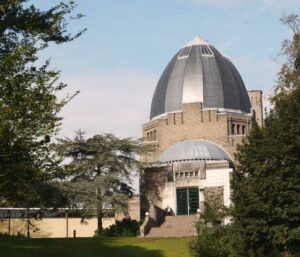 at his own request in silence.
When Queen Juliana and Prince Bernhard were struggling with the health of their daughter Marijke, Koot allegedly recommended the services of Greet Hofmans 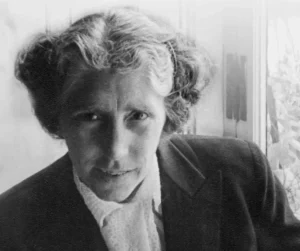 to Bernhard.


Leave a Reply