

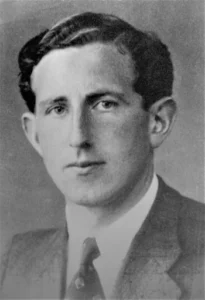
Thijssen, Jan, born 29-12-1908 in Bussum, 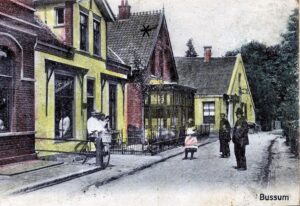 Gooise Meren Municipality, Noord-Holland, Netherlands. Jan who was a homosexual, had a partner Willem Johan Cornelis “Smit” Arondeus
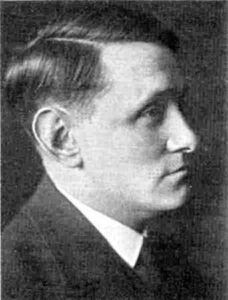
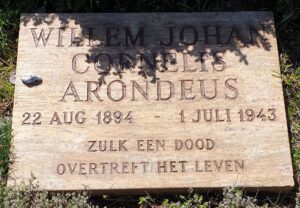 who was a resistance man too. 1940-44: The Germans invaded the Netherlands in May 1940. Soon after the occupation, Willem Arondeus joined the resistance. His unit’s main task was to falsify identity papers for Dutch Jews. On 27-03-1943, Willem’s unit attacked the Amsterdam registry building and set it on fire in an attempt to destroy records against which false identity papers could be checked. Thousands of files were destroyed. Five days later the unit was betrayed and arrested. That July, Willem Arondeus, age 48, and 11 others were executed.
Before his execution, Willem asked a friend to testify after the war that “homosexuals are not cowards.” Only in the 1980s did the Dutch government posthumously award Arondeus a medal.
Jan Thijssen was an electrical engineer with the PTT and was responsible for tracking down clandestine transmitters. He was himself an enthusiastic amateur radio operator.
Jan became the Commander of the O.D. radio service and, following a conflict with Jhr. Pieter Jacob Six
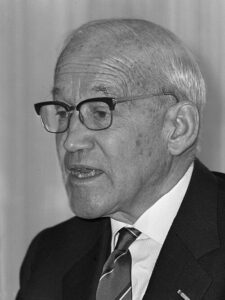
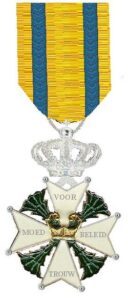 —the man who had rebuilt the O.D.—reestablished the service for the second time in late 1943. Contact was maintained with the Allies and the liberated south. Nearly 500 telegraphic messages were sent regarding sabotage projects and weapons drops. The low point was the arrest of two radio operators, Klaas Leendert. Timmer
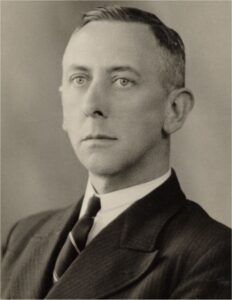
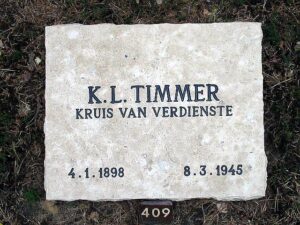 and Charles G. Kranz. They were executed by firing squad in January 1945. Jan’s successors, following his arrest, were Floris “Floor” van der Laaken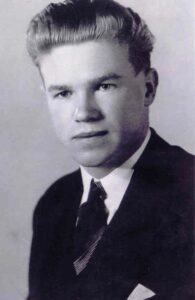
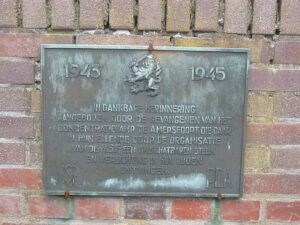 and Mr. Thom “Tom” Schadd.
From April 1944, the R.V.V./Council of Resistance, maintained a transmission link with the Intelligence Bureau (B.I.) based in London, which was also established thru Thijssen’s friend and collaborator Andreas Wilhelmus Maria “Andries or Dré” Ausems, 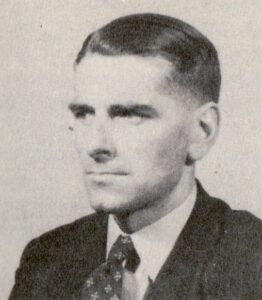 who had received training as a secret agent in England. In July 1944, there was a meeting of the national leaders of the R.V.V. at Deurne Castle. At this meeting, Thijssen proposed to establish an Operations Center that he would lead himself. The existing R.V.V. groups also had to be quickly transformed into small sabotage groups, which were primarily to act against the German Army.
The Allied advance in Western Europe is progressing faster than planned, partly due to local resistance. At the end of August, the L.K.P. and the R.V.V. were also supplied with weapon drops for the first time, and the Allied High Command gave the green light for large-scale sabotage actions on the Dutch railroad network. However, there was also division between Jan Thijssen’s R.V.V. and Frank Arnoldes van Bijnen’s 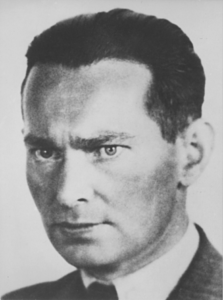
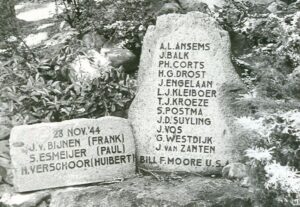 L.K.P., who had been appointed National Sabotage Commander within the L.K.P. on 25-08-1944. Problems were inevitable, and on September 12, the newly appointed commander of the Domestic Forces (B.S.), Prince Bernhard von Lippe Biesterfeld
 instructed the L.K.P., the R.V.V., and the O.D. to hold consultations (the so-called Delta consultations) to put an end to the counterproductive rivalry between the different organizations. Colonel Henri Koot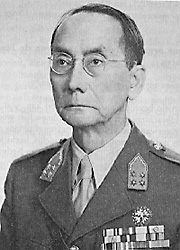
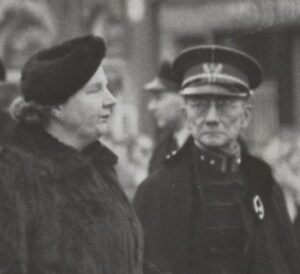 accepted the request to take command of the B.S/Domestic Armed Forces. In doing so, he did insist on being allowed to establish his headquarters in Amsterdam. However, Jan Thijssen and Frank van Bijnen were then involved day and nite in the underground operations around the Battle of Arnhem
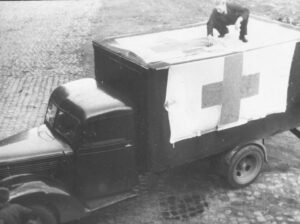
  that was ongoing at that time. They were therefore not present at the Delta meeting in Amsterdam. The O.D. thereby drew more and more power to itself. Something Thijssen did not tolerate. He wanted, among other things, the dropped weapon himself. He also came into conflict with Frank van Bijnen, and a crisis threatened to arise within the B.S. The weeks-long ongoing feud came to a head when on November 1, ‘Delta Commander’ Koot Jan Thijssen was removed from his position. A few days later, on 08-11-1944, Thijssen was arrested by the Germans on the highway from Rotterdam to The Hague while riding in a Red Cross car.
  Thijssen was transferred to the prison in Zwolle.
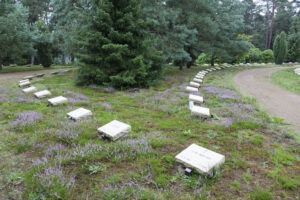
Death and burial ground of Thijssen, Jan.
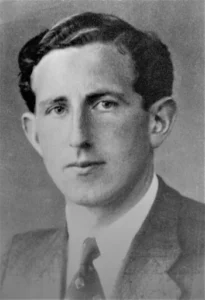
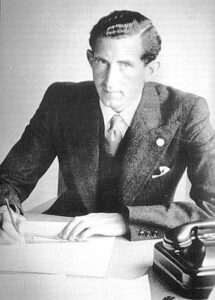
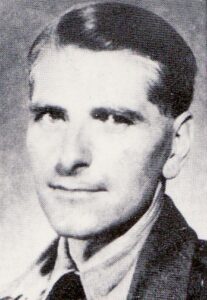
On 08-03-1945, Jan Thijssen, age 36, was executed by a German firing squad. He was one of the 116 prisoners (mostly resistance fighters) who were brought from various prisons and were executed at the Woeste Hoeve 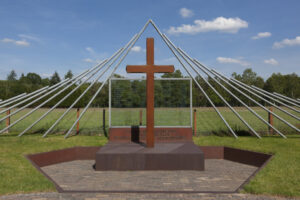 as a reprisal for the attack on SS-Obergruppenführer
 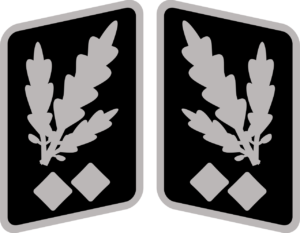 and General of the Waffen-SS and the Police, Johan Baptist Albin “Hanns” Rauter.
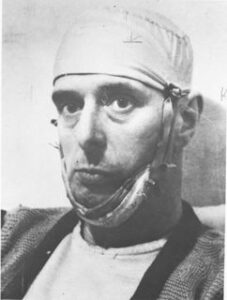
 The prisoners were executed in five groups of twenty and one of sixteen at Woeste Hoeve, at the site of the attack. The German Oberwachtmeister der Ordnungspolizei Helmut Seijffards, who refused to be part of the firing squad, was also executed on the spot. Of all the people who were led to the execution site, Jan Thijssen was the only one who tried to escape, a remarkable display of defiance and resistance to the bitter end. In his Zwolle cell, he wrote a number of slogans on the wall: “No storm wind will strike us down,” “The heart knows its own sorrow only,” and “Regret, grief, and fear thru thick and thin.” Death always in sight after a terrible trial. Fought fearlessly until the dawn of freedom breaks!”.
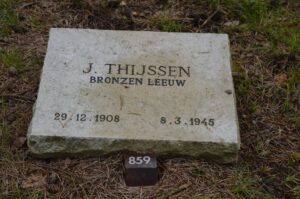
Resistance man Jan Thijssen was buried at the Dutch Nationaal Ereveld/Field of Honor, in Loenen, Loenen, Apeldoorn, Gelderland, Netherlands. Section A 859.


Leave a Reply