


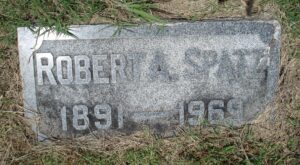
Spatz, Harold Althouse “Skinny”, born 14-07-1921 in Lebo, Coffey County,  Kansas, United States, to Robert Althouse Spatz, (1891–1969)
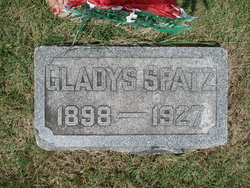
 and Gladys, born Antrim Spatz (1898–1927)
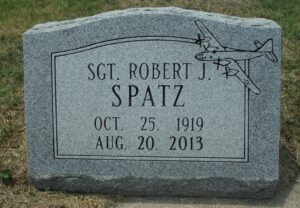
  Skinni had one brother and one sister, Sergeant Robert J. “Bob” Spatz (1919–2013)
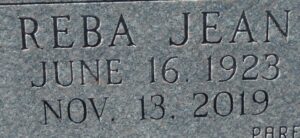
  and Reba Jean Spatz Barnett (1923–2019).
Harold joined the Army Air Corps  in 1941 as war loomed for the US. On 18-04-1942, after months of bad news on the war in the Pacific, the US public was stunned to learn that 16 American B-25 bombers,
 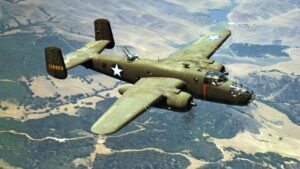 led by Lieutenant Colonel James Harold “Jimmy” Doolittle,
 had successfully bombed Tokyo and a number of other Japanese cities. The B-25s had taken off from the aircraft carrier, USS Hornet,
 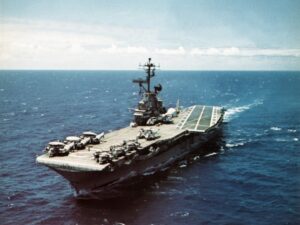 and flown over Japan to bomb strategic targets. During the Battle of the Santa Cruz Islands on 26-10-1942, the Hornet, under command of Captain Marc Andrew Mitscher,

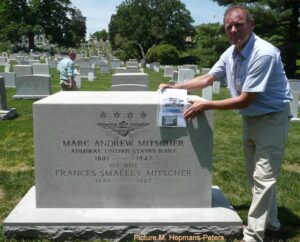
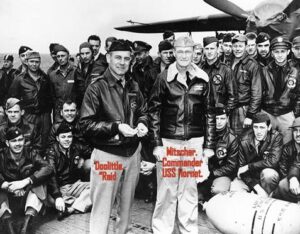 was so badly damaged that it had to be sunk. In January 2019, the wreck was found at the bottom of the Pacific Ocean with the help of an underwater drone.
Following the bombing made famous by the 1944 book and film, “Thirty Seconds over Tokyo” 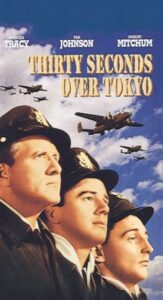 the raiders flew on to China rather than return to the USS Hornet. Short of fuel, most of the planes crashed far short of the friendly Chinese airfields they were to find, ending up inside Japanese lines, and 8 crewmen (2 men had died when their planes crashed) were captured by the Japanese. Initially the Japanese jailed the flyers, torturing them for information. Confined and poorly fed, the men contracted dysentery and beriberi. After interrogation, the men were sent to Tokyo, Japan for further interrogation, then returned to Shanghai, China where they were again imprisoned. On 14-10-1942, Japanese officers gave the crews a mock trial, and although never told of the charges against them, they were quickly found guilty and sentenced to death. 2nd Lieutenant Dean Edward Hallmark,
 2nd Lieutenant William Grover “Bill” Farrow,

 and Sergeant Skinny Spatz
  were selected for execution, while the Japanese gave “mercy” to the others by commuting their sentences to life in prison. The three men were executed in Shanghai’s Public Cemetery No. 1, in accordance with Japanese military tradition: they were forced to their knees, blindfolded with their arms tied behind them, then shot simultaneously by three soldiers in the center of their foreheads. Following their execution, the bodies were cremated and the ashes buried in the cemetery. Four crewmen survived the war (2nd Lieutenant Robert John “Bob” Meder
 died in captivity in December 1943) and returned to the US; in February 1946, four Japanese officers were tried for their mistreatment of the Doolittle aircrews and sentenced to five years imprisonment
 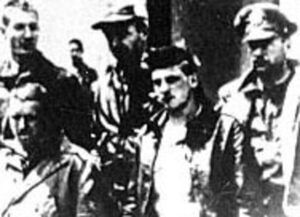 The crew of plane 16 after being captured by the Japanese. Left to right DeShazer, Spatz in front. Rear row, Farrow, Hite and Barr.
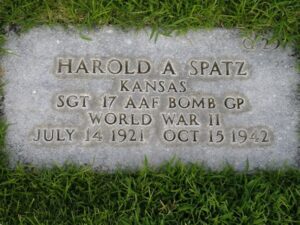
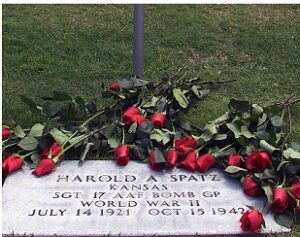
Death and burial ground of Spatz, Harold Althouse “Skinny”.

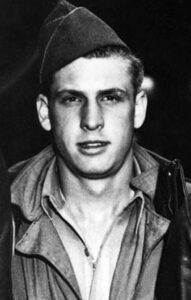

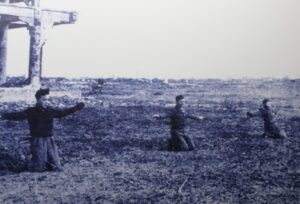 (from left) Doolittle Raiders Harold Spatz (engineer gunner Crew#16), Dean Hallmark (pilot Crew#6) and William Farrow (pilot Crew#16), just moments before their execution by the Japanese at a public cemetery in Shanghai, Japanese-occupied China – 1942
 In 1997, a memorial stone was gifted to Lebo, Kansas by Harold Spatz’s sister, Reba Jean Spatz Barnett, which was from her farm in Chase County, Kansas, and was prepared honoring six local service men. This memorial is standing in Lebo Memorial Garden at the center of town.
After the execution on 15-10-1942 (age 21) executed after a staged mock trial, by the Japanese, his body was cremated and his remains were taken to the International Funeral Home in Shanghai, China. After the war Spatz”s ashes were brought to Hawai during 1946 and interred at Schofield Barracks, Mausoleum #2, Oahu, National Memorial Cemetery of the Pacific.




Leave a Reply