

Rickenbacker, Edward Vernon was born Edward Rickenbacher on 08-10-1890 in Columbus, 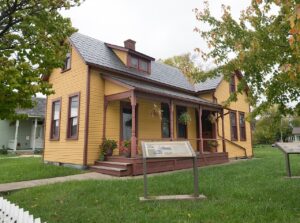 Ohio, United States. Edward was the third of eight children born to German-speaking Swiss immigrants, Elizabeth “Lizzie”, born Liesl Basler (1864-1946)
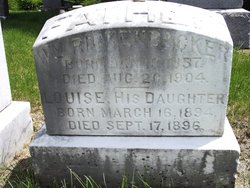
 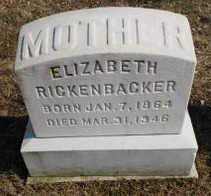 and Wilhelm Rickenbacker (1857-1904).
  Later in life, he changed the spelling of his last name to Rickenbacker and adopted a middle name, Vernon.
His father worked for breweries and street-paving crews and his mother Lizzie took in laundry to supplement the family income. In 1893, his father owned a construction company. With a loan from Lizzie’s parents, the couple purchased a lot and built a small home at 1334 East Livingston Avenue, 2 miles (3.2 km) southeast of downtown at the edge of the city limits in 1893. The house lacked running water, indoor plumbing, and electricity. This is where Edd, as he was called by his parents, spent his childhood.
Growing up, Rickenbacker worked before and after school. He helped in the garden where the family grew potatoes, cabbages, and turnips and cared for the family’s chickens, goats, and pigs. He earned money by delivering papers, setting up pins at a bowling alley, and selling scavenged goods. He gave most of his earnings to his mother but spent some on Bull Durham tobacco, 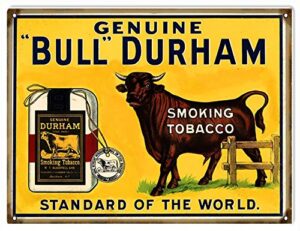 a habit he picked up from his older brother “Bill”
As a child, Rickenbacker was accident-prone. Before entering school, he toddled into an oncoming horse-drawn streetcar and fell 12 feet (3.7 m) into an open cistern. His brother rescued him from a passing coal car twice. Once, he ran back into his burning school building to retrieve his coat and nearly paid for it with his life. Sixty years later when producing his autobiography, he found significance in these close calls. He came to believe that God had repeatedly saved him for a higher purpose. He raced 4 times in the Indianapolis 500 with his best finish being 10th in 1914.
Edward was a famous race car driver before the United States’ entry into World War I. As the United States prepared to send troops to Europe, Rickenbacker was offered a position as General John Joseph Pershing’s
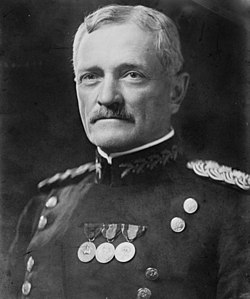
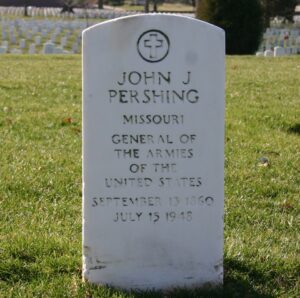 chauffeur. Vernon accepted and enlisted in the U.S. Army.
  Soon after arriving in France, Rickenbacker transferred to the Air Service
  and learned to fly. He then was made an engineering officer because of his great knowledge of gasoline engines. As the first U.S. pilots prepared to leave for the front, Rickenbacker asked to go with them. Major Carl Andrew Spaatz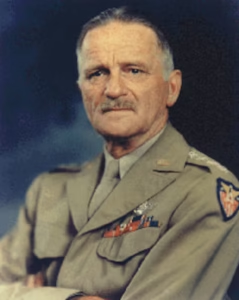
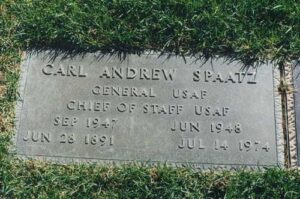 approved the request and Rickenbacker joined the 94th Aero Squadron,
  where he proved to be an exceptional fighter pilot. Rickenbacker rose to command the 94th Aero Squadron and became the leading U.S. ace of WWI with 26 confirmed victories. His most remarkable action came on 25-09-1918, as Rickenbacker patrolled alone near Billy, France. He spotted a group of seven enemy aircraft, and despite the strength of their numbers, boldly attacked and shot down two of them. President Herbert Hoover
 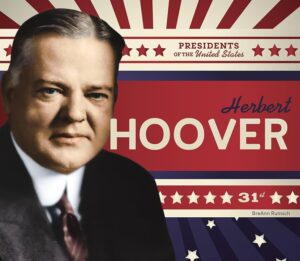 awarded Rickenbacker the Medal of Honor
  in 1930 for his aggressiveness in that action. Rickenbacker went on to become an aviation executive, and he advised the U.S. Army Air Forces in World War II.
He married Adelaide, born Frost Durrant in 1922. 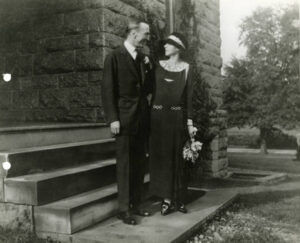
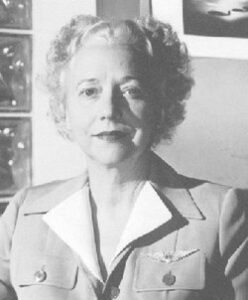
Death and burial ground of Rickenbacker, Edward Vernon.
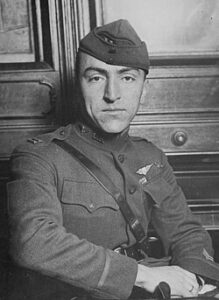
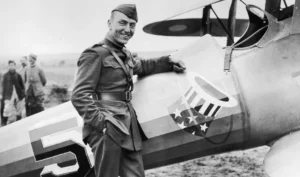
On 26-02-1941, Rickenbacker, age 82, was a passenger on Eastern Air Lines Flight 21 on a Douglas DC-3 airliner that crashed outside Atlanta, Georgia. The survivors were rescued after spending the night at the crash site. Rickenbacker barely survived being soaked in fuel and trapped in the wreckage. The press mistakenly announced his death.
In 1972, Rickenbacker had a stroke that left him in a coma for a short time. He recovered and traveled to Zürich, Switzerland, in July 1973, seeking medical treatments for his wife’s failing vision. While in Zürich, Rickenbacker contracted pneumonia and died 23-07-1973, at the age of 82. His memorial service was held at the Key Biscayne Presbyterian Church with the eulogy given by Lieutenant. General James Harold “Jimmy” Doolittle.  He was interred in Columbus, Ohio, at Green Lawn Cemetery. When he died, Rickenbacker was the last living Medal of Honor recipient from the United States Army Air Service.
On 02-02-1977, Adelaide his wife was blind, in failing health, and still grieving severely from the loss of her husband. She died by suicide via gunshot at their home in Key Biscayne, Florida, at the age of 92.


Leave a Reply