

Oesch, Karl Lennart, born 08-08-1892 in Leningrad Oblast 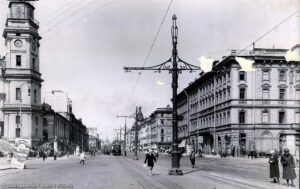 , Russia, to Karl Christian and Anna Barbara Oesch, born Stegmann who emigrated in 1880 from Schwarzenegg (municipality of Oberlangenegg near Thun), canton of Bern, to the municipality of Tohmajärvi in the district of Wyborg. They were successful in the dairy industry, particularly in cheese production and trade. Karl Lennart was the youngest of six sons. He went to school in Sortavala and studied at the University of Helsinki from 1911 to 1915. In 1915, he joined the Finnish Jägerbewegung and then went to Germany, where he was assigned to the 27th Royal Prussian Jäger Battalion
 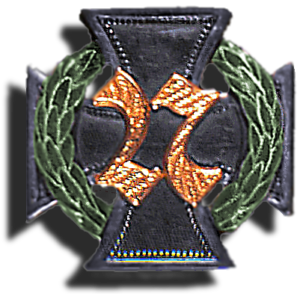 along with other Finnish exiles and eventually saw action on the Baltic front.
To prevent the Russians from becoming aware that Germany was building up separatist Finnish forces, the Jäger training was disguised as ‘Field Master Training for Scouts’. Oesch had dual nationality, but he renounced it in 1921 when he joined the Finnish army as a professional soldier, saying that in wartime one could only serve one country. In 1920, he married his wife Anna ,born Niskanen, and they had two children: son Karl Christian (* 1921) and daughter Ann-Mari (* 1922). To prevent the Russians from becoming aware that Germany was building up separatist Finnish forces, the Jäger training was disguised as ‘Field Master Training for Scouts’. Oesch had dual nationality, but he renounced it in 1921 when he joined the Finnish army as a professional soldier, saying that in wartime one could only serve one country.
In 1918, the Jäger battalions returned to Finland and, as White officers, took up the fight against the Red Finns and Bolsheviks. Oesch became one of the first White officers to be promoted to captain and took command of a battalion on the Kannas, the Karelian Isthmus between the Baltic Sea and Lake Ladoga. That same year, he was promoted to major and in 1921 to lieutenant colonel. He became a career officer and studied at the French military academy Saint-Cyr 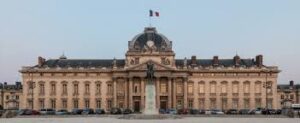 from 1923 to 1926. There, he focused mainly on artillery and fortification, both skills that would later prove extremely useful to him. He visited Switzerland several times, and it can be assumed that it was during this time that he came up with the idea of introducing the Swiss system of military classification, decentralised mobilisation and 300-metre shooting in Finland as well (the Finnish and Swiss armies are currently the only armies that train their soldiers on 300-metre shooting ranges). Back in Finland, he headed the War Academy, and from 1930 to 1940 he served as Chief of the General Staff. During this time, he actively promoted the construction of the later famous Mannerheim Line,
 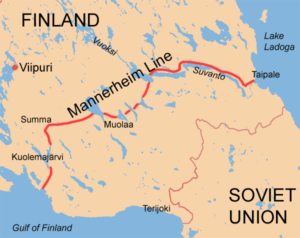 a fortified defensive line on the Kannas named after Marshall Mannerheim, Carl Gustav Emil.
 In 1936, he was promoted to Lieutenant General.
When the Soviet Union attacked Finland on 30-11-1939 and the Winter War broke out, Oesch was Chief of the General Staff. His preparations had proven their worth; the Finnish army, albeit poorly equipped, was ready and fought a battle that was followed with amazement by the entire free world. Oesch’s first hour at the front came when the Red Army  succeeded in March 1940 in bypassing the Finns at Vyborg across the frozen bay and establishing itself on the west bank. Major General Kurt Martti Wallenius,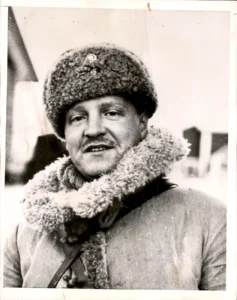
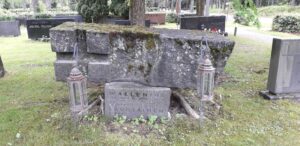 who had commanded the Vyborg area for three days, collapsed, nervous and weakened by excessive alcohol consumption, so Mannerheim immediately dismissed him and replaced him with Karl Oesch. He immediately formed an ad hoc combat group consisting of coast guard reservists and hastily brought in troops from Lapland. With this unit, he managed to slow down the advance of the Red Army and inflict considerable losses. The remnants of the Finnish Air Force
  destroyed most of the Soviet troops attacking across the ice from Kronstadt. He managed to stabilise and hold the front line. Because of this achievement, the Soviet Union agreed to the ceasefire of 13-03-1940. The marshal was deeply impressed by Oesch’s abilities. Even after the end of the Winter War, Karl Oesch was again chief of the general staff for several weeks, after which he took over the second Finnish army corps in April 1940.
On 22-08-1941, almost two months after the outbreak of war, Oesch and his Fourth Army Corps 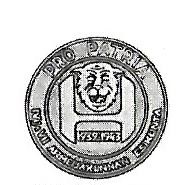 on the right wing of the Karelian Army were given permission to launch an offensive in the Soviet-occupied Vyborg area. Although he was temporarily sidelined due to overwork, his army corps made rapid progress and by 29-08-1941, Vyborg had been recaptured. In the last days of August 1941, Oesch’s troops surrounded three Soviet divisions south of Vyborg. Although some of the enemy managed to escape, all heavy weapons fell into Finnish hands, and on 01-09-1941, Soviet troops began to surrender. The Finns took 9,325 prisoners of war, including the commander of the 43rd Rifle Division,
  Major General Vladimir Vasilyevich Kirpichnikov,
  to their prison camps. In addition, they had to bury 7,500 fallen Soviet soldiers. On the Finnish side, 3,000 soldiers had been killed. It was probably the greatest military victory in Finnish military history.
In March 1942, the Finns had reorganised their armed forces for the stationary trench warfare, which ultimately lasted until 1944, into three large formations, and Oesch took command of the Olonez combat group between Lake Onega and Lake Ladoga. In April of that year, Oesch’s troops resisted a heavy Soviet attack. They then reinforced the front line and concentrated on maintaining it.
The Soviet offensive in June 1940, On 09-06-1944, the Red Army broke through the Finnish positions at Kannas. From the Soviet perspective, the Vyborg-Petrozavodsk operation was a great success, bringing Kuuterselkä on the Karelian Isthmus within reach of the Red Army. The reasons why the Red Army was ultimately able to break through were that the Finnish positions were weakly fortified and that the 18th Finnish Division  had just been relieved by the 10th Division, giving the Red Army even greater superiority. On the morning of 14-06-1944, Oesch received a telephone call from headquarters, appointing him commander of all Finnish troops on the Finnish peninsula. Mannerheim’s telephone message was: “It is chaos on the Kannas. Go there. The troops are under your command. Written orders will follow.‘ Oesch is said to have loaded his pistol with the words: ’If this fails, I’m done for.” Upon arrival in the area of operations (around noon on 15 June), he found that Finland was on the verge of being overrun by advancing Soviet troops. It was the most critical situation the Finnish army had ever faced. Karl Oesch immediately took countermeasures, and Carl Mannerheim, who normally always wanted to make the final decision himself, gave him free rein.
A complication was that Oesch only had part of his staff at his disposal; he lacked officers. His troops immediately began a strategic retreat with the aim of fighting the decisive battle at a suitable key location. On 20-06-1944, Vyborg was lost. Oesch managed to gather his troops (two-thirds of the Finnish armed forces) by cleverly positioning them, by resisting and by continuously integrating divisions and brigades arriving from East Karelia, thereby stabilising the front line along the VKT line (Viipuri-Kuparsaari-Taipale) 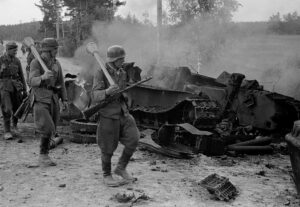 was stabilised, switching to defence and changing the combat initiatives locally in favour of the Finnish troops. These battles are known as the Battle of Tali-Ihantala. In an area of approximately 12 by 18 kilometres, his units destroyed the vanguard of the advancing Soviet forces with armoured and anti-tank troops. Oesch had seen through his opponents’ plans and once again acted on his own initiative, because contrary to Mannerheim’s orders, he did not immediately launch a counterattack, but struck at exactly the right place and with sufficient artillery support. Masterful infantry and radio reconnaissance contributed decisively to the Finnish success.
The Finns only learned of the planned large-scale offensive on the afternoon of 02-07-1944, when Soviet troops used unencrypted radio broadcasts to announce their intention to invade Finland. The start of the Finnish counterattack came as a surprise to the Red Army. In the early morning of 03-07-1944, approximately 80 Finnish and German bombers destroyed the uncovered Soviet attack force exactly two minutes before the planned Soviet attack, after which the Soviet troops were unable to regroup. In addition, the Finnish infantry was equipped with the new Panzerfaust 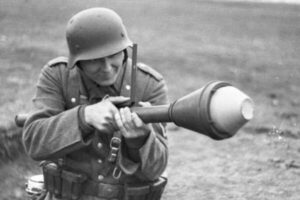 and Panzerschreck anti-tank weapons,
 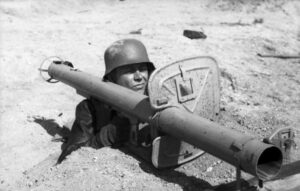 which they used with devastating success. The approximately 250 Finnish guns fired with the support of a new guidance system developed by artillery chief General Vilho Petter Nenonen,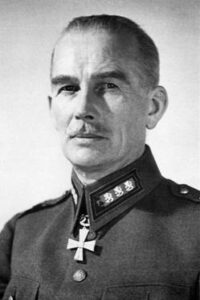
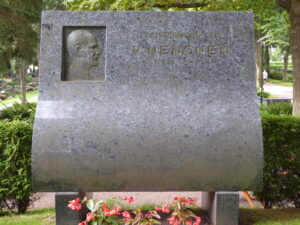 which enabled the rapid identification of new targets. Although the Russians managed to capture the village of Tali and advance to Ihantala on 4 July, the attack ebbed away on the evening of 5 July at the Ihantala cemetery. The fighting continued for two more days, but eventually the Soviet Union withdrew its troops, as they were urgently needed to push back the Germans at Leningrad and Narva. Finland was saved, and during the battle, Oesch was awarded the Mannerheim Cross.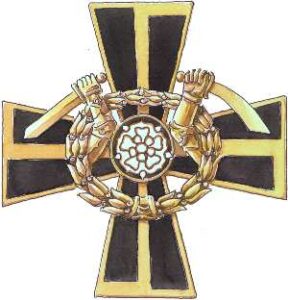
Tali-Ihantala was a defensive success in an otherwise lost war, as the Red Army was deep inside Finland. Given the German defeats, the Finns accepted the harsh Soviet armistice terms that same year, which resulted in further territorial losses.
After serving another year as chief of the general staff, Karl Lennart Oesch resigned in September 1945. The Soviet Union now demanded his arrest as a war criminal. Oesch reported to the police and was convicted along with other key Finnish figures, including former President Risto Ryti. 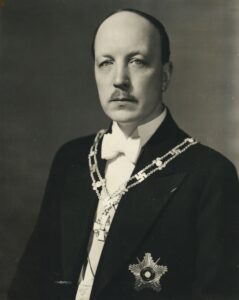 Stalin ordered that Marshal Mannerheim not be prosecuted, while Oesch was held responsible for the deaths of 17 captured Soviet soldiers. During the Continuation War, he had signed a regulation on the treatment of prisoners of war that allowed the use of weapons in cases of prisoner disobedience. The sentence was twelve years in prison, but Oesch was released after three years. Experts consider the verdict highly questionable, and the accusation is at odds with Oesch’s moderate personality. Nevertheless, it was vital for the Finns to yield to pressure from the Soviet Union and provide the demanded scapegoat.
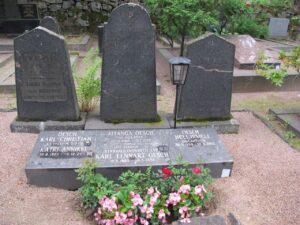
Death and burial ground of Oesch, Karl Lennart.


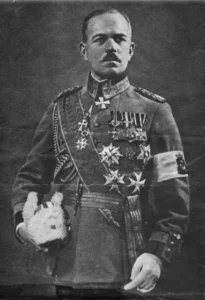
 with Mannerheim
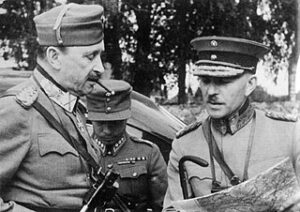
 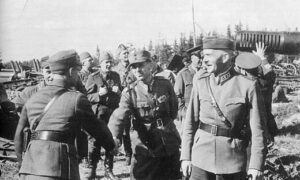 General Karl Lennart Oesch (right) in recaptured Vyborg in 1941
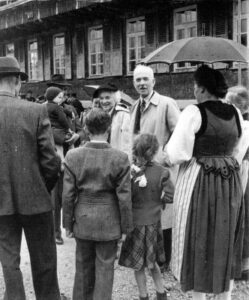
Karl Lennart Oesch visiting family in Switzerland. It is said that after his victory at Tali-Ihantala, Oesch was so highly respected that he would have been appointed Mannerheim’s successor had Mannerheim died. It was precisely for this reason that the 77-year-old field marshal shunned competition from the 26-year-younger Oesch and refused to promote him to General. Mannerheim wanted to keep his reputation intact, and this is probably the blind spot in the personality of this otherwise undisputed military leader and statesman. Oesch had fallen out of favour, probably partly due to his high-handedness, which had compensated for certain mistakes made by Mannerheim. Field Marshal Mannerheim became president of the state. He was succeeded by Juho Kusti Paasikivi. 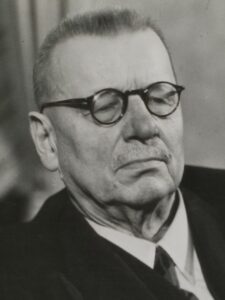 In February 1956, Urho Kekkonen
 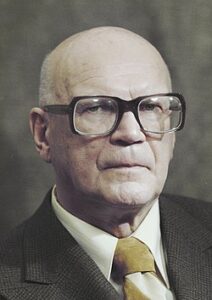 was elected president of Finland and re-elected in 1962 and 1968. Kekkonen presented the establishment of Finland as a generous gesture by the Soviet state and thus became the originator of the concept of Finlandisation. As Minister of Justice, he had already requested Oesch’s arrest and ultimately stopped inviting him to Independence Day celebrations. Unlike President Risto Ryti,
 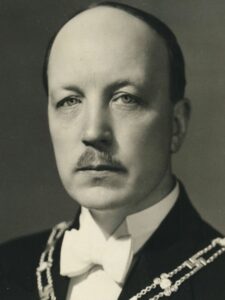 Oesch did not receive a state funeral upon his death in 1978.
It was not until early November 2008 that a scientific conference was held in Helsinki on the person and fate of Karl Lennart Oesch. This event was a belated tribute to him, who is regarded by many eyewitnesses as the true saviour of Finland in the 1944 defensive war against the Soviet Union. In 2014, he was honoured with a memorial stone by his parents’ home municipality.
Oesch, Karl Lennart passed away 28-03-1978 (age 85) in Helsinki, Helsinki Municipality, Uusimaa, Finland and is buried at the Hietaniemi Cemetery, Helsinki, Helsinki Municipality, Uusimaa, Finland. Section Vanha puoli (01) 07-01-015.
Message(s), tips or interesting graves for the webmaster: robhopmans@outlook.com




Leave a Reply