


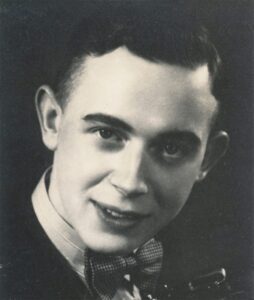
Obbink, Hendrik Willem “Wim” born 02-08-1921 in Aalten, 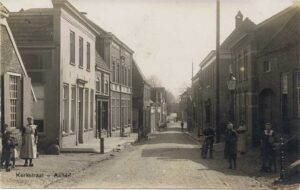 Netherlands, in the Aalten hamlet of Heurne as the youngest son of Hendrik and Mina Obbink, born Winkelhorst. “Wim” has a happy childhood with two older sisters and three older brothers. The family soon moves to their own farm “Den Bosch” at the back of the Haart in Aalten. Wim is a cheerful and sociable young man. He attends Mulo and then works as an accountant at two Aalten companies: the Aaltense Tricotage Fabriek (A.T.F.) on Dijkstraat
 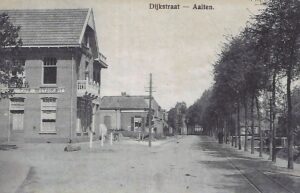 and sewing machine store Hilbelink on Peperstraat.
From September 1944 until the liberation of Aalten on 30-03-1945, Wim keeps a diary in small booklets on thin, fragile paper. His language is vivid and his handwriting diligent and precise. The southern part of the Netherlands has already been liberated, and his brother Herman and sister-in-law Lies live there. The Obbink family often thinks of them because they don’t know if they are still alive. Men, including Wim, are forced to do forced labor for the occupiers.
He cycles to Zevenaar and thinks of ways to outsmart the Germans. He always makes the best of the situation. Constantly, English bombers fly over, there are air battles, bombs fall, and farms burn down. In the end, he hides the Canadian pilot William “Bill” Harvey in the barn without his parents knowing. Many facets of life during this dark period of German occupation are described. The sentences in the diary make the wartime in Aalten very palpable.
F/Lt. W.S. (Bill) Harvey was the pilot of Spitfire RM906.  After an attack on a train he was hit by Flak and had to bail out. He landed near Borken in Germany. He tried to evade by running to a copse of trees but was shot at. He then stopped and raised his hands. Soon after he was taken prisoner by four German farmers. The walked for about 45 minutes until they arrived in Heiden. The following days more Allied prisoners arrived. After about a week these prisoners, including Harvey, were to be transsferred to a POW Camp in Bocholt / Stalag VI-F.
 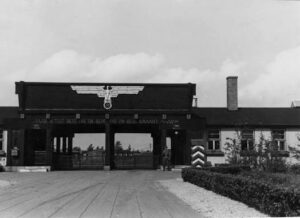 As there was the proposed camp was overcrowded, Harvey and the others were sent back to Heiden the same day. Before returning back at the jail there was a change of guards and the local army barracks. At the moment the prisoners were marched off, Harvey could escape. Harvey started walking in northwesterly direction. Doing this he passed the next day right to a German camp. Eventually he managed to reach Dutch soil. Soon after he came to a river (the boven Slinge?). He turned left and arrived at a bridge which he crossed and then walked in the direction of Winterswijk. At the outskirts of the town he approached a Dutchman, probably a certain Schoppers (or Jan Schoppert?), early in the morning. This man hid Harvey in his house. After midday he waked up Harvey. With him was Berend Willem “Ben” Speelberg, who told him that he would escort Harvey to Aalten that night. The next morning they left until they reached some marhes where Harvey was to stay for the rest of the day and night. When Speelberg hadn’t returned the next morning, Harvey set off on foot again. He made contact again with a Dutchman who took Harvey to his farm. This was the farm of the Family Hendrik Willem Obbink in Aalten. Harvey was liberated here on 30-03-1945.
In mid-April 1945, Wim Obbink joins the “Dutch National Battalion” 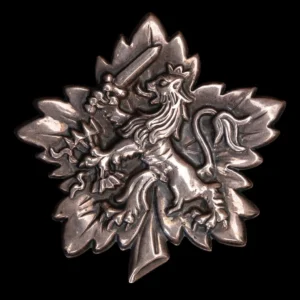
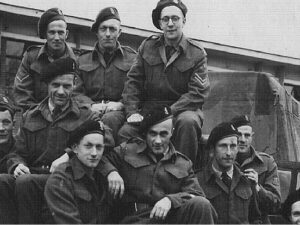 that assists the Allies in the liberation of the Netherlands. The Dutch National Battalion consisted of three companies of volunteers, each with approximately 130 men plus staff, made up of resistance fighters from, or who had to go into hiding as such in Aalten and the surrounding area. The companies actively participated in the liberation of the Netherlands during World War II.
This army consists of 400 Achterhoek refugees, farmer’s sons, and resistance fighters. Wim is part of the staff and helps with translations. He sends a few letters to his family. His last letter is from May 10, Ascension Day, a few days before the fatal accident. He has signed up for another six months in the army, he writes.
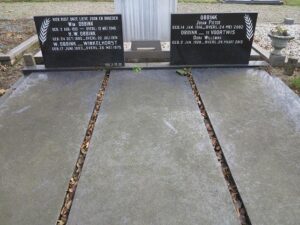
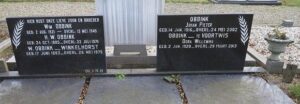
Death and burial ground of Obbink, Hendrik Willem “Wim”.
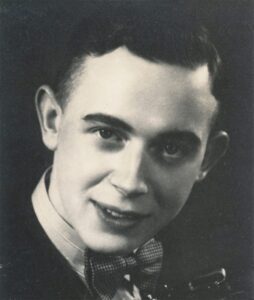
On Sunday, May 13, Wim age 23, gets on his motorcycle for a trip to Bilthoven. In Amersfoort, he crashes his motorcycle into a column of cars at the intersection of Arnhemseweg and Beekensteinselaan.
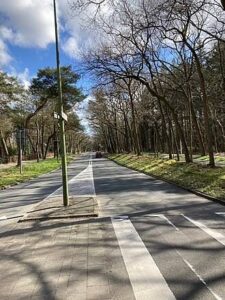
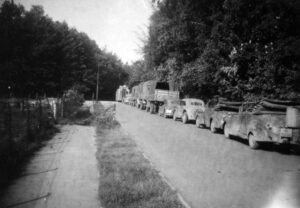 Wim does not survive this. His remains are transported from the St. Elisabeth Gasthuis in Amersfoort to Aalten. He is buried with military honors and much attention on 17-05-1945 at the Old Cemetery, in Aalten, Varsseveldsestraatweg in Aalten, Gelderland.


Leave a Reply