




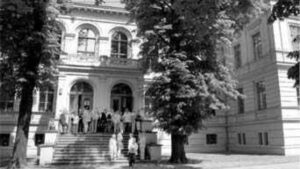
Klintzsch, Johann ‘Hans’ Ulrich born in Lübbenau, 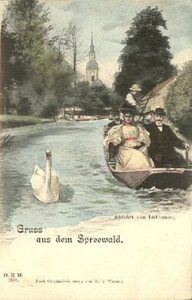 04-11-1898, son of priest Paul Arthur Heinrich Klintzsch and his wife Dorothea, born Schmidtgen. Klintzsch attended a private school in Lübbenau until he was eleven. The family then lived for two years in Cottbus, where he attended the Friedrich-Wilhelms-Gymnasium,
  and then from 1911 in Berlin, where he was sent to the Joachimsthalsche Gymnasium.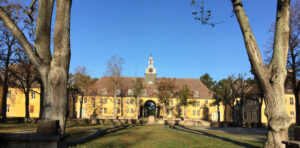
Around 1916, Klintzsch left high school and volunteered at the naval school in Flensburg-Mürwik. 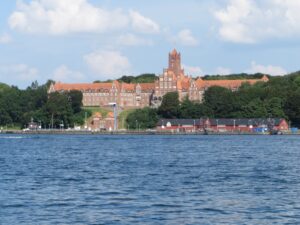 After his training there, he went to the training ship Freya
 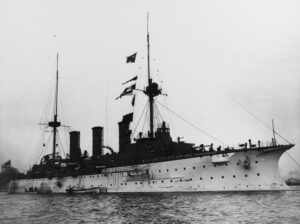 and then to the destroyer flotilla Vlaanderen. Here he stayed until the end of World War I.
On 06-01-1919, Klintzsch was finally released from military service. In February 1919, he joined the Lützow Freikorps, named after Major Ludwig Adolf Wilhelm von Lützow 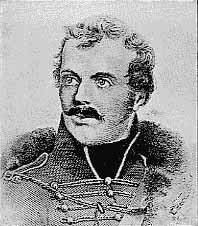
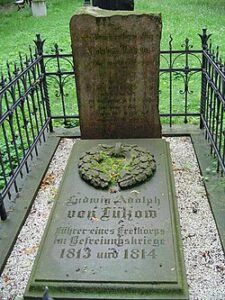 with which he participated in battles in Berlin, Braunschweig, and Munich in the following months. After the communist rulers in Munich were overthrown, Klintzsch joined the Ehrhardt Marine Brigade
 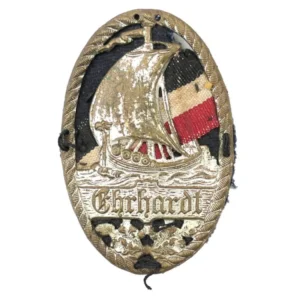 under command of Hermann Ehrhardt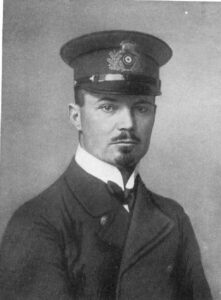
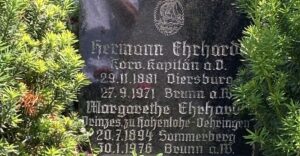 at the end of May 1919. With this, he participated in the Kapp Putsch (Walter Kapp
 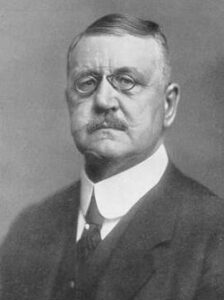 ) in March 1920. The Kapp Putsch, or more precisely the Kapp-Lüttwitz Putsch, was an attempted military coup in Germany aimed at overthrowing the new, democratic Weimar Republic. The putsch was a direct consequence of the provisions of the Treaty of Versailles.
After the Brigade was disbanded in June 1920, Klintzsch was transferred as a lieutenant at sea to a unit in the Baltic Sea. He stayed there for almost a year until he took his leave on 02-06-1921. Next, he went to Munich to continue his studies there. He had his permanent residence in the city until July 1921.
In secret, Klintzsch had been a member of the secret society Organization Consul (OC) 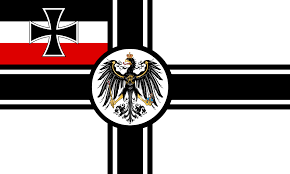 since 1920. This served as the successor to the Brigade. He was also a member of the Bund Wiking,
 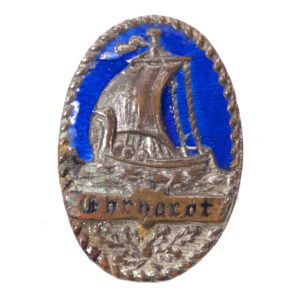 another Ehrhardt organization.
On 20-07-1921, Klintzsch joined the NSDAP. 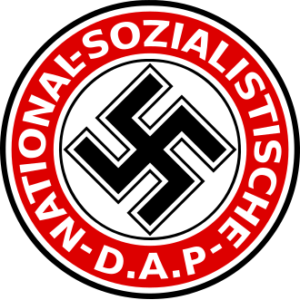 In August 1921, Ehrhardt, based on a corresponding agreement with Adolf Hitler, took over the military command of the gymnastics and sports department of the NSDAP. Ehrhardt handed over the leadership and military training of the members of the sports departments, which were soon renamed Sturmabteilung, also known as the SA or Brownshirts
 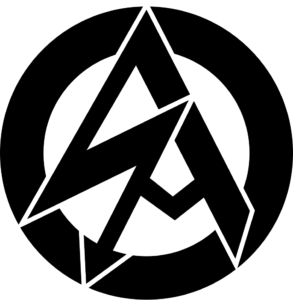 to Klintzsch. Klintzsch continued to receive his salary from the Ehrhardt Marine Brigade while working for the NSDAP.
Early September 1921, Klintzsch was briefly detained on suspicion of involvement in the murder of Matthias Erzberger. 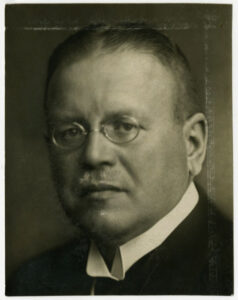
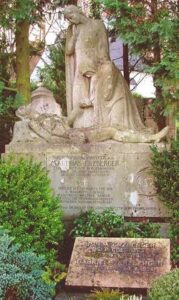 On 26-08-1921, Erzberger, age 45, was murdered in the Black Forest by two former naval officers, Heinrich Tillessen
 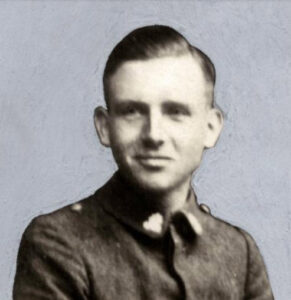 en Heinrich Schulz,
 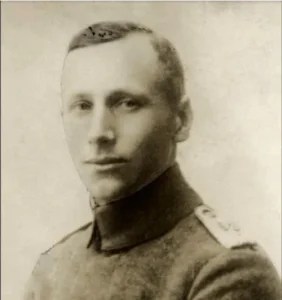 who were members of a far-right, nationalist group. They have bitterly realized that the national government has failed to keep its promises to them and that they have been cast out onto the streets without any recognition of their contributions. The two men are swept up in a wave of populist nationalist anger, which intensifies during gatherings of radicals and debates with like-minded people.
At the beginning of 1922, Klintzsch was released again. At that moment, he took over the leadership and training of the “gymnastics and sports department,” which was officially renamed “Sturmabteilung” (SA) on 05-10-1921. After his release from prison in early 1922, Klintzsch held the supreme command of the SA for almost a year, until March 1923. At that moment, Hermann Wilhelm Göring

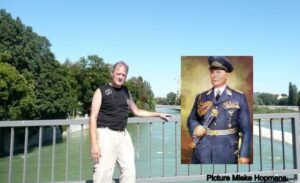 took over the leadership of the SA.
Further careerIn 1924, Klintzsch began a civilian career. After the size of the German armed forces dramatically increased after 1933 and former officers were given the opportunity to be re-enlisted in the army with the prospect of rapid promotion, Klintzsch had himself reactivated as an officer around 1935: from 1936 to 1939, he held the rank of major in the Luftwaffe. 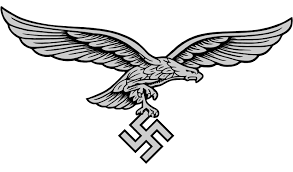 On 01-03-1945, he was appointed, now as a colonel, to the position of Fliegerführer 6 within Luft Flotte 6.
 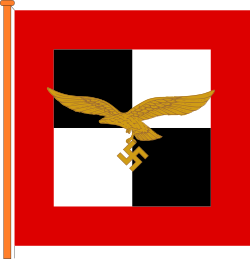 With his flying units, he was deployed in the Baltic region until the unconditional surrender of the Wehrmacht.
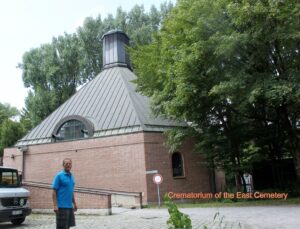
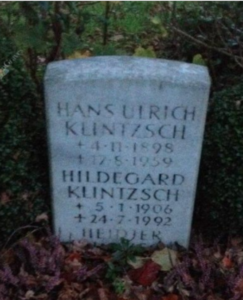
Death and burial ground of Klintzsch, Johann ‘Hans’ Ulrich.
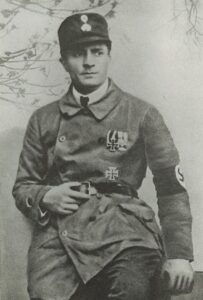
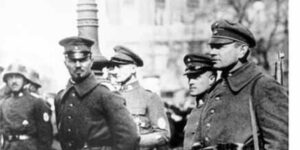
In the post-war years, Klintzsch is said to have aspired to become a pastor, and he worked as a catechist of the Protestant faith at Schorndorf from 1949 to 1952.
He sent Franz Erik Jaenicke 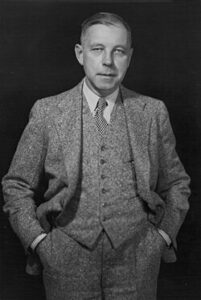 to Berlin to found the Nazi Party. Jaenicke, who also co-founded the Deutsch-Russischer Club (German-Russian Club) in Berlin, was dispatched by Klintzsch to help set up the party. Jaenicke a Co-operative Commonwealth Federation member of the House of Commons of Canada. He was born in Germany and became a barrister by career.
Johann ‘Hans’ Ulrich Klintzsch, who was married with Hildegard Klintzsch (1906–1992) with one son Fridthjof “Fritz” Klintzsch (born 30-03-1927 and died 23-01-2006 (age 78), 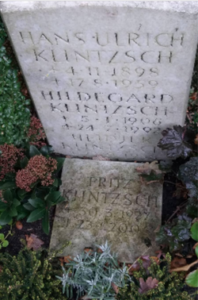 died 17-08-1959 (aged 60) in Hamburg, West Germany, during his son’s wedding in Hamburg. Ironically, Hans was buried in the Jewish cemetery of Ohlsdorf, Ilandkoppel 68, 22337 Hamburg, Germany.
Message(s), tips or interesting graves for the webmaster: robhopmans@outlook.com


Leave a Reply