


Kibby, William Henry “Bill”, born 15-04-1903, in Winlaton, County Durham, 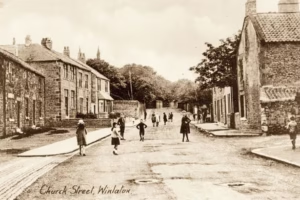 United Kingdom, the second of three children, Kibby was born to John Robert Kibby, a draper’s assistant, and Mary Isabella Kibby born Birnie.
 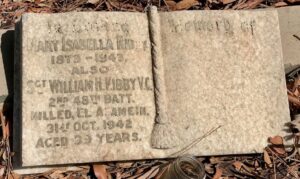 William had two sisters. In early 1914, the Kibby family emigrated to Adelaide, South Australia. Bill attended Mitcham Public School
 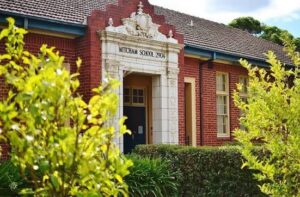 and then held various jobs before securing a position at the Perfection Fibrous Plaster Works in Edwardstown.
 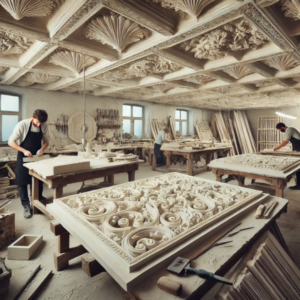 There, he worked as an interior decorator, designing and fixing plaster decorations. He married Mabel Sarah Bidmead Morgan in 1926; they lived at Helmsdale (now Glenelg East) and had two daughters, Clariss and Jacqueline.
Kibby stood only 5 feet 6 inches (168 cm) tall, but was a strong man and enjoyed outdoor activities. He joined the scouting movement, as an assistant scoutmaster of the 2nd Glenelg Sea Scouts  where he crewed their lifeboat. He enjoyed family walks and picnics and was a keen golfer, playing on various public courses. He was also a talented artist, painting and drawing in addition to his plaster design work, and even briefly attended art classes at the School of Mines and Industries. He was described as a quiet and sincere man who loved gardening. In 1936, he joined the part-time Militia and was posted to the 48th Field Battery, Royal Australian Artillery.
  under command of Captain Raymond J. Harvey.
 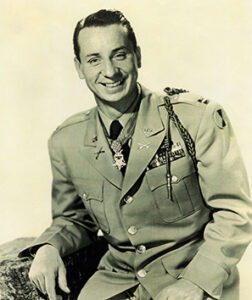 Along with his Militia service, he enjoyed participating in military tattoos.
On 29-06-1940, Kibby enlisted in the all-volunteer Second Australian Imperial Force, 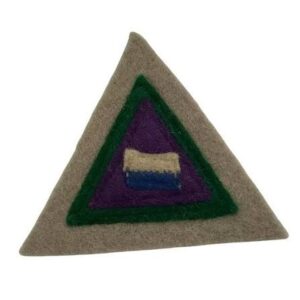 which had been raised for overseas service in World War II. He was posted to the 2/48th Infantry Battalion,
  part of the 26th Brigade. This brigade was initially assigned to the 7th Division.
  under command of Major General Sir John Dudley Lavarack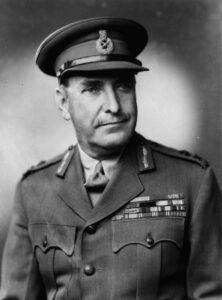
On 14 September, when the battalion was training in South Australia, Kibby was promoted to acting corporal, and this was followed by promotion to acting sergeant a month later. The 2/48th embarked on the troopship HMT Stratheden 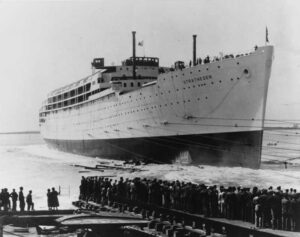 on 17 November and sailed for the Middle East, where it disembarked in Palestine on 17 December. On New Year’s Eve, Kibby fell into a slit trench and broke his leg. He then spent months convalescing. During his recovery, he produced at least forty watercolours and pencil drawings, which, according to his biographer, Bill Gammage, displayed “a fondness for Palestine’s countryside and a feeling for its people”. While in Palestine, Kibby struck up a friendship with the painter Esmond George, and occasionally accompanied him on sketching trips. After recovering, Kibby joined the brigade training battalion in August 1941 and also attended the infantry school to complete a weapons course. He rejoined the 2/48th in February 1942, the 26th Brigade having been transferred to the 9th Division a year earlier. At the time, the battalion was undertaking garrison duties in northern Syria, after participating in the siege of Tobruk.
During early 1942, the Axis forces had advanced steadily through northwest Egypt. It was decided that the British Eighth Army should make a stand just over 100 kilometres (62 mi) west of Alexandria, at the railway siding of El Alamein, where the coastal plain narrowed between the Mediterranean Sea and the inhospitable Qattara Depression. On 26-06-1942, the 9th Division  under command of Lieutenant General Sir Leslie James Morshead, “Ming the Merciless”
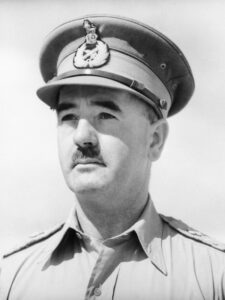
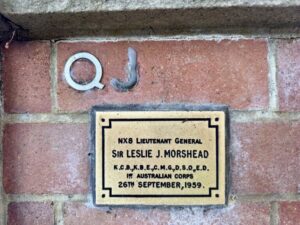 was ordered to begin moving from northern Syria to El Alamein.
On 1 July, Generalfeldmarschall Erwin Johannes Eugen Rommel‘s 
 forces made a major attack, hoping to dislodge the Allies from the area, take Alexandria, and open the way to Cairo and the Suez Canal. This attack resulted in the First Battle of El Alamein. The Eighth Army had regrouped sufficiently to repel the Axis forces and launch counter-attacks. On 6 July, the lead elements of the 9th Division arrived at Tel el Shammama 22 miles (35 km) from the front, from where they would be committed to the fighting in the northern sector.
Before dawn on 10 July, as Rommel focused his efforts on the southern flank of the battlefield, the 9th Division attacked the north flank of the enemy positions and captured the strategic high ground around Tel el Eisa. In the days following, Rommel redirected his forces against them, in a series of intense counter-attacks, but was unable to dislodge the Australians. On 22 July, the 24th and 26th Brigades attacked German positions on the ridges south of Tel el Eisa, suffering heavy casualties but taking positions on Makh Khad Ridge and Tel el Eisa itself. 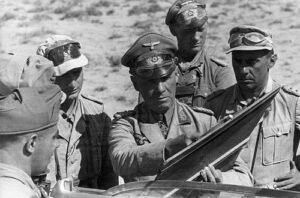
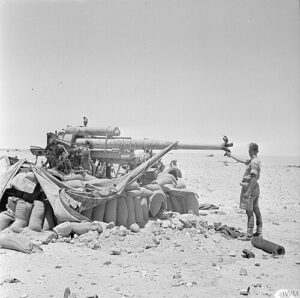
At the Second Battle of El Alamein, from 23 to 31 October 1942, Kibby distinguished himself through his skill in leading his platoon, after its commander had been killed, during the first attack at Miteiriya Ridge. On 23 October, he charged a machine‑gun position, firing at it with his Thompson submachine gun; 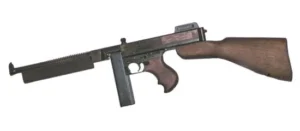 Kibby killed three enemy soldiers, captured twelve others and took the position. His company commander intended to recommend him for the Distinguished Conduct Medal
 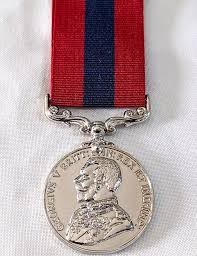 after this action, but was killed. During the following days, Kibby moved among his men directing fire and cheering them on. He mended his platoon’s telephone line several times under intense fire, restoring communications with the battalion mortars and enabling them to bring down fire on the attacking enemy.
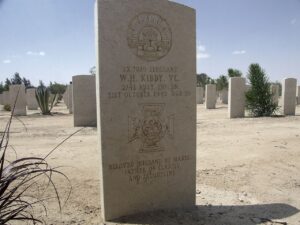
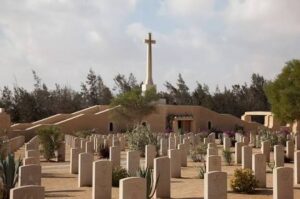
Death and burial ground of Kibby, William Henry “Bill”.
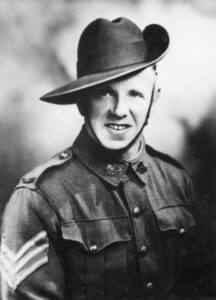
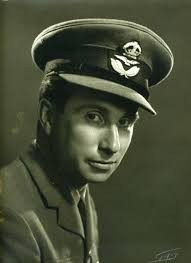
During 30–31 October, the platoon came under heavy machine‑gun and mortar fire. Most of the members of the platoon were killed or wounded, and by the time the battle was over the total fighting strength of the battalion was down to 213 men from an establishment strength of 910. At one point before midnight on 31-10-1942, in order to achieve his company’s objective, Kibby moved forward alone, to within a few metres of the enemy, throwing grenades. Just as his success in this endeavour appeared decisive, he, age 39, was killed. By the morning, the 2/48th consisted of fewer than 50 unwounded men. The posts captured by the 2/48th that night were lost to the enemy, who buried Kibby with other dead in a common grave. the El Alamein War Cemetery in Egypte. Section Plot XVI, Row A, Grave 18. He was initially placed in a mass grave by the Germans, after which his comrades later found him and placed him in a temporary grave. In January RWPW+VMP, Al Alameen City, El Alamein, Marsa Matrouh Governorate 5063153, Egypte1944, his remains were permanently transferred to this Commonwealth cemetery. RWPW+VMP, Al Alameen City, El Alamein, Marsa Matrouh Governorate 5063153, Egypte.
In 1947, Kibby’s father John met Field Marshal Bernard “Monty” Montgomery, 
 who had commanded the Allied forces during the Second Battle of El Alamein, when he visited Adelaide. In 1956, the soldiers’ mess at Woodside Barracks in the Adelaide Hills was named for Kibby. In 1996, a rest area on the Federal Highway near Yarra, New South Wales was named after him.


Leave a Reply