



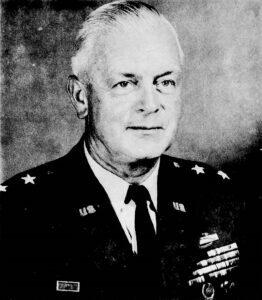
Heintges, John Arnold, born 09-12-1912, in Koblenz, 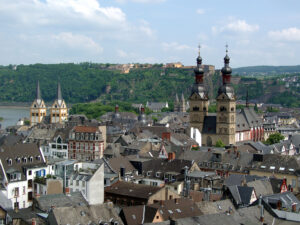 German Empire. His father was an officer in the Imperial German Army
 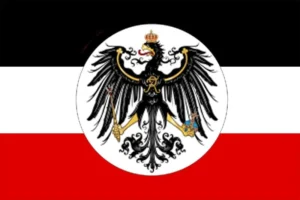 who was killed in action in the Battle of Tannenberg. In 1920 his family emigrated to the United States, sponsored by an uncle who was a major in the Army Medical Corps, and his mother remarried an infantry officer.
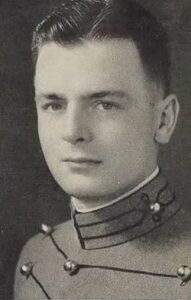
John attended the United States Military Academy West point 
 and was commissioned as a Second Lieutenant in 1936. He served in the 45th Infantry Regiment Philippine Scouts
 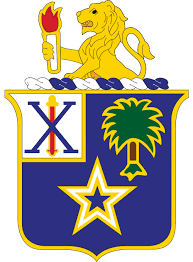 from 1937 to 1939. He then served as a company commander and regimental Operations Officer (S3) of the 13th Infantry Regiment, 8th Infantry Division
 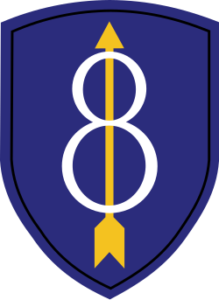 under command of Major Generaal James Preston Marly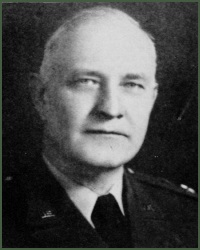
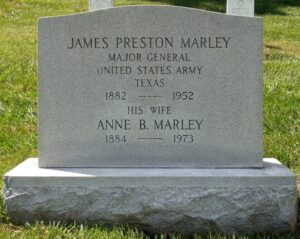 at Fort Jackson, South Carolina from 1940 to 1942.
During World War II, Heintges commanded the 3rd Battalion, 7th Infantry Regiment, 3rd Infantry Division  and then commanded the 7th Regiment. He saw action in Sicily, Italy, southern France and Germany and his regiment captured Adolf Hitler’s Berghof in Berchtesgaden on 04-05-1945.
The U.S. 3rd Infantry Division (“Rock of the Marne”) suffered heavy losses in WWII, with nearly 35,000 casualties and over 4,900 killed, fighting on every European front from North Africa to Austria and earning numerous honors, including 36 Medals of Honor  (the most of any division) and the French Croix de Guerre
  for its intense combat, particularly during the breakout from Anzio.
Following graduation from the United States Army War College, Heintges served in the Army Operations (G3) section. In 1954 he was posted to West Germany as Chief, Army Section, U.S. Military Assistance Group, Germany where he prepared and implemented the training plan for the West German Army. From 1957 to 1958 he served as deputy commander of the Army Infantry Training Center at Fort Dix 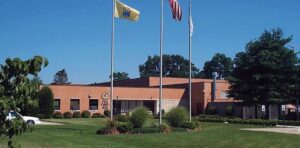
In 1958, Heintges was appointed as commander of Programs Evaluation Office (PEO) in Laos. In order to assume this new role he nominally resigned from the Army and served in Laos as a civilian. During this time he developed the Heintges Plan to improve US assistance to the Royal Lao Army.
From 1961 to 1962, Heintges served as Director of Organization and Training, Office of the Deputy of Chief of Staff for Military Operations in Washington D.C. He served as commander of the 5th Infantry Division (Mechanized) 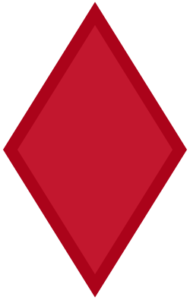 in Fort Carson, Colorado from 29-01-1963 to 15-07-1964. He served as commander of Fort Benning from August 1964 to July 1965.
Heintges (right) talks to Major Paul Lenhart, XO, 2nd Battalion, 9th Artillery, 3rd Brigade, 25th Infantry Division, 24-12-1965 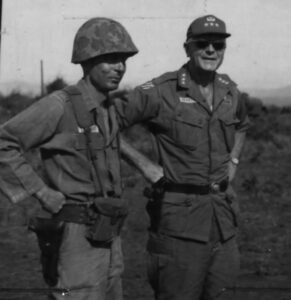
Heintges was promoted to Lieutenant General and was assigned as Commanding General, I Corps in South Korea from 01 August to 5 November 1965. In November 1965 he was appointed as Deputy Commander, Military Assistance Command, Vietnam (MACV). In May 1967 he was succeeded in that role by General Creighton William Abrams.
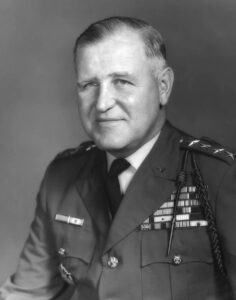
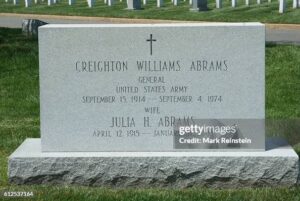 Assigned to command the United States Army’s 37th Tank Battalion, 4th Armored Division during World War II, he was at the head of the Division’s column in December 1944 when it relieved the paratroopers of the 101st Airborne Division
  under siege at Bastogne, France. Creighton passed away 04-09-1974 (age 59) in Washington, District of Columbia, United States. The 101 Airborne Divsion “Sceaming Eagles” liberated my hometown of Eindhoven,
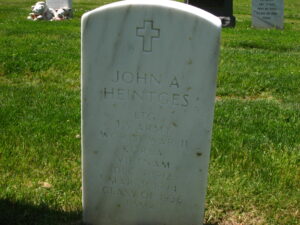
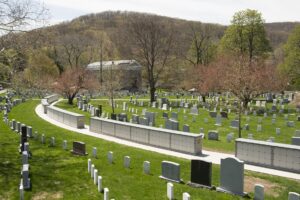
Death and burial ground of Heintges, John Arnold.
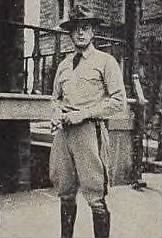
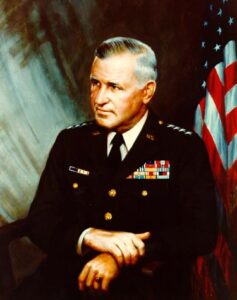
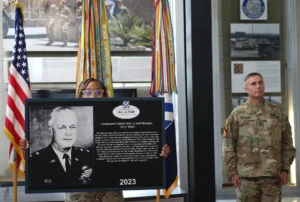
Heintges then served as deputy commander, Seventh United States Army. John subsequently served as Deputy Commander in Chief United States Army Europe, in Heidelberg, West Germany, Deputy Commander of the Eighth Army in Korea, and U.S. Representative to the Central Treaty Organization in Ankara, Turkey. He retired from the Army in 1971.
John Heintges died on 31-03-1994, age 81, in Colorado Springs, Colorado, and he is buried at the United States Military Academy Post Cemetery West Point, Orange County, New York, United States. Section XXXVI Site D-146.


Leave a Reply