


Fonck, René Paul, born on 27-03-1894 in the village of Saulcy-sur-Meurthe  in the Vosges region of north eastern France. Fonck left school when he was 13. Although he had been interested in aviation from his youth, he was rejected for the air service when conscripted on 22-08-1914. Instead, he underwent five months basic training for the role of combat engineer; his training duties included first digging trenches near Épinal, and later bridge repairs on the Moselle River.
  On 15-02-1915 Rene was finally accepted into basic training to learn how to fly. He trained at St. Cyr and then at Le Crotoy on a Blériot Penguin,
  a reduced-wingspan “flightless” version of the famous Blériot XI aircraft that gave the sensation of flying while still on the ground. He completed his pilot training in May 1915 and then flew Caudron G III
  observation aircraft with Escadrille C 47. The unit was initially commanded by Captain Galouzeau de Villepin. On 25-05-1916 Fonck’s observer was killed by an anti-aircraft shell burst, a fate that almost befell Fonck a few weeks later. Fonck claimed his first enemy aircraft in July 1916, but his victory was unconfirmed.
On 6 August, Rene attacked a German Rumpler C.III,  and by maneuvering over and around the reconnaissance plane, staying out of its fields of fire, forced it lower and lower until the German crew landed behind French lines. It was his first verified victory, though shared with his observer, Lieutenant Thiberge. It brought him the Médaille militaire in late August 1916.
On 17-03-1917, Fonck scored a second time, downing an Albatros in conjunction with his observer, Sergeant Huffer. By this time, Fonck had amassed over 500 hours flight time, an incredible amount in those early days of aviation.
On 15-04-1917 (“Bloody April”), Fonck, age 23, received a coveted invitation to join the famous Escadrille les Cigognes.  Groupe de Combat 12, with its four escadrilles (or squadrons), was the world’s first fighter wing. The then leading French ace, Georges Guynemer,
  was serving at the time in one of its escadrilles, N3, and had just scored his 36th victory.
Fonck was assigned to another escadrille in the group, Spa 103. Flying the SPAD VII,  he quickly made a name for himself, attaining flying ace status by 13 May. He picked off another target on 12 June, then went on hiatus until 9 August. He scored twice more that month, on 21 and 22 August 1917
On 14 September, he killed the pilot of a German observation plane and watched as the plane inverted and dropped the thrashing observer almost through the wing of Fonck’s Spad. He even went to the extreme of tearing the barograph out of the cockpit of that day’s victim, his twelfth, so its readout would confirm his combat report. On 30 September, he and Adjutant Dupre jointly shot down a German two-seater Rumpler C.IV 6787/16 of FA 18. The news reported the killed pilot to be Leutnant Kurt Wissemann, 
 who had allegedly shot down Guynemer, and that Fonck had boasted of avenging the death of his “good friend”. This story is put into question by German records, indicating that Wissemann of Jasta 3 had been killed two days before in a different fight, in which he was flying a single-seater, probably against No. 56 Squadron.
September and October added four victories apiece to Fonck’s score. Thus, by year’s end, he had raised his tally to nineteen, was commissioned an officer, and had received the Légion d’honneur. 
Fonck got only better. Known for his clinical professionalism, he applied mathematical principles to combat flying, and his engineering knowledge regarding the capabilities of the aircraft he flew was unsurpassed by his fellow pilots. Fonck took few chances, patiently stalking his intended victims from higher altitudes. He then used deflection shooting with deadly accuracy at close range, resulting in an astonishing economy of ammunition expended per kill. More often than not, a single burst of less than five rounds from his Vickers machine gun was sufficient. His preferred method of aerial combat was not to engage into dogfights, but to carry out surgically merciless executions. He was also reputed to be able to spot enemy observation aircraft from very far away, where most other pilots would have perceived nothing.
To summarize, he claimed 56 victories during the whole of 1918, attaining a total of 36 kills before May 1918. His 1918 list by itself would have made him France’s leading ace. By the end of the war, he had accounted for all but 36 of Escadrille SPA.103’s 111 claimed victories. Unlike many leading French aces, Fonck’s score contained only three shared victories. Also unlike most aces, he remained unwounded; indeed, only a single enemy bullet had ever hit his aircraft. He had also forgone the most hazardous air-to-air combat: he shot down no observation balloons.
Yet for all his skill and success, Fonck never captured the hearts of the French public as Guynemer had. Fonck was ascetic and withdrawn. Instead of drinking or socializing with the other pilots, he planned his flying missions and tactics, ironed his uniforms, and stayed physically fit through calisthenics. He seemed to overcompensate for his shyness by constantly mentioning his exploits. As a result, he seemed distant, arrogant, even abrasive. His comrades respected his skills, but even one of his few friends, Marcel Emil Haegelen, 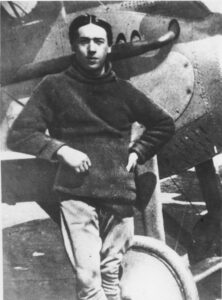 considered him a braggart and shameless self-promoter. Fonck may have resented the fact that Guynemer remained more popular in the French press even after he surpassed him in victories. Fonck also seemed to lack insight into the effect his personality had upon his image or career. However he and he alone carried the flag of the French Air Force
  at the victory parade on the Champs-Elysées.
Fonck returned to civilian life after World War I, and published his war memoirs Mes Combats,  prefaced by Marechal Foch, in 1920. The fame he got from the war allowed him to be elected Member of Parliament representing the Vosges from 1919 to 1924.
During the 1920s, Fonck persuaded Igor Sikorsky  to redesign the Sikorsky S-35
  for the transatlantic race or Orteig Prize. On 21-09-1926, the aircraft crashed on takeoff when the landing gear collapsed, killing two of his three crew members. Charles Lindbergh
  won the prize seven months later in 1927.
Fonck eventually returned to military aviation and rose to Inspector of French fighter forces from 1937 to 1939.
His inter-war contact with the likes of former World War I foe Hermann Göring  and Ernst Udet
  cast a shadow upon Fonck’s reputation during the German occupation of France, as did allegations of collaboration with the Nazis and the Vichy regime. In January 1941, Fonck was made a member of the National Council of Vichy France.
  On 10-08-1940, Vichy Foreign Minister Pierre Jean Marie Laval
 announced that Fonck had recruited 200 French pilots to fight on the Nazi side. However, the truth was more complicated. Marshal Petain, Henri Philippe Benomi Omer Joseph
  wished to exploit Fonck’s relationship with Göring in order to meet Adolf Hitler. He ordered Colonel Fonck to talk to Göring. A meeting was planned at Montoire, but after discovering evidence about the pro-Nazi politics of Pierre Laval, Fonck tried to convince Pétain not to attend. Initially Pétain appeared to heed Fonck’s advice, but for some reason he eventually decided to disregard Fonck’s warnings and met Hitler at Montoire on 24-10-1940. Fonck’s loyalties were thus questioned by the Vichy regime, and he returned home to Paris, where he was eventually arrested by the Gestapo
  and imprisoned in the Drancy internment camp.
After the war, a French police inquiry about his supposed collaboration with the Vichy regime completely cleared Fonck. The conclusion was that his loyalty was proved by his close contacts with recognised resistance leaders such as Alfred Marie Joseph Heurtaux 
 during the war. He was awarded the Certificate of Resistance
  in 1948. The citation reads: “Mr. Fonck, René, a member of the fighting French forces without uniform, took part, in territory occupied by the enemy, to glorious fights for the liberation of the nation”.
Alfred Marie-Joseph Heurtaux (20-05-1893 – 30-12-1985) was a French World War I fighter ace credited with 21 victories. Later in his life, he joined the French Resistance during World War II, and survived imprisonment in Buchenwald death camp to become a Brigadier General in the post war Armée de l’Air. He ended his career working as a consulting engineer. He died 30-12-1985, age 92, at Chantilly, Oise and was buried in Paris.
Death and burial ground of Rene Paul Fonck.
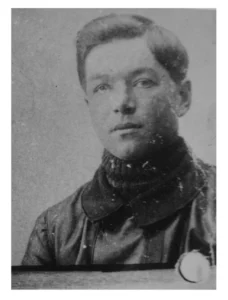


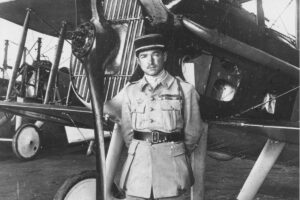
Fonck remained in Paris, but also frequently visited his native Lorraine, where he had business interests.
On 18-06-1953 (aged 59) Rene Paul Fonck died of a stroke in his Paris apartment, Rue du Cirque, and is buried in the cemetery of his native village of Saulcy-sur-Meurthe.


Leave a Reply