


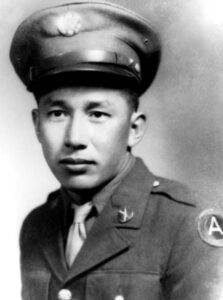
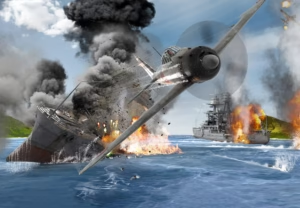
Hajiro, Barney Fushimi, born 16-09-1916, in Territory of Hawaii,  the second to the eldest of nine children born to the Japanese immigrant parents, Shiroichi and Satsuyo, born Noda, Hajiro. His parents had moved from Hiroshima to Maui during World War I. Two of his siblings died in infancy. The family was poor, and Hajiro left school to work, first in the sugarcane fields of Maui and later as a stevedore in Honolulu. As the eldest, he left school at 8th grade to work in the sugar cane fields to support his family. He was a dockworker when he was drafted into the Army in 1942. After Pearl Harbor,
 he went on to volunteer for the 442nd Regimental Combat Team
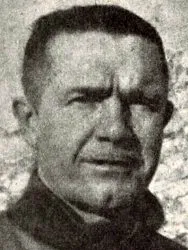
 under command of Colonel Charles Wilbur “Six” Pence
 in March 1943, until he was wounded during the rescue of the “Lost Battalion” in France in October 1944. He retired as a U.S. Army Brigadier General. The 442d Regimental Combat Team (RCT) was activated on 01-02-1943, composed of American-born Japanese called “Nisei” (NEE-say), or second generation. The 442d fought a brutal five-day battle in the Vosges Mountains of France to rescue the Texas “Lost Battalion,” sustaining heavy casualties to save over 200 men.
Two months after the Japanese attack on Pearl Harbor, Barney was drafted into the U.S. Army  and performed menial labor as part of an engineering battalion.
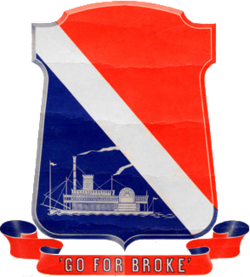
In March 1943, Hajiro volunteered to be part of the Army’s all-Nisei 442nd Regimental Combat Team. The 442nd was mostly made up of second-generation Americans citizens of Japanese descent from Hawaii and the mainland. The unit was sent to Europe and in May 1944 fought the Germans in Italy, north of Rome. From there the 442nd was redeployed to France.
On 19-10-1944, the 442nd was fighting near Bruyères and Biffontaine in eastern France and over the next ten days, Hajiro, a private in Company I, repeatedly distinguished himself in battle. He exposed himself to enemy fire while assisting an Allied attack on October 19, and three days later he and a comrade ambushed an 18-man enemy patrol. On October 29, during the rescue of the so-called “Lost Battalion”, which had been surrounded by German forces in the Vosges Mountains, he single-handedly destroyed two German machine gun emplacements. Afterwards, in another firefight, he was shot in the shoulder  and wrist leaving his left arm partially paralyzed. He was able to rejoin the 442nd in Monte Carlo, but was barred from further combat duty. He was then sent back to the United States to recover.
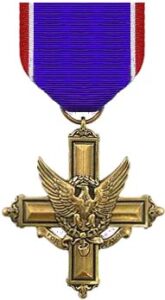
Hajiro was recommended for the Medal of Honor  for his actions in October 1944. He received the Distinguished Service Cross
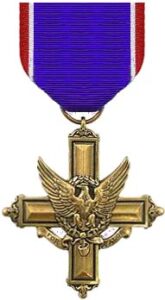 and the World War II Victory Medal before he was honorably discharged.
Medal of Honor citation, Hajiro’s official Medal of Honor citation reads:
For conspicuous gallantry and intrepidity at risk of his life above and beyond the call of duty. Private Barney Fuahimi Hajiro distinguished himself by extraordinary heroism in action on 19, 22, and October 29, 1944, in the vicinity of Bruyeres and Biffontaine, eastern France. Private Hajiro, while acting as a sentry on top of an embankment on 19-10-1944, in the vicinity of Bruyeres, France, rendered assistance to allied troops attacking a house 200 yards away by exposing himself to enemy fire and directing fire at an enemy strong point. He assisted the unit on his right by firing his automatic rifle and killing or wounding two enemy snipers. On 22-10-1944, he and one comrade took up an outpost security position about 50 yards to the right front of their platoon, concealed themselves, and ambushed an 18-man, heavily armed, enemy patrol, killing two, wounding one, and taking the remainder as prisoners. On 29-10-1944, in a wooded area in the vicinity of Biffontaine, France, Private Hajiro initiated an attack up the slope of a hill referred to as “Suicide Hill” by running forward approximately 100 yards under fire. He then advanced ahead of his comrades about 10 yards, drawing fire and spotting camouflaged machine gun nests. He fearlessly met fire with fire and single-handedly destroyed two machine gun nests and killed two enemy snipers. As a result of Private Hajiro’s heroic actions, the attack was successful. Private Hajiro’s extraordinary heroism and devotion to duty are in keeping with the highest traditions of military service and reflect great credit upon him, his unit, and the United States Army.
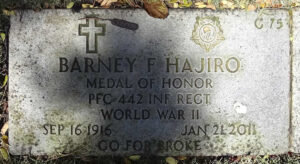
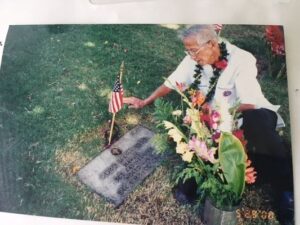
Death and burial ground of Hajiro, Barney Fushimi.
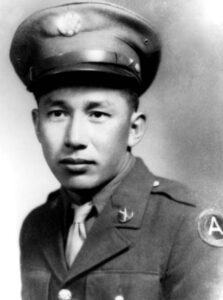
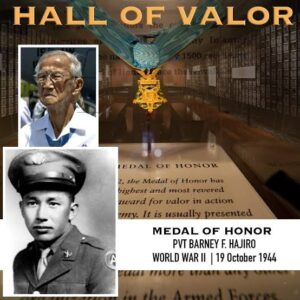
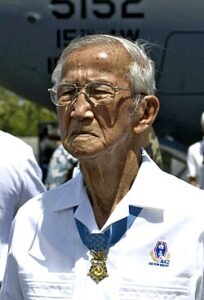
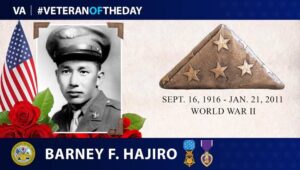
Hajiro, Barney Fushimi, passed away 21-01-2011, age 94, in Waipahu, Honolulu County, Hawaii, United States of America and he is buried at the National Memorial Cemetery of Honolulu, Honolulu, Hawaii, United States, also known as Punchbowl or the Arlington of the Pacific. 2177 Pūowaina Dr, Honolulu, HI 96813,Section G, Lot 75.


Leave a Reply