


Grawitz, Ernst Robert, born, 08-06-1899 in Charlotteburg, 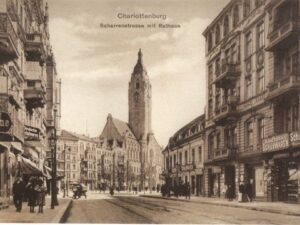 Germany. Ernst-Robert came from a family of physicians. He was the son of a military doctor and later head of the department at the Charlottenburg-Westend hospital, Ernst Grawitz (1860–1911),
 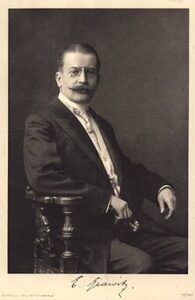 and his wife Helene (born Liebau) (born 14-10-1869, in Magdeburg). His uncle was the pathologist Paul Grawitz.
 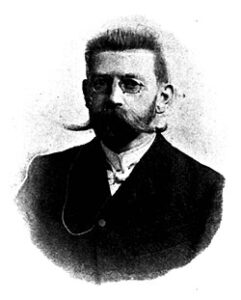 . Ernst Robert was married with Ilse, bornTaubert Grawitz (1905-1945, age 40)
 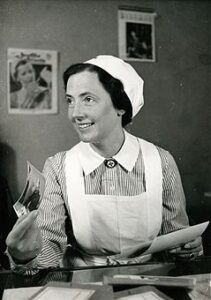 the daughter of SS-Obergruppenführer and General of the Waffen-SS, Siegfried Louis Imanuel Taubert
 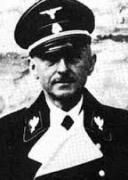 who survived the war. In 1945, as the Allies approached Wawelsburg Castle,
  Heinrich Himmler
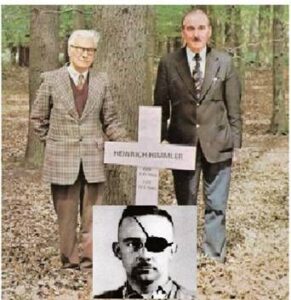 ordered the castle destroyed, but Taubert refused. He fled to Schleswig-Holstein and died 13-02-1946 (age 65) in Kiel, Kiel, Schleswig-Holstein, Germany.
In 1917, Grawitz enlisted as a war volunteer in the Jäger-Ersatz-Bataillon 1. 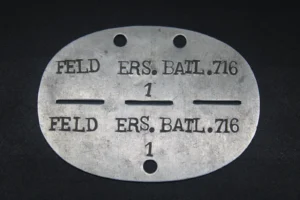 And on 18-09-1918, as a lieutenant at Épehy on the Western Front, he fell into British captivity.
In November 1919, after his release from captivity, he began his medical studies at the Humboldt University in Berlin. 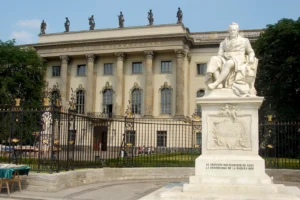 Grawitz passed his state exam and received his official admission. He was until 1929 a junior doctor, assistant, and senior assistant in the internal medicine department at the hospital in Berlin-Westend. After this, he set up a practice as a specialist in internal medicine.
From 1930 to 1933, Grawitz worked in the internal department of the hospital in Berlin-Westend. The then-medical director of the hospital valued Grawitz “as an absolutely reliable, loyal, and highly honourable character”.
At the same time, his director regretted that Grawitz had not been able to complete his habilitation (the exam for a private lecturer). This was because the young scientist was said to have overused his political activities. Besides his medical studies, Grawitz was active in right-wing organisations. In November 1919, he was part of the Citizens’ Defence Berlin, and in 1920, he participated in the Kapp Putsch.
The Kapp Putsch (March 1920) was a failed right-wing coup in Germany. Led by Wolfgang Kapp 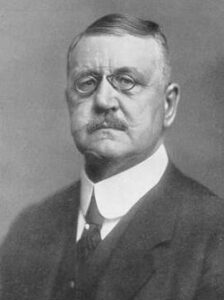 and Walther von Lüttwitz,
 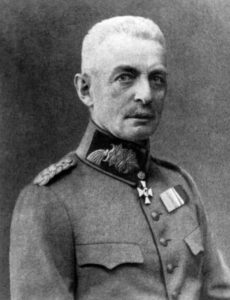 nationalist military officers attempted to overthrow the fledgling democracy (the Weimar Republic) to install an authoritarian regime. The coup failed within a hundred hours due to massive resistance.
Subsequently, Grawitz became a member of the Freikorps Olympia and later declared in documents that he had been a supporter of Adolf Hitler since 1920.
In November 1931, Grawitz joined the Schutzstaffel,SS 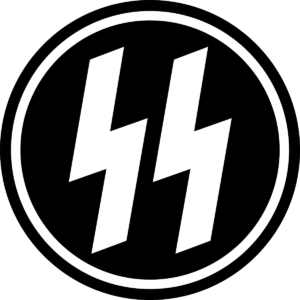 and became a member of the NSDAP
 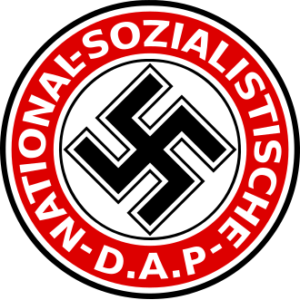 in 1932. On 01-06-1935, he was appointed by the Reichsführer-SS Heinrich Himmler as Chief of the SS Medical Office and “Reichsarzt der SS” (free translation: Chief of the SS Medical Office and Reich Physician of the SS). As Reichsarzt SS (Chief Medical Officer of the SS), Grawitz was directly subordinate to Himmler and was the highest technical authority in all medical and health matters within the SS. He was also responsible for the doctors and the medical condition in the concentration camps.
On 17-11-1936, Grawitz was appointed as the deputy president of the German Red Cross  by the Reich Minister of the Interior Wilhelm Frick,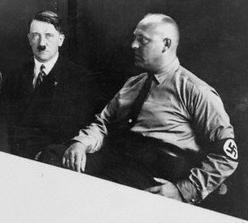
 in accordance with the applicable statutes. After the amendment of the statutes and the adoption of the DRK law at the end of 1937, Grawitz became the “Geschäftsführender Präsident.” Why SS member Grawitz was appointed to the leadership of the DRK/Red Cross on 01-01-1937, can primarily be explained by the German war plans. For Adolf Hitler, 1936 was the “year of the most difficult decisions,” as he later called it himself, because in that year he had made the final decision to start an offensive war.
Large parts of society had to adapt to this decision: the military, the industry, and not least the German Red Cross, which, with its long experience in military medical services and its large personnel resources, could be a decisive factor in supporting an offensive war.
In the existing organisational form of a merger of several legally independent associations, however, the DRK could not be adequately prepared for this task. The president in office since 1933, Duke Charles Edward of Saxe-Coburg and Gotha, 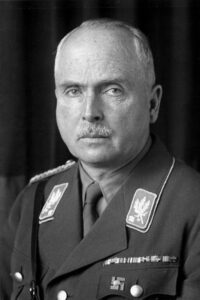
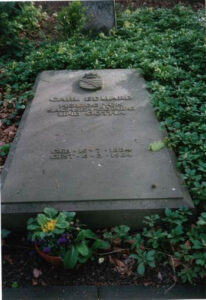 performed purely representative duties. In 1937, Ernst-Robert Grawitz was the man who was able to bind the DRK staff to the SS.
The German Red Cross must, according to the Lebensgesetze of the National Socialist Third Reich, be a healthy organization.In accordance with the intended purpose according to the Geneva Conventions, it must meet the requirements set for it in peace and war.the organisational structure and leadership must guarantee the possibility and incentive for voluntary cooperation among large parts of the German people. As early as mid-1937, Grawitz restructured the DRK organization without any legal basis in accordance with the propagated “Leader Principle.” The previously independent state and district associations were transformed into state and district offices, and the association structure was completely dismantled. Grawitz reported: “Today, there is a new, powerful German Red Cross, strictly organised militarily and led by the National Socialists, ready for any action.” At the end of 1937, the law on the DRK and a new statute were subsequently adopted as the legal basis.
Parallel to the reorganisation of the DRK, Grawitz placed SS members in the DRK leadership. He appointed SS Gruppenführer Oswald Pohl 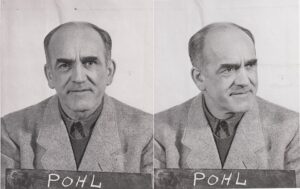
 (who had been organising the administration of the SS for Himmler since 1935 and gradually also the administration of the concentration camps for Himmler) as treasurer and later as head of the administration of the DRK. From initially small workshops and businesses in the concentration camps, Pohl built the economic empire of the SS, which exploited the concentration camp prisoners in their enterprises through forced labour.
With Grawitz’s approval, Pohl acquired millions in credit for the SS from the treasury of the DRK, which he, as “general commissioner for all property matters of the DRK,” secretly transferred to Heinrich Himmler’s commercial enterprises. Not least for this reason, Pohl concentrated the money that had previously been managed by the individual DRK foundations and organisations into joint accounts to which only Pohl, Grawitz, and their close associates had access.
In September 1939, Grawitz, according to SS doctor Werner Kirchert, 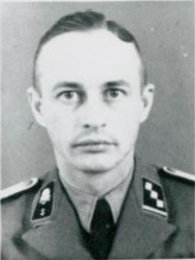 agreed to provide SS doctors for the murder of physically and mentally disabled individuals (later called “Aktion T4”). Grawitz is said to have stated: “…it is not a pleasant task, but one must also be willing to take on unpleasant work,” however, “…he did not want to burden the SS externally with this, although he should have at least made part of the SS staff available.” He did not exempt himself from these unpleasant tasks and declared himself willing “… to carry out the killing of the first mentally ill person himself after the establishment of the first euthanasia center.” Werner Kirchert survived the war and died 10-12-1987 age 81, in Aitdorf, Rhein-Sieg, Cologne, North Rhine-Westphalia.
Together with Oswald Pohl, Grawitz approved the experiments on humans that had been taking place in the concentration camps since 1941. He received the requirements for prisoners for medical experiments from a wide range of research institutions, such as the research center of the Heeressanitätsinspektion (free translation: army medical inspection) and the Robert Koch Institute. 
In the National Socialist racial ideology, Grawitz’s work as a doctor for the Red Cross and his involvement in the murders were not contradictory. According to this ideology, all those defined as racially superior, as “Aryan,” must be helped. The work of the National Socialist collective doctors, healthcare, and the activities of the German Red Cross in the “Third Reich” were applicable to them. But all those who were classified as inferior because they were of Jewish or Slavic descent, mentally or physically disabled, or because they politically opposed Adolf Hitler, were considered “burdens” in Nazi propaganda and, in countless cases, became victims of the ideology of the “destruction of unworthy life.” The medical knowledge of the collective doctors was used against them; German doctors experimented on these people or administered lethal injections. And even the German Red Cross as a humanitarian organization in war and peace did not want to help these people; only a few DRK employees tried to organise illegal aid with modest means.
Cold sore and hepatitis experimentsAt the initiative of Grawitz, sulfonamide experiments for the treatment of gas gangrene were conducted on sixty Polish women in the Ravensbrück concentration camp  under the supervision of Nazi doctor und SS Gruppenführer, Karl Gebhardt.
 Grawitz’s testimony during the Nuremberg trial, according to Grawitz, demanded “absolutely warlike wounds” by adding dirt, glass splinters, etc.
In 1943, Grawitz asked Heinrich Himmler to provide him with eight concentration camp prisoners for experiments with infectious hepatitis. In his letter, it states that research has shown that this disease is not transmitted by bacteria but by viruses. Hepatitis has been experimentally transmitted from human to animal, and it is “desirable” to transfer cultured viruses to humans. Himmler responded in writing and made eight Jews from Auschwitz 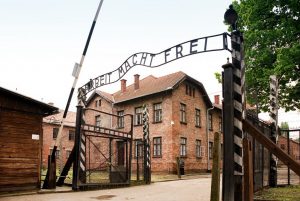 available. The experiments were carried out in the Sachsenhausen concentration camp.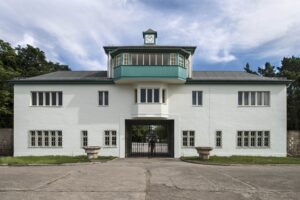

Suicide and murder of his familyIn early April 1945, Grawitz visited Adolf Hitler in the Führerbunker for the last time. Grawitz was to be the main defendant in the Doctors’ Trial in Nuremberg and could have expected his execution. He prevented that by committing suicide.
On the night of April 23 to 24, 1945, as the Soviet army advanced towards Berlin, Grawitz killed his wife and children and himself by detonating grenades. 
The location Karl-Marx-Straße 59 in Potsdam is part of the historic villa development in Babelsberg near the former Griebnitzsee University campus, 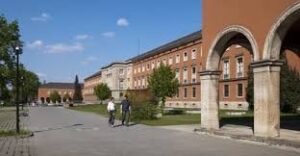 where several important Nazi leaders lived during World War II. Probably, their heavily damaged bodies were buried in the vicinity/garden of his house.
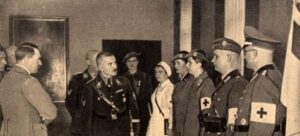
Many prominent Nazis, Nazi followers, and members of the armed forces committed suicide during the last days of the war. Others killed themselves after being captured. The list includes 8 out of 41 NSDAP regional leaders who held office between 1926 and 1945, 7 out of 47 higher SS and police leaders, 53 out of 554 army Generals, 14 out of 98 Luftwaffe  Generals, 11 out of 53 Admirals in the Kriegsmarine,
  and an unknown number of junior officials.


Leave a Reply