


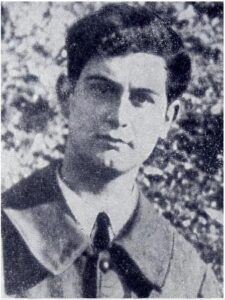
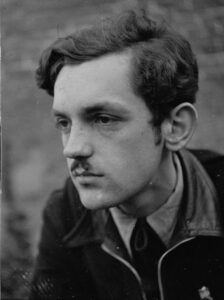
La Chapelle, Fernand Bonnier de, born 04-11-1922, in Algiers, Algeria, 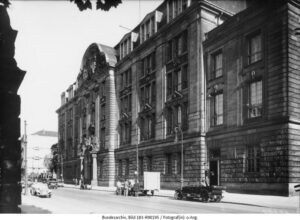 the son of a French journalist who was a monarchist and a protester against fascism. Bonnier was involved with a royalist group that wanted to make the pretender to the French throne, the Count of Paris, the King of France. He studied at the Lycée Stanislas in Paris
 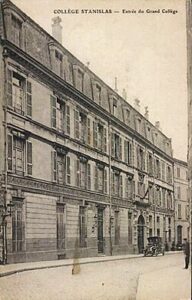 after France’s surrender to Nazi Germany, and attended a demonstration of anti-German students on Armistice Day 11-11-1940 at the Arc de Triomphe.
 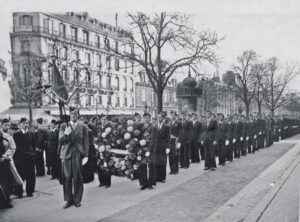 On 11-11-1918, France and its allies signed an armistice with Germany, bringing World War I to an end. For the French, who had lost nearly 1.4 million soldiers, Armistice Day became a national day of commemoration.
Fernand then joined the free zone by illegally crossing the border. He returned to Algiers (where his father was a journalist for The Algerian Dispatch) and visited the Youth Camps. After obtaining his degree in 1942, he was surprised by the Allied landings on 08-11-1942 during Operation Torch. Operation Torch, major Allied amphibious operation in French North Africa, with the landing of 107,000 British and U.S. troops at Casablanca, Morocco, and the Algerian cities of Algiers and Oran.
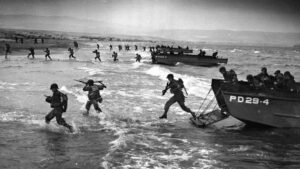
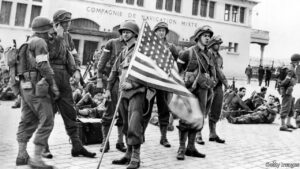 A monarchist and an ardent anti-Vichyiste, he regretted that his comrades[who?] had participated in Operation Torch and enabled the success of the landings but had not asked him to participate.
Following the landing, Bonnier was one of the first to commit to the Corps Francs d’Afrique 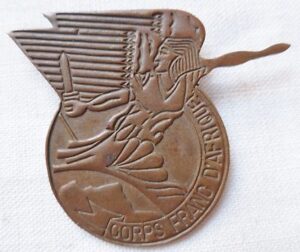 training under the initial direction of Henri d’Astier de la Vigerie,
 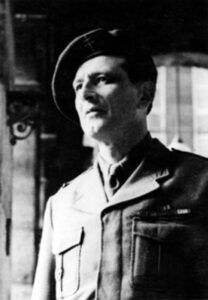 former leader of the north African resistance. This training was initiated by a resistance group of 8 November. They opposed the “Admiral of the Fleet” Jean Louis Xavier Francois Darlan
 who was collaborating with the Nazis. They further objected to serving under generals who had attacked the Allied forces at Oran and in Morocco, including Admiral Jean-Pierre Esteva,
 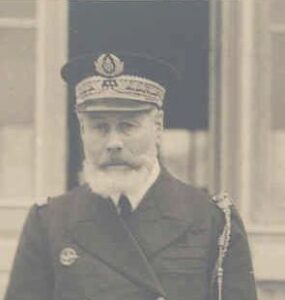 who had surrendered Tunisia to Axis forces without a fight.
When d’Astier was appointed head of the police as Deputy Secretary of the Interior, the Corps Francs d’Afrique maintained unofficial relations with the force. Bonnier served as the liaison. He often visited the home of Henri d’Astier, where he also met Lieutenant Father Pierre-Marie Cordier. 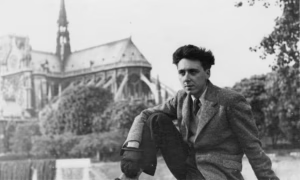
After Darlan surrendered Algiers to Allied forces, General Dwight David “Ike”. Eisenhower,  who feared armed resistance from Vichy sympathizers among the French, agreed to allow Darlan to govern French North Africa and West Africa under Vichy policies. This caused consternation in the French population and in Washington and London.
At that time, members of the Corps Francs repeatedly covered the walls with slogans that mocked Darlan, such as “Admiral to the fleet!” Darlan was not only attacked for his past collaboration with Germany, but also for his present attitude, upholding the exclusion laws inspired by Germany, as well as other repressive Vichy policies, such as the internment in concentration camps of thousands of French resistance fighters, Spanish Republicans and Central European Democrats.
Bonnier and three of his comrades, Otto Gross, Robert and Philippe 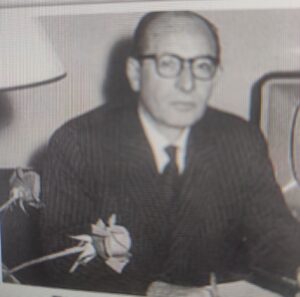 Tournier Ragueneau decided to assassinate Darlan. They had participated a few weeks earlier in the operation of 08-11-1942. The four drew straws and Bonnier drew the shortest. Following the draw, Bonnier procured an old “Ruby” 7.65 pistol. The day of 24-12-1942 was chosen. Abbé Cordier heard his confession and gave him absolution. Failing to find Darlan that morning at the Summer Palace, he lunched that day with d’Astier.
They returned to the Summer Palace after eating and settled in a hallway. After some time, the Admiral appeared, accompanied by Frigate captain Hourcade. Bonnier shot Darlan twice, once in the face and once in the chest, and then shot Hourcade in the thigh. The occupants of the other offices in the Palais captured him. Under interrogation he claimed he had acted alone and seemed unworried about the consequences.
The next morning, 25-12-1942, he was convicted in less than an hour. Bonnier declared that he had acted only for reasons of moral purity. The judge signed a removal order sending Bonnier to the military tribunal of Algiers. The court sat that night and rejected requests for further investigation. My Viala and Sansonetti acted as lawyers for the accused. The rest of the procedure took place in less than a quarter of an hour. The court discounted Bonnier’s motivations and age and sentenced him to death.
The lawyers requested clemency. The law required the appeal to be heard by the Head of State, Marshall Henri Philippe Benomi Omer Joseph Pétain.  That procedure would have had to await the end of hostilities. Charles Noguès, dean of the Imperial Council,
 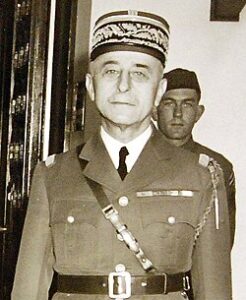 proclaimed himself acting High Commissioner, under an unpublished order issued by Darlan on 02–12-1942. The order was invalid according to the legal order of Vichy. Nogues immediately rejected the clemency petition. General Henri Honore Giraud,


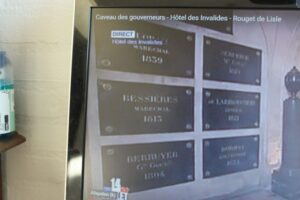 who was then head of military justice as Commander-in-chief, refused to postpone execution, and ordered his execution the next morning at 7:30.
Alarmed by his conviction, Bonnier asked to speak to a police officer and Commissioner Garidacci responded. Bonnier revealed that Abbé Cordier was aware of his intentions and implicated Henri d’Astier. Garidacci kept this confession to himself, with the apparent intention of later blackmailing d’Astier.
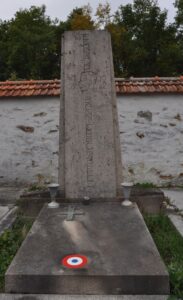
Death and burial ground of La Chapelle, Fernand Bonnier de.
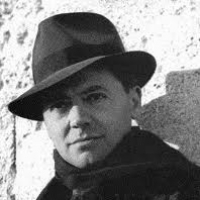
Giraud was elected that day by members of the Vichy Imperial Council, to replace Darlan. When d’Astier and others appealed to Giraud, he told them it was too late.
Bonnier de la Chapelle, age 20, was executed in Hussein-Dey, the square known as “the shot”. His speedy trial and execution fueled theories about who may have been behind the assassination.
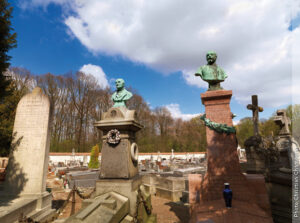
Bonnier was rehabilitated by a Chamber judgment revision of the Court of Appeals on Algiers on 21-12-1945, which ruled that the assassination had been “in the interest of liberation of France.” In June 1950, his body was repatriated to Bruyères Cemetery in Sèvres, France.
On 19-08-1953, a decree signed by President Vincent Auriol 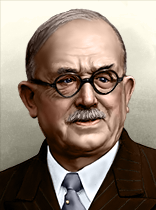 granted Fernand Bonnier de la Chapelle a posthumous Médaille militaire
 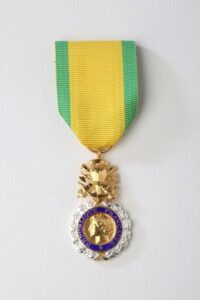 accompanied by the Croix de Guerre
  with palms and the Resistance Medal.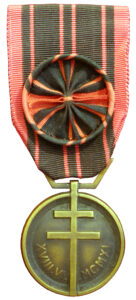
Historians have speculated that Bonnier acted on the encouragement of General Charles André Joseph Marie De Gaulle’s, 
 entourage or under instruction from the British Special Operations Executive, while judicial records show he was involved with a royalist group aiming to replace Darlan with Henri of Orléans.
Every year, a delegation from Nouvelle Action Royaliste leaves flowers on his grave in Sèvres.




Leave a Reply