


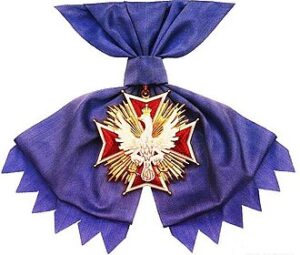

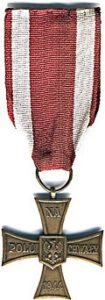
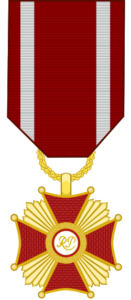

Pilecki, Witold, known by the codenames Roman Jezierski, Tomasz Serafiński, Druh and Witold, born 13-05-1901 in Olonets, Olonetsky Uyezd,  Olonets Governorate, Russian Empire. his parents were forest inspector Julian Pilecki (1870–1932)
 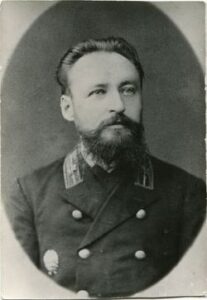 and his wife Ludwika, born Osiecimska Pilecka (1871 – not known)
  . Witold was one of five children and one sister was Maria Pilecki,
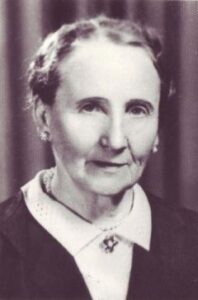 born 29-01-1899 in Petrozavodsky Urban Okrug, Karelia Republic, Russia, She died 08-02-1991 (age 92) in Koszalin, Miasto Koszalin, Zachodniopomorskie, Poland.
Mitold was a descendant of a Polish-speaking noble family (szlachta) of the Leliwa coat of arms. His ancestors had been deported to Russia from their home in Lithuania (former Nowogródek Voivodeship region, now in Belarus) for participating in the January 1863–64 Uprising, for which a major part of their estate was confiscated. Witold was one of five children of forest inspector Julian Pilecki and Ludwika Osiecimska.
As a youth, Pilecki joined Polish underground scouting; in the aftermath of World War I, he joined the Polish militia and, later, the Polish Army.  He participated in the Polish–Soviet War, which ended in 1921. In 1939, he participated in the unsuccessful defense of Poland against the invasion by Nazi Germany, the Slovak Republic,
  and the Soviet Union.
  Shortly afterward, he joined the Polish resistance, co-founding the Secret Polish Army resistance movement. In 1940, Pilecki let himself be captured by the occupying Germans in order to be voluntarily sent to the Auschwitz concentration
camp 

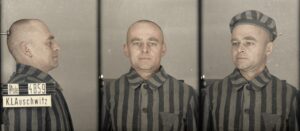 and infiltrate it. At Auschwitz, he organized a resistance movement that eventually included hundreds of inmates, and he secretly drew up reports detailing German atrocities at the camp, which were smuggled out to Home Army headquarters and shared with the Western Allies. After escaping from Auschwitz in April 1943, Pilecki fought in the Warsaw Uprising
 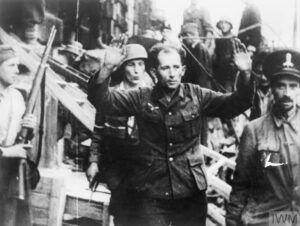 of August–October 1944.
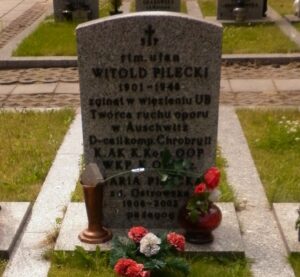
Death and burial ground of Pilecki, Witold.


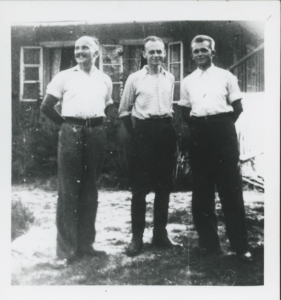
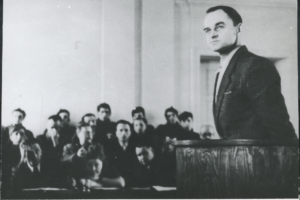
On 09-11-1939 in Warsaw, Major Jan Henryk Włodarkiewicz, 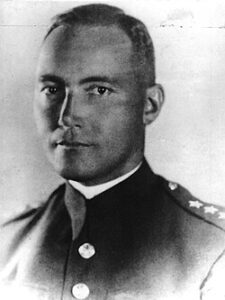 Second Lieutenant Pilecki, right on the photo,, Second Lieutenant Jerzy Maringe, Jerzy Mieczysław Skoczyński,
 and brothers Jan and Stanisław Dangel
  founded the Secret Polish Army (Tajna Armia Polska, TAP),
 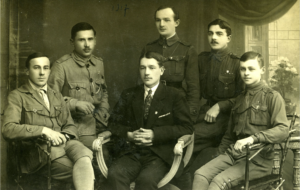 one of the first underground organizations in Poland. Włodarkiewicz became its leader, while Pilecki became TAP’s organizational head as it expanded to cover Warsaw, Siedlce, Radom, Lublin, and other major cities in central Poland. As cover, Pilecki worked as manager of a cosmetics storehouse. From 25-11-1939 until May 1940, he was TAP’s inspector and chief of staff. From August 1940, he headed its 1st branch (organization and mobilization)
Following its suppression, he was interned in a German prisoner-of-war camp. After the communist takeover of Poland, he remained loyal to the London-based Polish government-in-exile. In 1945, he returned to Poland to report the situation in Poland back to the government-in-exile. Before returning, Pilecki compiled his previous reports into Witold’s Report to detail his Auschwitz experiences, anticipating that he might be killed by Poland’s new communist authorities. Pilecki’s life ended on a bitter note. He went underground again, fighting until the Soviet-allied Polish secret police arrested him in May 1947. His own statesmen jailed and tortured him for over a year before executing him by firing squad on 25-05-1948.
Pilecki, Witold, is buried at the Powązki Cemetery, Warsaw, Miasto Warszawa, Mazowieckie, Poland.
His story, inconvenient to the Polish communist authorities, remained mostly unknown for several decades; one of the first accounts of Pilecki’s mission to Auschwitz was given by Polish historian Józef Garliński,
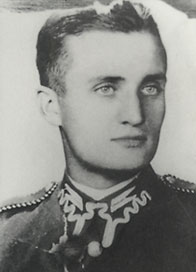
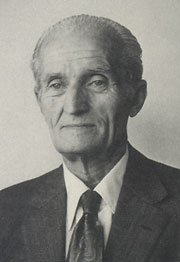
 himself a former Auschwitz inmate who emigrated to Britain after the war, in Fighting Auschwitz: The Resistance Movement in the Concentration Camp (1975).
  Several monographs appeared in subsequent years, particularly after the fall of communism in Poland facilitated research into his life by Polish historians.





Leave a Reply