


Meyer, Kurt Adolph Wilhelm “Panzermeyer”, born 23-12-1910 in Jerxheim, Sachsen Anhalt,  came from a lower class family. His father Otto Meyer being employed as a factory worker,

 was as a one-man band the main attraction on every wedding, village dance or holiday gathering. Kurt’s mother was Alma, born Weihe and he had one sisrter, Melanie. In 1914, his father joined the Imperial German Army and served as an NCO in the First World War, obtaining the rank of Sergeant Major before being discharged for wounds received in battle. Meyer attended school in Jerxheim. After completing his education, Meyer found work as an apprentice shopkeeper, followed by a stint of road construction and then as a mailman. He applied to join the Mecklenburg Police force, seeing it perhaps as an escape from a labourer’s life. He was accepted on 01-10-1929. Meyer’s nickname, “Panzermeyer”, has nothing to do with armoured warfare. While in training in the Police Academy at Schwerin, Meyer decided to play a prank on a fellow student
. 

 His plan was to throw a pail of water on his classmate from the roof of a two story building, but Meyer slipped and fell. He landed on his feet, but suffered over 20 fractures. He was expected to die, but he recovered to full health. After this, Meyer’s classmates christened him “Panzer” because he was as tough as a battle tank. Meyer joined the NSDAP
  on 01-09-1930, nr. 316 714, three years before Adolf Hitler became Chancellor of Germany. He then applied to join the Schutzstaffel, SS-nr.: 17 559 on 15-10-1931, commanded by SS Reichsführer, Heinrich Himmler “Reichsheini” (Did you know)
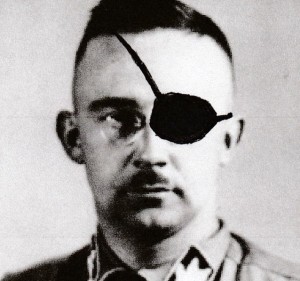

 . He was accepted on 15-10-1931, his first posting being to 22nd SS-Standarte
  based in the town of Schwerin. Meyer was commissioned as an SS-Untersturmführer in 1932. In May 1934, he was transferred to the SS’s most prestigious unit, the Leibstandarte SS Adolf Hitler (LSSAH) (see Adolf Hitler)
  (did you know).

 In 1935 Meyer signed a Mein Kampf book, being a SS Gruppenführer
 , sent to me by Annmaria Shinn. By September 1936, Meyer had again been promoted, this time to SS–Obersturmführer and special task force commander and had also taken command of the LSSAH’s Anti-Tank unit, 14th Panzerabwehrkompanie. Adolf Hitler with this promotion promished Meyer a puppy from the next litter of his special bred German shepherds, Receiving any sort of gifts from the Führer was a singular honour. The dog was delivered to him in Normandie and named her Patras-Pat for short. He took the dog everywhere were his division went

 . Patras would find his end in January 1943 near Alexeyevka in Russia, as she ran out and caught a live grenade that her master had hurled against the enemy. The LSSAH took part in the bloodless annexation of Austria as a part of the XVI. Armeekorps and later, under General Heinz Guderian,

 in the occupation of Czechoslovakia. On 6 June 1944, D-Day, the Allies launched Operation Overlord, the amphibious invasion of France, which opened the long-awaited Western Front. After much confusion, the Hitlerjugend
  got moving at around 14.30 on 6 June, and several units advanced on Sword Beach, until they were halted by fierce naval and anti-tank fire, and by Allied air cover. Meyer’s regiment was ready for combat by 22.00 on 7 June. Meyer set up his command post in Ardenne Abbey, whose towers provided an excellent view of the rolling fields of Normandy. His first orders were “more realistic” than those of the division; while the division was ordered to break through to the beach, Meyer himself ordered his regiment to take covering positions during 7 June and await reinforcements. During their first engagement, the Hitlerjugend of Meyer’s regiment proved themselves brave soldiers, destroying 28 Canadian tanks while losing only “5 or 6 tanks” for their efforts, according to what Meyer could recollect when he appeared in court in Aurich after the war. The 27th Canadian Armoured Regiment
  reported 31 German tanks destroyed and German casualties were serious enough to halt the SS short of their ultimate objective of pushing back the Allies to the sea. It was during this period that the shooting of Canadian prisoners occurred. Meyer would later be charged with and convicted of ordering that no prisoners be taken, and also found guilty of responsibility for the shooting of eighteen prisoners of war. Days of furious fighting followed, and over the next two weeks, the regiment was to suffer badly in the battles for Carpiquet Aérodrome and the villages of Contest, Buron, and Authie. On 14 June, SS-Brigadeführer, Kommandeur SS-Panzer Grenadier Regiment 1, Fritz Witt,

 a friend of Meyer, was killed when British naval gunfire hit his command post. Meyer, as the next highest ranking officer, was promoted to divisional commander; at 33 years of age, he was the youngest German divisional commander of the war. Meyer managed to hold the line north of Caen in spite of several British and Canadian offensives. Meyer made it out of the Falaise pocket. On 27 August, he became the 91st soldier to be awarded the Swords to the Knight’s Cross with Oak Leaves.
 Meyer and the remnants of the Hitlerjugend joined the retreat across the Seine River and into Belgium. On 06-09-1944, in the small village of Spontin, he and his driver Max Bornhöft had been arrested by a Belgian police officer. Both were wounded and surrendered to the Americans, disguised as a German Army captain, knowing he would likely otherwise have been identified as an SS officer and killed. There a civilian drew his weapon in front of the prison and shot Bornhöft dead. Before he could also hit Meyer, an American officer intervened. Meyer was taken to a Catholic hospital for treatment. Because he was missing and presumed dead, he was retroactively promoted to Brigadeführer und GeneralMajor der Waffen SS effective from September 1. In prison his wife Kate and the children
  were allowed to visit him every second day for twenty minutes and Kate was sitting in the first row of the courthouse as the trial started. On 10-12-1945 Kurt Meyer come to court in Aurice, guarded by the Canadian Major Russel and the Captain Stutt
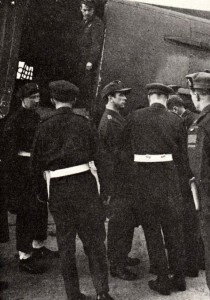
 .
.  The president of the court was his opponent from the battle of Caen in august 1944, the Canadian General, Harry Wickwire Forster
 .
.
First Kurt Meyer was sentenced to death but this decision was changed to lifelong imprisonment shortly after the process and after Kurt Meyer had written a letter to General Vokes. One day before his execution on 13 January, General Chris Vokes  chief of staff, Lieutenant General John Carl.C Murchie
  and high commissioner Vincent Massy
 decided to change the sentence in a life imprisonment. Meyer was transferred to the Canadian prison in New Brunswick, Canada. General Christopher “Chris” Vokes died age 80 on 27-03-1985, John Murchie died age 70 on 05-03-1966 and lawyer Vincent Massey died age 80 on 30-12-1967. Meyer served five years in Dorchester Penitentiary, in New Brunswick, Canada
  where he worked in the library and learned English. After the war, Harry Foster (with four brigadiers) presided over the court martial of Canada’s top prisoner of war, SS Obergruppenführer Kurt Meyer. The trial was a showcase for Canada, the first time that the country had conducted an international prosecution of this sort. Meyer was found guilty of three of five charges and sentenced to death. The sentence was later commuted to life imprisonment. When asked by his son (author Tony Foster) why the death sentence had been imposed he replied, “Because I had no choice according to those rules of warfare dreamed up by a bunch of bloody barrack-room lawyers who had never heard a shot fired in anger.”
General Foster, Harry Wickwire.
 died age 62 on 06-08-1964 in Halifax, Nova Scotia and is buried on Oak Grove Cemetery, Kentville, Kings County, Nova Scotia, Canada.
On 18-10-1951 Meyer was transported to Germany again and landed in the prison of Werl, with General Albert “Smiling Albert” Kesselring,


 Generaloberst Mackensen, Friedrich August “Eberhard”
 and Generaloberst Nicolaus von Falkenhorst.
 At last Meyer was released from prison after influence of the chancellor Konrad Adenauer on 07-09-1954, age 43. After the German government reduced his sentence to fourteen years. He had now spent nearly ten years in prison and factoring in the conventional reduction of a third for good behavior, he was eligible for release as having served his sentence.

 Released from prison Kurt Meyer lived in Hagen but didn’t pursue a political career, partly due to ill-health; he needed a cane to walk and suffered from heart disease and kidney problems. He started a job with Andreas Brewery
  in January 1955 in charge of the 27 sales drivers who covered the district. The brewery owner, Karl-Horst Andreas,
  had also been an officer with the Waffen-SS. His starting salary of 700 Deutschmarks provided for basic recessives and little else, so he gave up smoking. Karl-Horst Andreas died age 74 in 1981. He remained friends with SS Standartenführer, Kommandeur SS Panzer Reg 1 “LSSAH”, Joachim “Jochen” Peiper


 , SS Obergruppenführer, member of 1st SS Division Leibstandarte SS Adolf Hitler before he became Adolf Hitler’s personal adjutant. Otto Günsche,


 SS Standartenführer, Falaise Pocket, Ardennes Offensive, with the 12th SS Panzer Division, Max Wunsche.


 and SS Oberstgruppenführer,Kommandeur der SS-Div “LSSAH”, Sepp Dietrich


 and SS Obergruppenführer, Kommandeur General II SS Panzerkorps, Paul `Papa` Hausser.
Total casualties amongst the Waffen-SS  will probably never be known, but one estimate indicates that they suffered 180.000 dead, 400.000 wounded, and 40.000 missing. World War II casualties indicates that the Waffen-SS suffered 314.000 killed and missing, or 34.9 per cent. By comparison, the United States Army suffered 318.274 killed and missing in all theaters of the war.
Death and burial ground of Meyer, Kurt Adolph Wilhelm “Panzermeyer”.


After a series of mild strokes, Meyer died of a heart attack in Hagen, Westphalia on 23-12-1961. On the evening of 23-12 during dinner with 18 years old Gerhild, he suddenly put down his fork and touched his heart. “I don’t feel well” he muttered and leaned back, pale, and trembling. Kate only two days out of hospital after a abdomined operation, lay resting on the living room sofa. Kurt threw up, Gerhild helped him to lie down. “Hide the cake, cognac and glasses” he ordered. After his mild stroke in July he had been told to stay away from coffee, rich foods and alcohol. He whispered to call his colleques from the brewery, but Kate knew that he was dying. In hospital, where he had been rushed to intensive care, Kate and the children gathered. He tried to speak, but his head dropped. Inge held his hand as the last sparks of life flickered then died, his 51st birthday. He left his wife Kate

 born Bohlman and five children, son Kurt and daughters, Irmtraud, Ursula, Inge and Gerhild
 Fifteen thousand people on a gray and cold December day, attended Kurt Meyer’s funeral on the Hagen, Am Berghang, Delstern Friedhof and Konrad Adenauer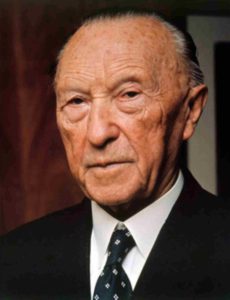

 sent his sympathies ?. Waffen SS comrades arrived in droves from all over Europe.
Marco Avalon reported that the gravestone of Kurt “Panzer” Meyer has been deleted since 30-07-2024..


Message(s), tips or interesting graves for the webmaster: robhopmans@outlook.com


Rene Meyer
Very interesting post, my name is also Meyer from Denmark, my family had nothing to do with the war as we were entertainers, circus people. But what is facinating is that I met Manfred Rommel in Stuttgard in 1988 as he was the Mayor and I was an entertainer in a famous theater Salome, son of Erwin.
Jean Paul Moyano P
Hello, I visited Kurt Meyer´s grave on 2010 during my vacations when I was on Cyprus commisioned for UN Nations as Chief Patrol I visited a girl friend and we went to Hagen Friedhof and looked for Meyer´s grave until we found him. In my city Tucuman, ARgentina were many former SS members received during Presindent Peron, which included to Adolf Eichmann. My step grandfather was an Obersturmbann Führer of SS of Panzerdivisionen. Died in Argentina at 98 years old on dec, 2021. You can contact me for further information. Thank you