

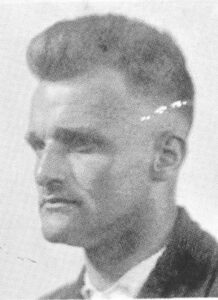
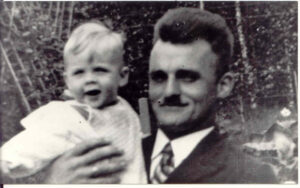
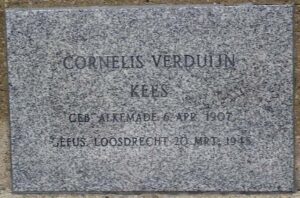
Verduijn, Cornelis “Kees”, born in Alkemade, 06-04-1907, 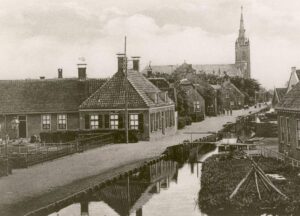 Netherlands, a house painter by profession. Cornelis was married to Adriana van de Gugten. Early after the outbreak of World War II, he became involved in the resistance. He worked together with Jan Spreij
 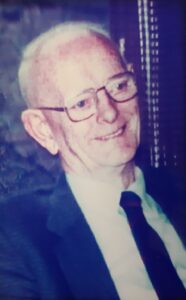 and the teacher Adrianus Plaisier. Jan Spreij acted as provincial leader after Evert Hendrik Jan “Nico” Boven,
 had to go into hiding and was later arrested. At the end of the war, Spreij himself had to go into hiding because he was being sought, but he survived the war. Boven passed away age 23 in concentration camp Neuengamme on 04-11-1944. Adrianus Plaisure survived the war and passed away in Ede, on 29-07-1965, age 76.
Initially, they focused—albeit with little success—on acquiring weapons. Their area of operation was initially not so much in their hometown Ede, but in other provinces. Later in the war, the focus shifted to providing assistance to those in hiding. Thus, Verduijn arranged shelter for several Jewish families. For example, he ensured that the Simon and Nel Leijdesdorff couple 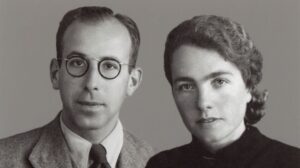 could hide with the Karssenberg family on Molenstraat in Ede. The Cohn couple was in hiding for 28 months with his own parents. In 1943, he was imprisoned for six months in Camp Vught for helping Jews. In 1943, he was imprisoned for half a year in Camp Vught
  for helping Jews. After his release, he went into hiding to avoid being sent to work in Germany. On 13-01-2002, Simon Leijdesdorff passed away in Amstelveen; he was 89 years old.
Verduijn was a member of the Reformed Noorderkerk and, like several other church members, a member of the resistance group De Vries, named after the alias of the group’s leader Evert Jan van Spankeren, who was a teacher at the Veldhuizenschool on Kraatsweg in Ede.
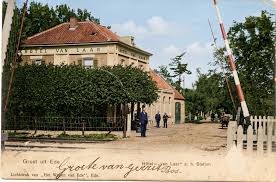
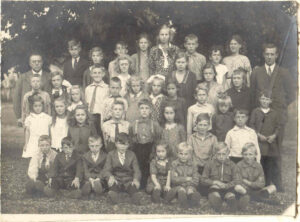
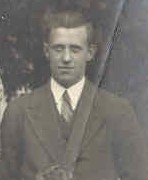 Evert survived the war and passed away at the young age of 51, in Ede, on 25-12-1961.
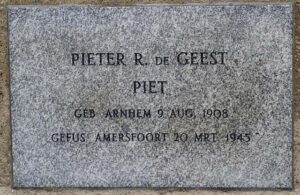
On the nite of March 8 to 9, 1945, four members of Van Spankeren’s group, including Verduijn, along with fifteen others, were arrested after a weapons drop near Lunteren. Beside Verduijn, they were Pieter Rutger “Piet” de Geest, age 36 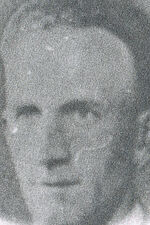
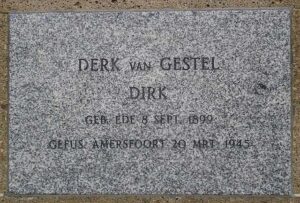
 Derk “Dirk” van Gestel, age 45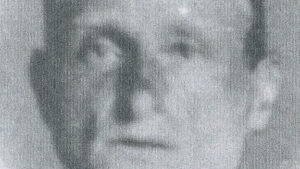
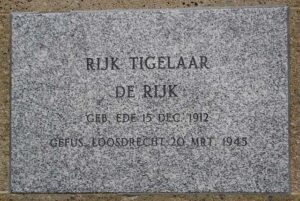
 and Rijk Tigelaar, age 32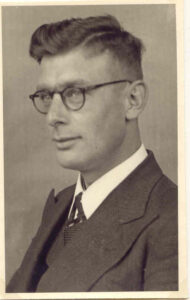
On 20-03-1945, Pieter “Piet ” van Geest, age 36, with nine other resistance men were executed on the Appelweg in Amersfoort in retaliation for the murder of the Dutch ‘collaborating’ police officer, Gijsbertus Godevridus (Gijs) van de Hoef.
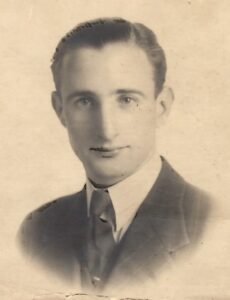
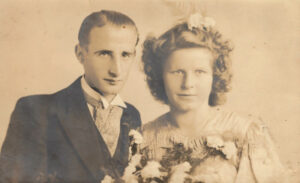
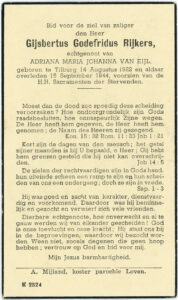 The Dutch police officer, age 22, dies on 15-09-1944 from injuries sustained during a shooting at the N.S. workshop in Tilburg..
The same terrain had already been used for a dropping a week earlier. Van Spankeren had been against reusing the site and had agreed with the Edese resistance leadership that a number of members of his group would first keep watch over the site for several nites to ensure that the Germans did not show any extra interest.
On 08-03-1945, Derk Wildeboer, 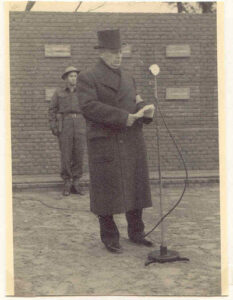 alias Bill, here with Prince Bernhard from Holland
 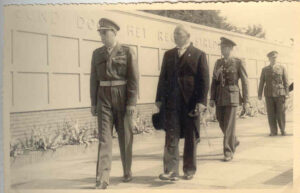 head of the Ede resistance, decided, at the urging of secret agent François Beckers and other staff members, that the dropping should go ahead after all. Van Spankeren was not reachable himself to possibly object. The other members of his group refused to cooperate. Verduijn and four other members of the De Vries group were already present on the site, however, because they were keeping an eye on things there. They were not happy with the event going ahead, but they did cooperate with the dropping. It was an NSB
 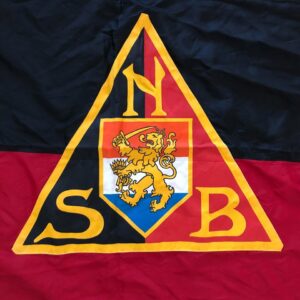 member who noticed that there were a lot of people in the woods in the evening. He became suspicious and warned the Germans, who arrested several resistance members after the dropping. The NSB (National Socialist Movement in the Netherlands) under command of Anton Adrian “Ad” Mussert
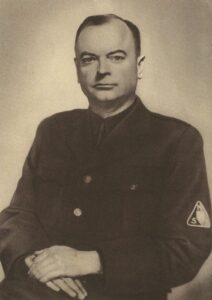


 is a political party that collaborated with the Nazis during the occupation years. Traitor Mussert, age 51, is sentenced to death. Exactly one year after his arrest, he is executed by firing squad on 07-05-1946.
The detainees were transferred to De Wormshoef, 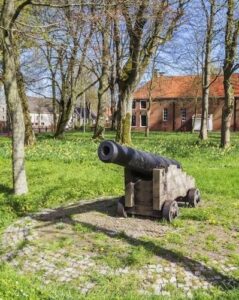 the regional headquarters of the Sicherheitsdienst/ SD
Death and burial ground of Verduijn, Cornelis “Kees”.
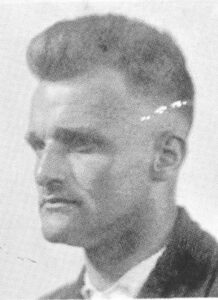
 They were interrogated there with great violence and after a few days transported to Camp Amersfoort
 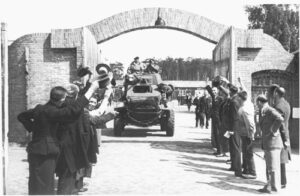 as death candidates. On 20-03-1945, ten detainees, including Verduijn, age 37, and five others involved in the arms drop, were transported by bus to Loosdrecht. In the roadside ditch where a German sergeant had been killed a week earlier, they were executed.
Verduijn was married to Adriana van de Gugten. She was left with four children. Their youngest son, Ben Verduijn, 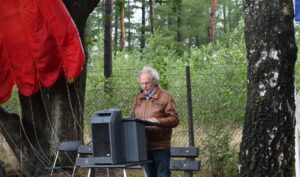 who was six months old when his father passed away, later published several books about the weapon drop. In 2020, a book about his father was published: My Shield and Trust.
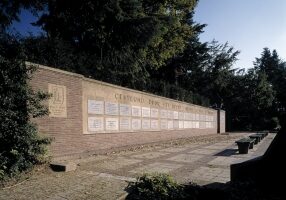
The body of Verduijn was interred after the war in The Mausoleum in Ede. In April 2017, it was announced that a Cornelis Verduijnstraat would be built in the new resistance heroes neighborhood on the former Ede-Oost barracks complex. In November 2021, Verduin received the honorary title of Righteous Among the Nations from the Israeli Holocaust memorial center Yad Vashem. 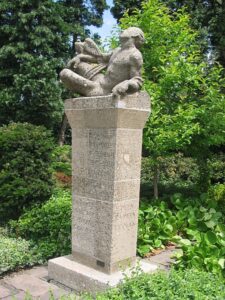 The war monument in Nieuw-Loosdrecht (municipality of Wijdemeren) is a natural stone statue of a dying male figure with a dove on his right arm. Around his arms and one leg, he bears broken shackles. The statue is placed on a tapering, tuff stone column with a capital. The monument is 70 centimeters high, 85 centimeters wide, and 69 centimeters deep. The pillar contains the names of ten individuals executed by the occupiers and other war victims from Loosdrecht and the surrounding areas. The name of the designer has also been inscribed.


Leave a Reply