


Ulex, Wilhelm, born 15-07-1880, in Bremerhaven 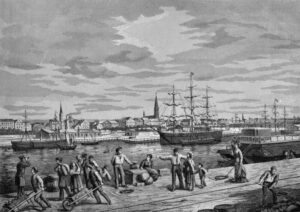 , Germany to the the lawyer Caspar Ulex, a judge at the Higher Regional Court and president of the senate at the Hanseatic Higher Regional Court.
  Wilhelm Ulex passed his high school graduation exam at the Wilhelm Gymnasium in Hamburg in 1899.
On 02-09-1899, Ulex joined the Holstein Field Artillery Regiment No. 24 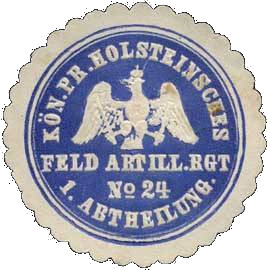 as an ensign, where he was promoted to second lieutenant on 16-02-1901. This was followed by promotion to first lieutenant on 18-10-1909, and to Hauptman on 18-12-1913. During World War I, Ulex was deployed with his regiment on the Western Front. He was awarded both classes of the Iron Cross,
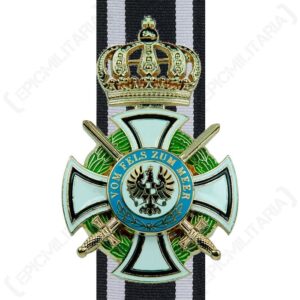
 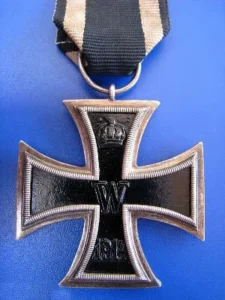 the Knight’s Cross of the Royal House Order of Hohenzollern with Swords,
  the Mecklenburg Military Merit Cross II. Class
 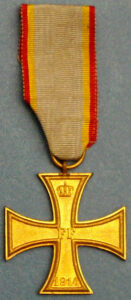 and the Bremen Hanseatic Cross,
 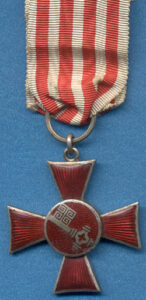 as well as the Wound Badge in Black.
 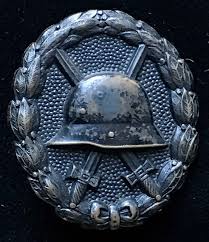 Ulex received the Military Merit Cross III Class with War Decoration from the Austrian allies.
After the end of the war, he was transferred to the Reichswehr. 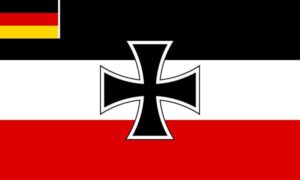 Ulex was assigned to the 2nd Division in Stettin on the staff of the Artillery Commander II and promoted to Major on 01-10-1922. In 1926, he transferred to Schwerin to join the staff of the 2nd (Prussian) Artillery Regiment.
 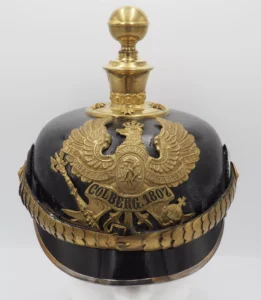 In this position, he became a Lieutenant Colonel on 01-04-1928. On 01-10-1931, he was appointed colonel commander of the 2nd Artillery Regiment and then, from October 1933, Major General artillery commander VI.
In August 1935, he became Infantry Commander II and, on 01-10-1935, when the units were exposed, Lieutenant General Commander of the 12th Infantry Division.  From 06-10-1936, Ulex commanded the newly formed XI Army Corps in Hanover as commanding general.
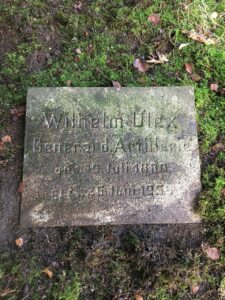
Death and burial ground of Ulex, Wilhelm.
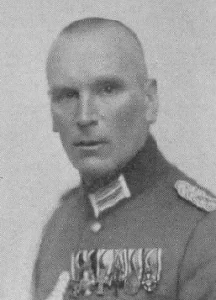
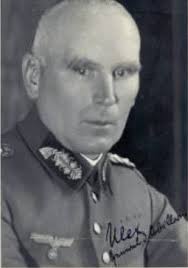

Wilhelm Ulex was considered politically unreliable and retired as General of the Artillery on 31-03-1939.
During the invasion of Poland, Ulex was called up again due to a shortage of army commanders and in September became commanding general of the X Army Corps, which was subordinate to the 8th Army in Army Group South.  From 15-10-1939, Ulex was deployed as commander in the southern border section. In March 1940, together with Colonel General Johannes Albrecht Blaskowitz,
 commander-in-chief of the German occupation army in Poland, he protested against the violent acts of the SS
  and police troops in occupied Poland and categorically demanded their replacement:… the increasing acts of violence by the police forces show a completely incomprehensible lack of human and moral sensibility, so that one can speak of nothing less than dehumanization.” Ulex was relieved of his post shortly thereafter. On 02-06-1940, he became commander of Wehrkreis I, a position he held until April 1941, and on 31-12-1941, at the age of 61, he was retired.
Due to his Christian worldview, Ulex was critical of the Nazi regime. He was considered “hostile to the party.” Ulex was a sympathizer of the Confessing Church and was therefore classified by Reichsführer SS Heinrich Himmler 

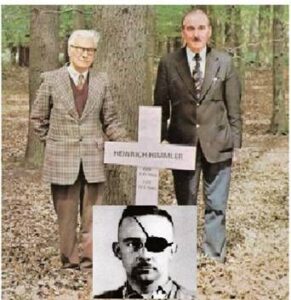 as an “unrepentant representative of the Confessing Front.” From 1953 onwards, Ulex was a member of the Gesetzlose Gesellschaft zu Berlin (Lawless Society of Berlin).
Wilhelm Ulex passed away on 26-06-1959, age 78, in Bremerhaven and was buried in the family grave in Ohlsdorf Cemetery. It is located on Stiller Weg in square AC 8.


Leave a Reply