


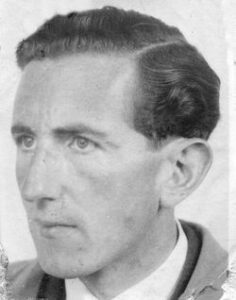
Thijssen, Jan, alias Lange Jan and Karel born 29-12-1908, in Bussum, 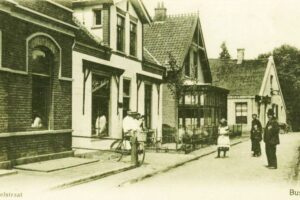 Gooise Meren Municipality, Noord-Holland, Netherlands. Jan was a cousin of Theo Johannes “Do” Thijssen
 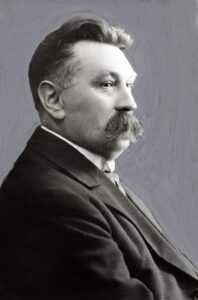 , known as a writer and a member of the House of Representatives for the Social Democratic Workers’ Party (SDAP).
  Jan was born in Bussum in 1908. Thijssen came from a socialist family. The family lived at Gooilaan 12 in the Het Spiegel neighborhood. His father was a partner in the accounting firm Thijssen & van de Kieft,
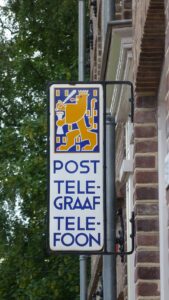
  which was frequently used in SDAP and Dutch Trade Union Federation (NVV) circles. Thijssen’s family wasn’t well-off. In Bussum, he attended the five-year HBS (Higher Secondary School). Thijssen wanted to continue his studies, but there was no money for university. Thijssen’s interest turned to electrical engineering. While at HBS, he began repairing and building radios. He sold the radios to private individuals, thus earning the money to study electrical engineering at the Secondary Technical School. After completing his military service, he became an electrical engineer at the state-owned Post, Telegraph, and Telephone Company (PTT).
  In 1938, the company charged him with detecting illegal transmitters. In May 1940, he was an infantry officer. After the demobilization of the Armed Forces, he married Cornelia van de Weijer and settled in Rijswijk.
Shortly after the German invasion in 1940,  Thijssen began building a domestic transmitter network independently. After coming into contact with the Ordedienst (Order Service),
 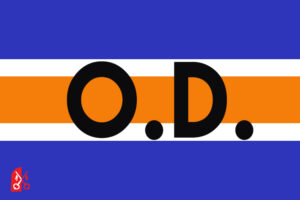 he was asked by this resistance organization to build a transmitter network for the OD (Order Service). The Ordedienst leadership had long desired to establish its own radio link between General Headquarters and the regional commanders. The domestic network of radio transmitters would serve as a backup communication system in case the Germans destroyed the telephone and telegraph connections between the major population centers.
What Thijssen offered was exactly what the OD’s Chief of Staff, Mr. Pieter Jacob Six, 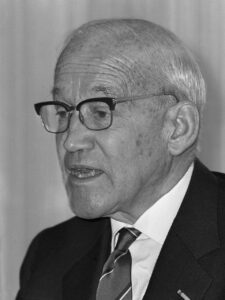 needed. Moreover, his task of building a radio service and the idea of being able to provide important services in the event of an imminent Allied invasion satisfied Thijssen’s impetuous drive. In the summer of 1942, Thijssen was appointed head of the Radio Service at the OD. After months of hard work, the domestic transmitter network was ready for use by mid-1943. Thijssen and his staff had established a radio group in each OD region. Code officers were attached to these radio groups. They were able to send coded telegrams from General Headquarters in Amsterdam over the transmitter network to the radio groups in the OD regions. Thijssen wanted to deploy the domestic transmitter network as quickly as possible. Jan Thijssen received orders from Pieter Jacob Six, Chief of Staff of the OD, to wait until the Netherlands was liberated and the German retreat was complete before using the domestic transmitter network.
Thijssen grew disillusioned when it became clear to him that the O.D. wished to use his radionetwork solely for their own purposes. He also felt irritated by the much too passive attitude of the O.D.. He advocated a new, nationwide organization, which was to fully occupy itself with active resistance like sabotage and keep in close contact with the Allies. At the end of April 1943, along with six other underground workers, including the Communist D. van der Meer from Amersfoort. he established the R.V.V. (Raad van Verzet,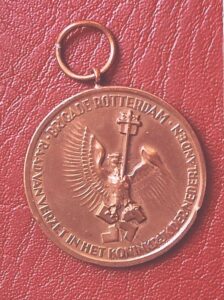 the Council for Resistance in the Kingdom of the Netherlands). Van der Meer resigned a month later and was succeeded by Gerben Wagenaar,
 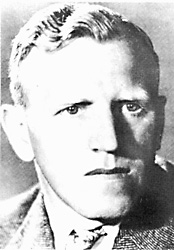 one of the national leaders of the Military Commission, the resistance movement of the Dutch Communist Party.
  The April/May general strike of 1943, started spontaneously following a notification by German General Friedrich Christian Christiansen
 to the effect that all former Dutch military personnel be returned to imprisonment as POW’s, caused Thijssen to call for a boycott of this measure and to committ sabotage. Jan was the first to inform London of this strike and his proposed actions through his own transmitter. During 1943 and 1944, the R.V.V. performed liquidations, raided distribution offices and public records and committed acts of sabotage. However, the objective of the R.V.V. to gain overall leadership within the active resistance was not reached. This was partly due to the fact that the illegally printed organ of the C.P.N. ‘De Waarheid’ (Truth)
 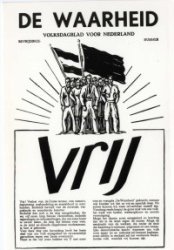 identified itself more and more with the R.V.V., lending the organization an -albeit undeserved- communist aura. The O.D. and the R.V.V. couldn’t agree on matters either causing the Chief Staff of the O.D., Jhr. Pieter Six to oust Jan Thijssen as Chief of Radio Service of the O.D. There was also much rivalry between the R.V.V. and the Landelijke Knokploegen (L.K.P., National Raiding Parties).
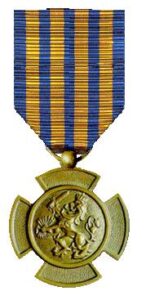
  From April 1944 onwards, the R.V.V. maintained radio contact with the London based Bureau of Intelligence, established with the assistance of Thijssen’s friend and colleague Andreas Wilhelmus Maria (Andries or Dré) Ausems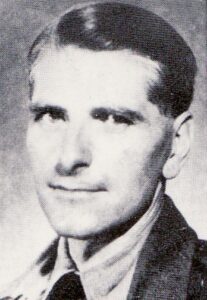
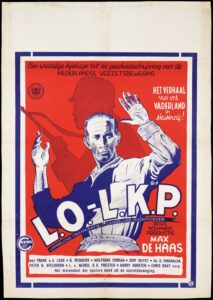
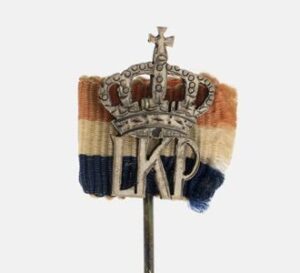
 who had been trained in England as a secret agent. July 1944, at Deurne Castle, a meeting took place between the national leaders of the R.V.V. At this meeting, Thijssen proposed the establishment of an Operations Center, to be headed by himself. The existing R.V.V. groups had to be transformed into small sabotage groups to be deployed mainly against the German Army. In part aided by local resistance activities, the Allied drive through western Europe progressed faster than had been anticipated. At the end of August, the L.K.P.
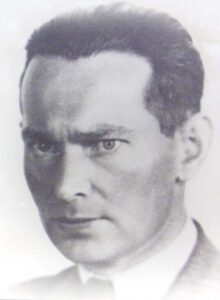
  and the R.V.V. also received weapons by airdrops and the Allied Supreme Command gave orders for large-scale sabotage acts directed against the Dutch railway system. There was however a split between Jan Thijssen’s R.V.V. and Frank van Bijnen’s
  L.K.P.; the latter having been named National Commander of Sabotage within the L.K.P. on 25-08-1944. Problems were inevitable and so, on September 12th, the newly appointed commander of the Binnenlandse Strijdkrachten (B.S., Internal Armed Forces), H.R.H. Bernard von Lippe Biesterfeld
  ordered the L.K.P., the R.V.V. and the O.D. to start the so-called Delta council to end the rivalry between the various organizations. Colonel Henri Koot
 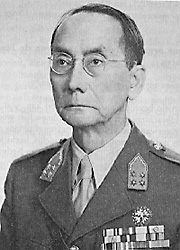 was asked and he accepted to take command of the B.S, Internal Security Forces.
 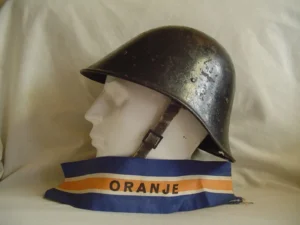 Jan Thijsen requested to be permitted to set up his HQ in Amsterdam.
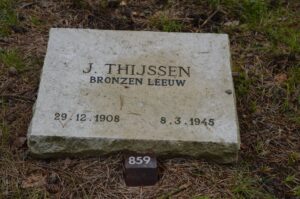
Death and burial ground of Thijssen, Jan, alias Lange Jan and Karel.
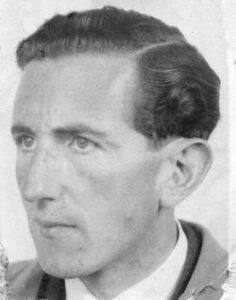
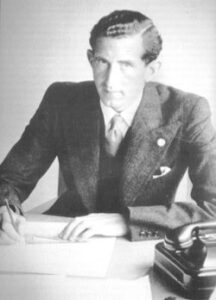
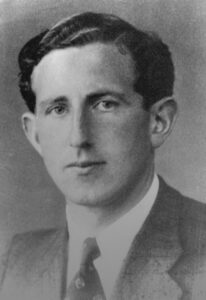
At that time however, Jan Thijssen and Frank van Bijnen were heavily involved in underground activities in support of the battle for Arnhem which was in progress at that very moment. Therefore they were absent from the Delta meeting in Amsterdam. As a result, the O.D. claimed ever more power for itself, something Thijssen could only disagree with. Among other things, he claimed the weapons that had been dropped for himself. He also clashed with Van Bijnen and a crisis within the B.S. was looming. The disagreement went on for weeks and erupted when ‘Commander Delta’ Koot relieved Thijssen of his function. A few days later, 08-11-1944, on the highway between Rotterdam and The Hague driving a Red Cross van, Thijssen was arrested by the Germans Thijssen was taken to a prison in Zwolle. March 8th, Jan Thijssen was executed. He was one of 116 inmates from various prisons, mainly members of the resistance, who were taken to De Woeste Hoeve 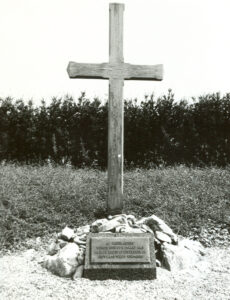 and shot in reprisal of the raid on SS-Obergruppenfuhrer und General der Waffen-SS und der Polizei, (General of the SS, Waffen-SS and Police) Rauter, Johan Baptist Albin “Hanns.
  The prisoners, in five groups of twenty and one of sixteen, were taken to the exact location of the raid near De Woeste Hoeve and shot.
  The German Oberwachtmeister der Ordnungspolizei (Chief of Police), Helmut Seijffards who refused to be a member of the firing squad, was executed on the spot as well. Of all the people being led to their execution, Jan Thijssen was the only one attempting to escape, a remarkable example of rebelliousness and resistance to the bitter end. In his prison cell in Zwolle, he wrote a few phrases on the wall: “Ons slaat geen stormwind neder”, “Het hart kent zijn eigen droefheid alleen” en “Spijt, smart en schrik door dun en dik. De dood steeds in ’t zicht na vreselijk gericht. Gestreden onversaagd tot de vrijheidzonne daagt!”. ( “No storm will bring us down”, “Only the heart knows its own sadness”, and “Regret, grief and fright against all odds. Always facing death after terrible Judgment. In struggle undaunted ’till the sun of freedom rises”).
Thijssen, Jan, alias Lange Jan and Karel, is buried at the Nationaal Ereveld Loenen. Loenen Cemetery of Honor, Apeldoorn Municipality, Gelderland, Netherlands. Section A 859.


Leave a Reply