

Trevor-Roper, Richard Algernon Dacre, born 19-05-1915 in Shankin on the Isle of Wight 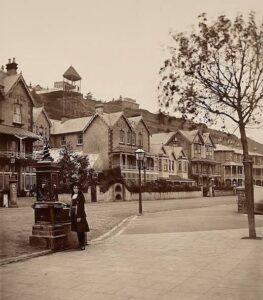 to Charles Cadwaladr and Gertrude Alice, born Clabby and was educated at Oriel House prep school in Flintshire and Wellington College in Crowthorne, Berkshire.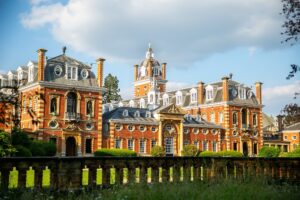
In February 1934, he entered the Royal Military Academy in Woolwich 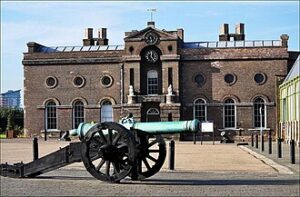 and on 29-08-1935, was commissioned into the Royal Artillery as Second Lieutenant.
By 1937, he was serving in 2nd Medium Brigade 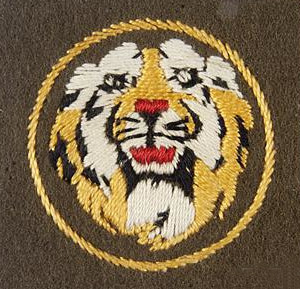 at Longmoor Camp in Hampshire but, and for unexplained circumstances, he resigned his commission with effect from 01-08-1937 and left the Army.
With the approach of war, Richard applied to join the RAF  and by the end of the month, was posted to RAF Cardington in Bedfordshire. He really wanted to become a pilot, but all vacancies were taken up by this time, so on 24th August, he signed up as a wireless operator/air gunner at No.2 Electrical and Wireless School at RAF Yatesbury.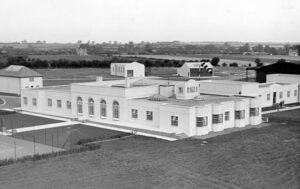
Following various training courses, in August 1940, Richard was posted to 16 Operational Training Unit  at RAF Upper Heyford and in early October, to RAF Lindholme, joining 50 Squadron,
 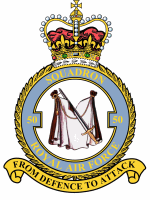 under command of Wing Commander G.W. Golledge,
 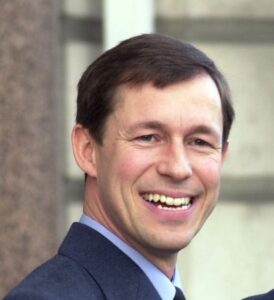 one of Bomber Command’s most prestigious units where he flew his first mission on 6th November as the rear gunner in a Hampden.
In November, Trevor-Roper joined the crew of Squadron Air Chief Marshal Sir George Augustus Walke,
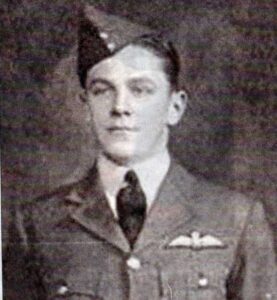
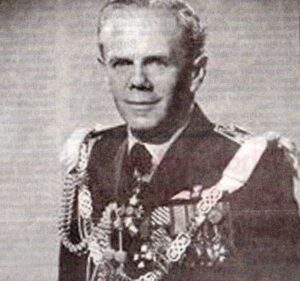 with an operation to Hamburg on 14th November being the first of some nineteen with this crew. This resulted in Richard being awarded the Distinguished Flying Medal DFM,
 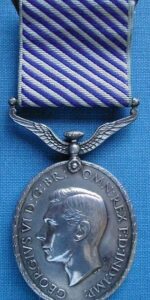 with the Citation highlighting several incidents, particularly one on 11-02-1941 when radio equipment failed and “his skill undoubtedly ensured the safe landing of the aircraft” and “he was an outstanding inspiration to his own and other crews.”
On 17-10-1941, he was promoted to Pilot Officer and, after flying missions with several different crews and being sent on a “Gun Turret Course”,
Richard was posted to 50 Squadron’s Conversion Flight on 14-05-1942, with the squadron moving to RAF Swinderby and from where, on 25th June, he flew on the third Thousand Bomber raid. The term “thousand-bomber raid” was used to describe three night bombing raids by the Royal Air Force against German cities in summer 1942 during World War II.
Richard married Patricia Edwards in St Andrew’s church in Nottingham on 05-09-1942, but this did not seem to curtail, or even diminish, his dedication for off-duty fun! At some stage, late in his RAF career, he was awarded the Grog Gong, the citation stating that “……even though surrounded by Air Commodores, Group Captains, etc he can still drink himself into a perfect coma …. and from all his operations at the bar, he has returned unscathed, and many times has removed the pants of more sober persons”.
Despite this (!), Richard stayed on instructional duties until he returned to 50 Sqn, via 1660 Conversion Unit, and on 14th November, he joined the crew of Squadron Leader Peter Birch, flying eleven operations with this crew, the last to St Nazaire on 22-03-1943.
Also on this mission were pilots Henry Maudsley 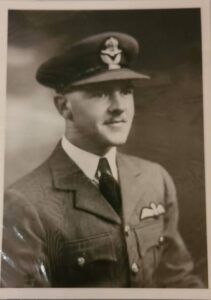 and Les “Leslie” Gordon Knight
  and their crews who, according to 50 Squadron Operations Book, were transferred to RAF Scampton on 25th March – as was Richard, but there is no record as to how he arrived.
Suffice it to say that he and 132 other aircrew joined 617 Squadron, nickname ‘The Dambusters’ 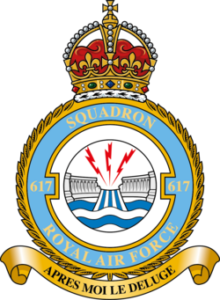 under controle of , Wing Commander Guy Penrose Gibson
 and, less than two months later, flew to the dams on Operation Chastise. Operation Chastise, commonly known as the Dambusters Raid, was an attack on German dams.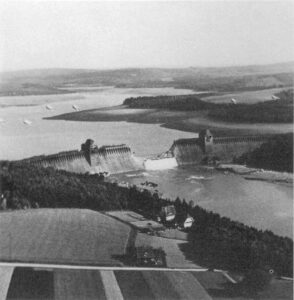
Eventually, 617 Squadron went back on operations, but Trevor did not join the core of the Gibson crew which transferred to the new CO, Wing Commander George Walton Holden 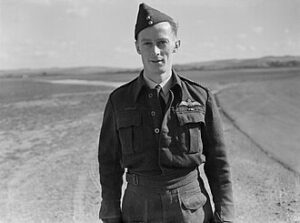 .
.
In March 1944, now promoted to Flight Lieutenant and after another period in a training unit, Richard was posted to 97 (Pathfinder) Squadron  based at Bourn and joined a very experienced crew captained by Flight Lieutenant Desmond Rowlands.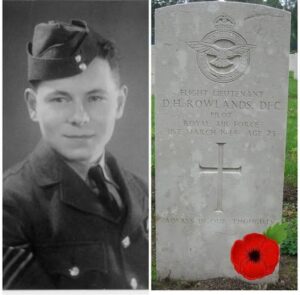
“One of the shot-down Pathfinders was that of Flight Lieutenant Desmond Rowlands of 97 Squadron. His crew were mostly second tour men who had only just started operating with the Pathfinders. Their aircraft was found near Coburg by the Messerschmitt 110 of Major Martin Drewes. 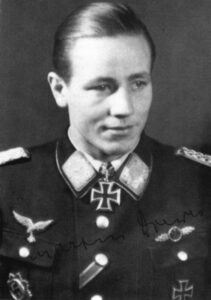
 Major Drewes survived the war and passed away 13-10-2013, age 94, in Blumenau, Brazil. The German positioned himself under the Lancaster and fired just one burst of cannon shells into the starboard wing. There was no return fire and the bomber went straight down and burst apart with a brilliant red explosion as its bombs and the four red target indicators blew up.
“Six bodies were found near the main fuselage on the edge of a wood. The tail came down some distance away and the body of the rear gunner was found in his turret.
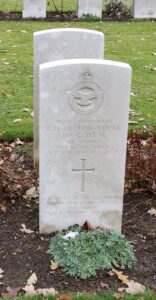
Death and burial ground of Trevor-Roper, Richard Algernon Dacre.
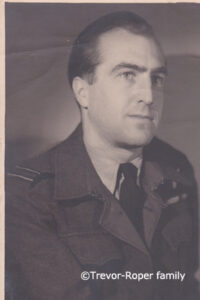
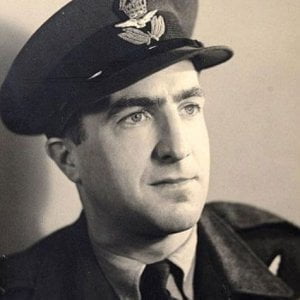
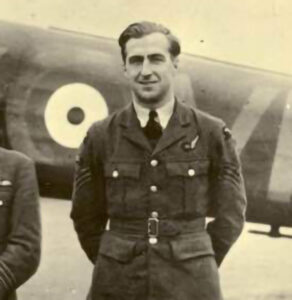
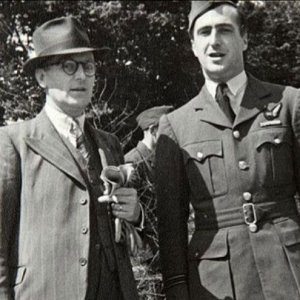
Their luck ran out on Bomber Command’s worst night of the whole war, on 30/31 March 1944, when ninety-five bombers were lost from a total of 795 that set out to attack Nuremberg.
Richard’s aircraft was shot down near Ahorn, by the German nightfighter pilot, Major Martin Drewes, who claimed five ‘kills’ that night.
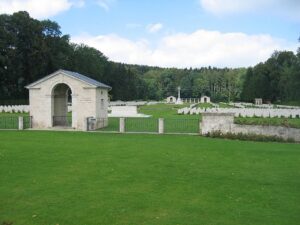
All on board died and are buried in Durnbach near Gmund am Tegernsee, CWGC War Cemetery. Am Moos, 83703 Gmund am Tegernsee, Germany.
Message(s), tips or interesting graves for the webmaster: robhopmans@outlook.com





Leave a Reply