




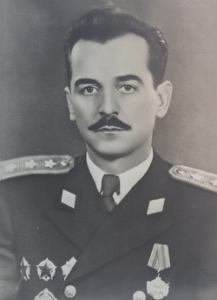
Popović Konstantin “Koča”, born 14-03-1908, Belgrade, 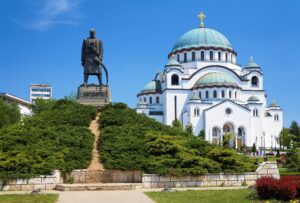 Kingdom of Serbia, in a wealthy merchant family, as the son of Aleksandar Popovic and Ruža, born Zdravković. At the age of four, in 1912, he moved with his parents to Switzerland, where they lived for some time. There, Popović learned to play the piano and was also a solo singer in a choir. He first learned to read and write in French, and only after a few years, when he arrived in Belgrade in 1921, did he learn the Serbo-Croatian language.
“Koča” completed his high school education in Belgrade in 1926 and then went into military service. Koča Popović graduated in 1927 from the officer training of the Royal Yugoslav Reserve Artillery in Sarajevo 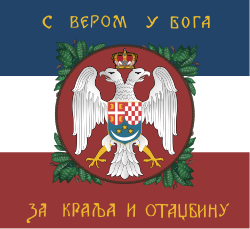 and was promoted to second lieutenant in the artillery in the same year.
Popović then became involved with the then-illegal Yugoslav Communist Party. 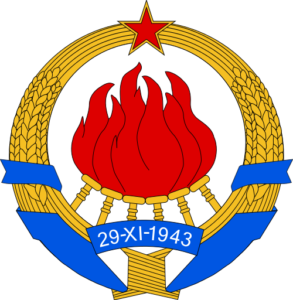 In Paris, there was a center of the Comintern, led by Josip Broz Tito,
 which was used to supply volunteers from the Balkans to the Republicans in the Spanish Civil War. Popović was recruited thru this center, along with a select group of party members. Popović fought on the side of the Spanish Republican troops and not on the side of the International Brigades, and held the rank of artillery captain. At the end of the Spanish Civil War, Popović escaped thru France and returned to Yugoslavia.
In 1940, Popović, as a reserve officer in the Royal Yugoslav Army, was mobilized and instructed by his colonel to be vigilant against subversive activities within the regiment.
After the surrender of the Royal Yugoslav Army to the German Army in April 1941, Popović organized the Kosmaj detachment during the uprising in Serbia. At the formation of the First Proletarian Brigade, Popović became its commander and subsequently took command of the First Proletarian Division.
During his time as the leader of the partisans, he met William Deakin, here with Tito 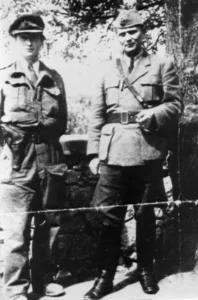 leader of the British military mission to Tito’s headquarters.
Together with dozens of other veterans from World War II and the Spanish Civil War, Popović was one of the founders of the football club Partizan Belgrade in October 1945.
After the establishment of a communist regime in Yugoslavia in 1945, he served as the chief of the general staff of Yugoslavia from 1945 to 1953. In this role, he also conducted negotiations with representatives of Western powers involved in the modernization of the Yugoslav People’s Army 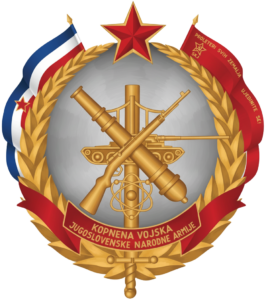 during the conflict with the Soviet Union (also known as the Informbiro).
As a result, Popović became the Minister of Foreign Affairs of Yugoslavia in 1953 and held this position until 1965. As Foreign Minister, he was on several occasions the head of the Yugoslav delegation at the UN General Assembly.
From 1965 to 1972, Popović was a member of the Federal Executive Council and from 1966 to 1967, Vise President of Yugoslavia. In 1985, he and Peko Dapčević 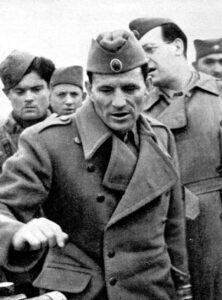 were considered for a promotion to general of the army, but both declined the proposal.
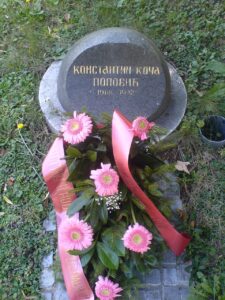
Death and burial ground of Popović Konstantin “Koča”.
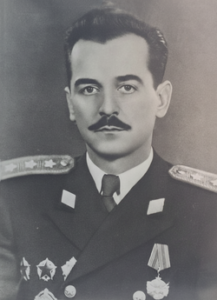
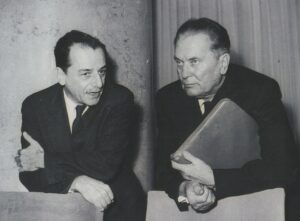
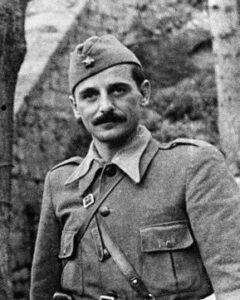
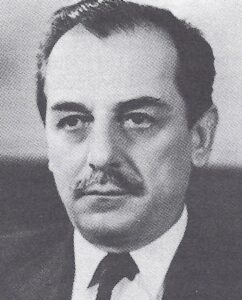
Popović passed away in (age 84) in Belgrado, Servië, Federale Republiek Joegoslavië. at the age of 84. “Koča” is buried at the Novo Groblje, cemetery, Belgrade, Belgrade, City of Belgrade, Servie.
Message(s), tips or interesting graves for the webmaster: robhopmans@outlook.com


Leave a Reply