


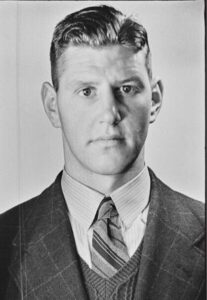
Osborne, Ian Ronald, born 24-02-1924 in City of Sydney, New South Wales,  Australië, the son of Ronald Charles Osborne and Mabel Isabel Osborne, later of Killara, New South Wales, Australia. They had married on the 02-02-1921 in St James’ Church in Sydney. Ian had an older brother David Ronald and a sister June.
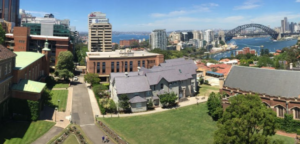
Prior to enlisting, Ian was a student at the Sydney Church of England Grammar School.
 Ian volunteered for the Royal Australian Air Force
  in Sydney on the 12-09-1942 and began training as a navigator under the Empire Air Training Scheme before embarking for overseas service in England.
Arriving in Britain he received further specialist training before joining No. 100 Squadron,  Royal Air Force. 100 Squadron, under command of Air Marshal George Jones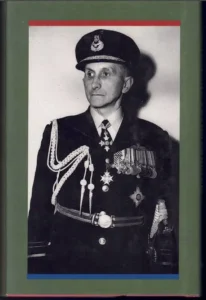
 were part of Bomber Command and flew the Avro Lancaster heavy bomber.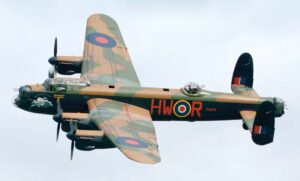
Taking off from R.A.F. Grimsby 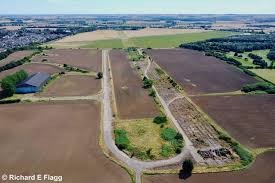 on the night of the 3rd/4th February 1945, Ian was the navigator in Lancaster PB569
 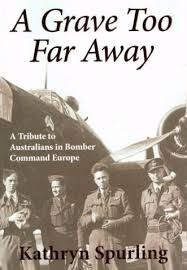 and taking part in a bombing raid on the Prosper Benzol Works at Bottrop in the Ruhr industrial area of Germany.
Lancaster PB569 shook to the full roar of the Merlin engines, Pilot Robin Ordell 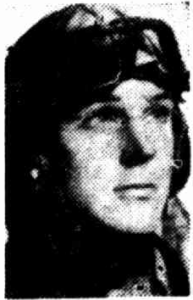
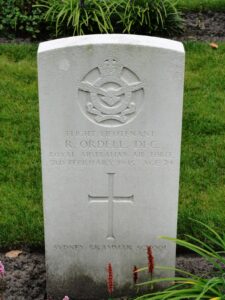 released the brakes and the bomber gained momentum until it lifted skywards with the slipstream flattening the grass. It was 1605 on 03-02-1945: destination, at Bottrop, Germany. Little did they realise the dwindling view of the English coastline would be the last for all bar one. Even this late in the war German anti-aircraft defences were lethal. For the last five months this crew, like others, had danced with searchlights. Ordell saw the searchlights and knew they would be relentless in their pursuit of bomber targets.
Intercepted by Hauptmann Heinz Rökker 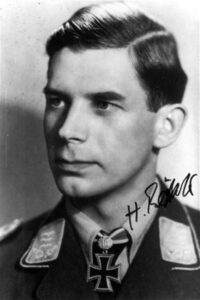 of the 2./NJG 2,
  flying Ju 88 G-6 4R+CK from Twente airfield. Fired upon with a single burst of Schräge Musik.
Schräge Musik – also known as “schräge Nachtmusik” – is the term for a German weaponry technique during World War II, in which machine guns or automatic cannons were mounted at an upward angle in a nite fighter. With the help of the slanted music, British nite bombers, which had no downward-firing weapon positions, were attacked without having to expose themselves to danger.
The name was derived from the slanted arrangement of the weapons. “Oblique Nite Music” is a reference to its use in nite fighters.
Those who died were buried near Venray on 16 February, since when their remains have been taken to Mierlo War Cemetery. The men were initially buried at St. Oda Monastery, Venray: Crew:-Pilot : Flight Lieutenant Robin Ordell RAAF Aus/422251 [Killed] Flight Engineer : Sergeant Charles Scurr RAFVR 1077176 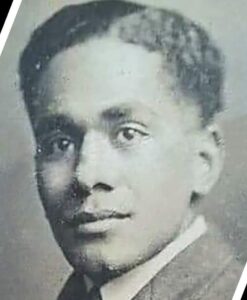 [Killed] Navigator: Bomb Aimer : Pilot Officer John Gordon Treatt Killen RAAF Aus/421913 [Killed] Wireless Operator : Flight Sergeant Keith Kevin Reynolds RAAF Aus/424306 [Killed] Mid-Upper Gunner : Flight Sergeant Raymond Kevin McKaskill RAAF Aus/431183 [Killed] Rear Gunner : Flight Sergeant J Harper RAF [PoW]
The only member of the crew to survive was the British tail-gunner, Flight Sergeant James Harper. He became a prisoner of war and spent the rest of the war in hospital recovering from his injuries.
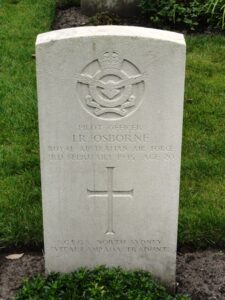
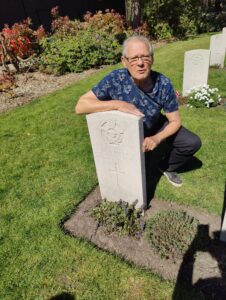
Death and burial ground of Osborne, Ian Ronald.
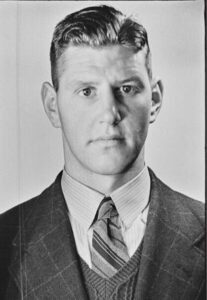
All the dead were originally were buried in the St. Elizabeth Cemetery in Venray, in the Netherlands, but were later re-buried in Mierlo War Cemetery.
Ian, age 20, is commemorated on the Australian War Memorial, Bomber Command Centre Memorial and on the WW2 Memorial at Killara Golf Club.
Message(s), tips or interesting graves for the webmaster: robhopmans@outlook.com


Leave a Reply