

Mutaguchi, Renya, born 07-10-1888, in Saga Prefecture, Kyushu, 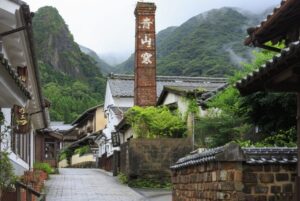 Japan, the second son of Fukuji Nobuyoshi. Nobuyoshi, his father, who was a family member of Saga Prefecture and worked as a lower level and was appointed as a judge. His mother was also a family member of the Saga Prefecture, Mutaguchi, and there was no successor in Mutaguchi’s house, so he decided to make a quantum and heir in the Fukuji family and Mutaguchi family. Thus, as a boy, Renya became ‘Mutaguchi Renya’. Although it is also featured in other three generations , Mutaguchi Renya, who was actually an orphan, had a growth environment. This seems to have influenced the fact that the character of Mutaguchi was a small citizen in a good or bad meaning.
Renya was married to Toshiko, born Suenaga Mutaguchi (1895–1976) and the couple had one child, Terujashu Mutaguchi (1950-2024).
Mutaguchi was a native of Saga Prefecture. He graduated from the 22nd class of the Imperial Japanese Army Academy 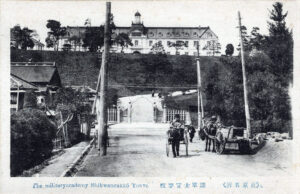 in 1910 and from the 29th class of the Army Staff College
 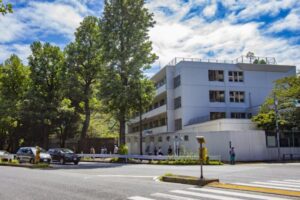 in 1917.
Mutaguchi served in the Japanese forces with the Siberian Intervention against the Bolshevik Red Army  in the Russian Far East. Afterwards, he was sent as a military attaché to France.
Promoted to Major in 1926 and Colonel in 1930, from 1933–1936 he served in the General Affairs Section of the Imperial Japanese Army General Staff in Tokyo, before being transferred to China in 1936 to take command of the Japanese garrison force in Beijing. He was commander of the IJA 1st Infantry Regiment in China from 1936–1938. Units responsible to Mutaguchi were involved in the Marco Polo Bridge Incident 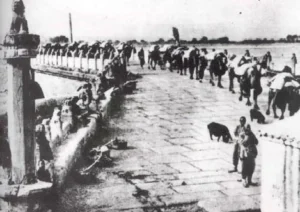 of 07-07-1937, military clash between Chinese and Japanese troops that marked the start of the Second Sino-Japanese War. It began near Beijing after a false report of a missing Japanese soldier led to gunfire at the Marco Polo Bridge.
Mutaguchi was promoted to Major General in 1938, and served as Chief of Staff of the Fourth Army from 1938–1939. He was then recalled to Japan and served from 1939–1941 as Commandant of the Military Preparatory School. 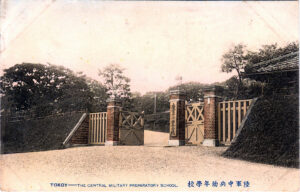
Promoted to Lieutenant General in 1940, with the start of the Pacific War, 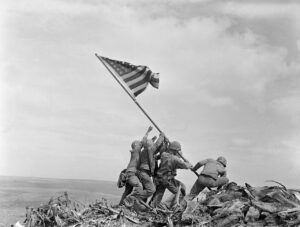 The Pacific War, sometimes called the Asia–Pacific War or the Pacific Theater, was the theater of World War II fought between Japan and the Allies in East and Southeast Asia, the Pacific and Indian Oceans, and Oceania.
Mutaguchi was given command of the 18th Division in April 1941. This division was active in the invasion of Malaya in the early stages of the war, and Mutaguchi himself was wounded 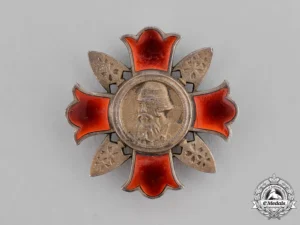 during the Battle of Singapore in February 1942. After the fall of Singapore, the 18th Division was transferred to the Philippines to reinforce units pushing the remaining American forces down the Bataan Peninsula. In April 1942, the 18th Division was reassigned to Burma.
Mutaguchi was then made commander of the Fifteenth Army from March 1943, and strongly pushed forward his own plan to advance into Assam, leading to the Battle of Imphal. The Battle of Imphal was fought from March to July 1944 around Imphal, the capital of Manipur in northeast India. Japanese forces tried to invade India and destroy Allied troops, but the British-led Allies won.
After the failure of the Imphal offensive in May 1944, Mutaguchi refused to allow his divisional commanders to retreat, and instead dismissed all three of them. He eventually called off the attack on 3 July. Some 55,000 of Mutaguchi’s 85,000-man force ended up as casualties, most dying from starvation or disease. This was the worst defeat suffered by the Japanese army at that time. With the complete collapse of the offensive, Mutaguchi was relieved of command on 30 August and recalled to Tokyo. He was forced into retirement in December 1944.
Mutaguchi was recalled briefly to active service in 1945, to resume his former post as Commandant of the Military Preparatory School.
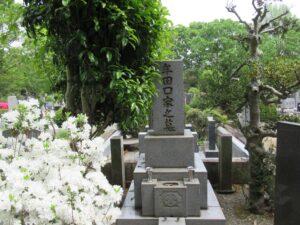
Death and burial ground of Mutaguchi, Renya.
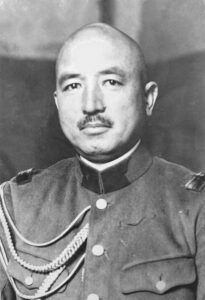
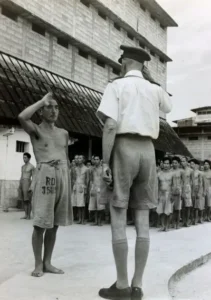
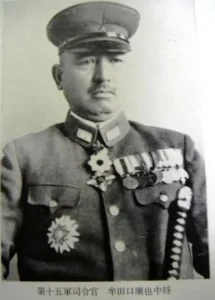
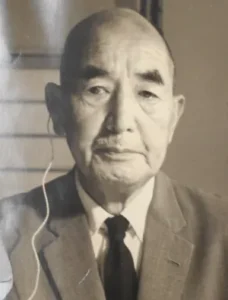
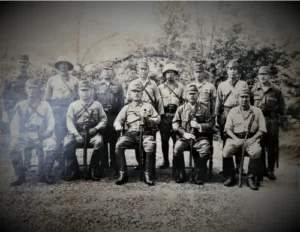 Renya Mutaguchi during his time as commander of the 18th Division. The person in the middle is Renya.
British historian Frank McLynn characterized Mutaguchi as “eccentric,” “reckless,” and a “fanatic,” citing his decision to provide his soldiers with only twenty days of food for the nearly four month-long Battle of Imphal. This led to catastrophic loss of life due to starvation and disease for the Imperial Japanese Army in the battle.
After the end of the war, he was arrested by the American occupation authorities and extradited to Singapore, where he faced a military tribunal which convicted him of war crimes. Released from prison in March 1948, he returned to Japan. Mutaguchi died in Tokyo on 02-08-1966, age 77 and is buried at the Tama Cemetery, Fuchu, Tokyo, Japan. 4-628 Tamacho, Fuchu City, Tokyo 183-0002, Japan.




Leave a Reply