

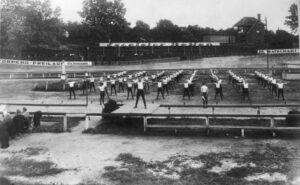
Mazurkiewicz, Jan, “Radosław”, born 27-08-1896, in Lemberg, 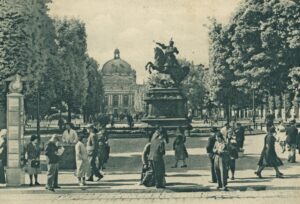 Austria-Hungary, in a craftsman’s family in Lviv. Jan spent his childhood in Zolochiv, where from 1902 he attended primary school and from 1906 to the gymnasium. He was active in Scouting, a member of the “Sokół” (Falcon) Polish Gymnastic Society.
  In 1911 he moved with his family to Lviv, where he continued his education. He was a member of the Organisation of Independent Youth Zarzewie, and later belonged to the Riflemen’s Association
 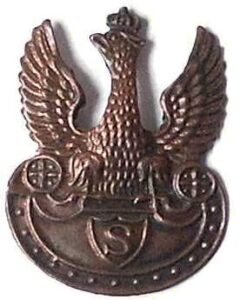 After a short training, he joined the 1st Brigade of Polish Legions,
 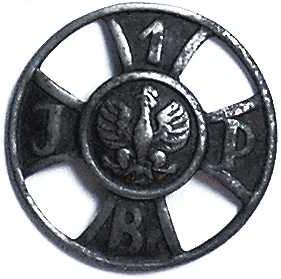 in which he was a soldier of the 1st battalion company. Then he was assigned to the marching battalion of captain Peter Leon Berbecki
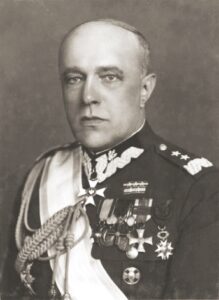
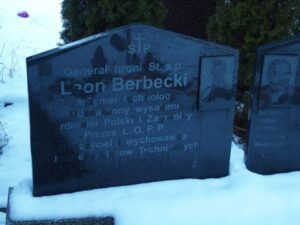 and in his ranks took part in December 1914 at the Battle of Łowczówek. He was wounded and captured by the Russians. He escaped from it in June 1915, after which he managed to get back to his unit. In October wounded again, then he underwent treatment in the hospital.
From November 1918 he was a soldier of the Polish Army. Later, he was assigned to the Second Department of Polish General Staff. During the Polish–Soviet War, he served as a military courier (he imported, among others, Polish patriot, nationalist, Field Marshal, Chief of State and Prime Minister of Poland.Józef Piłsudski’s
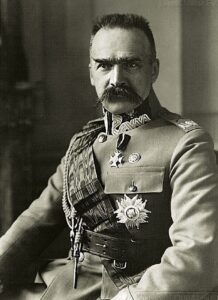
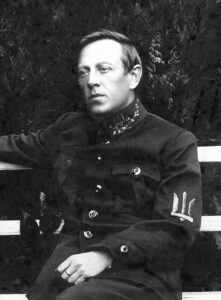
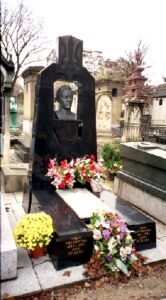
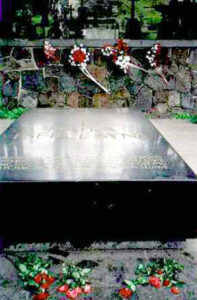 letters to Ukrainian revolutionary, politician and journalist Symon Petliura
 and a counterintelligence officer.
In 1934 he completed the course of the battalion commanders at the Infantry Training Center in Rembertów. From 1938 to 1939 he was a lecturer in tactics at courses for company commanders.
During the Invasion of Poland, he was the head of a diversion on the southwestern front section. After the Soviet invasion of Poland, he founded the Secret Military Organization (TOW) 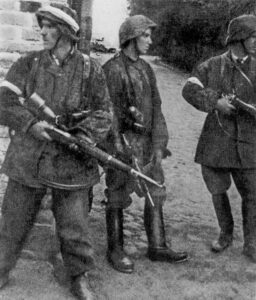 in Stanisławów. On 19-09-1939, he crossed the Polish-Hungarian border, transferring the organization’s headquarters to Budapest. Then he went to France, where he met with General Władysław Eugeniunsz Sikorski.
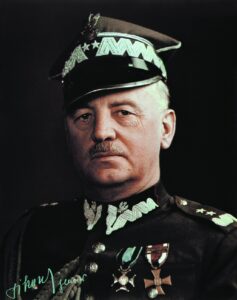
 In June 1940 he returned to the country and assumed the function of the Commander-in-Chief of TOW, an independent combat and subversive organization operating according to the guidelines of the Union of Armed Struggle.
In March 1943, after merging TOW with Kedyw he became the deputy head of the organization, colonel Emil August “Nil” Fieldorf. 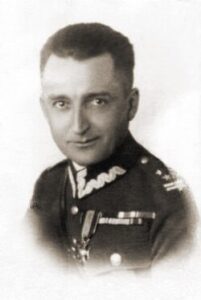
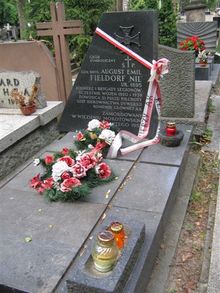 On 01-02-1944, he took the post of commander of Kedyw.
Jan Mazurkiewicz, “Radosław” (standing sideways) 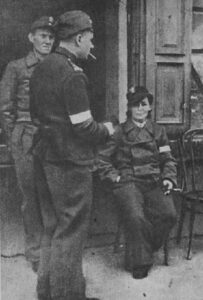 in Wola. Sitting on the chair is his wife Anna Mazurkiewicz, “Irma”.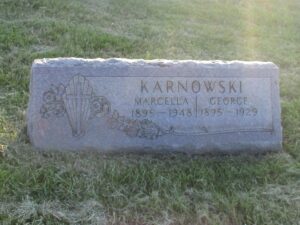
Shortly before the outbreak of the Warsaw Uprising, Mazurkiewicz was made commander of the Radosław Group. This force was one of the largest, best trained and equipped Polish units in the uprising. After the initiation of the uprising, the unit seized major portions of the Wola suburbs, and subsequently defended it against German attacks carried out by troops under the command of SS Gruppenführer Heinz Friedrich Reinefarth

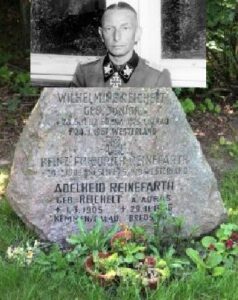 and Standartenführer Oskar Anton Paul Dirlewanger.
 One of the battalions of the group, Battalion Zośka, liberated the Gęsiówka concentration camp
  located within Warsaw and freed 384 prisoners (mainly Jews), most of whom then joined the unit. The Radosław Group fought its way to Warsaw Old Town borough when further defense in Wola became impossible. In the areas of Wola that Reinefarth’s and Dirlewanger’s troops recaptured from the insurgents, at least 40,000 civilians and prisoners of war were murdered in the Wola massacre. On 11 August he was seriously wounded during the fighting
On 15-09-1944, he sent his liaison officer to the east bank of the Vistula in order to establish contact with the troops of the First Polish Army. In the absence of sufficient assistance on their part, on 20 September he ordered his decimated units to leave Czerniaków and pass through the sewers to Mokotów. He left his soldiers a free hand – they could decide whether they would go to German captivity or leave the city with the civilian population. Shortly before the order was signed, Mazurkiewicz was officially promoted to the rank of colonel, by General Tadeusz Bór-Komorowski, 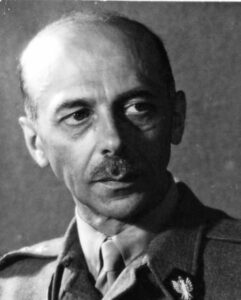
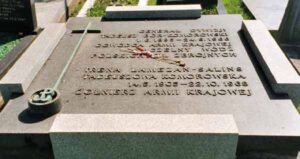 the commander of the uprising.
Jan did not go into captivity, he left the ruins of the destroyed capital with his wife Marcella Karnowski. Jan continued his underground activity in Częstochowa, where the headquarters of the Home Army was located.
After the dissolution of the Home Army on 19-01-1945 and the liberation of Częstochowa by the Red Army,  he took the leadership of the Central Area of the NIE, a Polish anticommunist resistance organisation formed in 1943. Later he became a delegate to the Central Area of the Armed Forces Delegation for Poland, under which he conducted further underground activities against communist authorities.
In the end, he gave up further conspiracy, considering the resistance pointless. On 01-08-1945, he and his wife were arrested by officers of the Ministry of Public Security.  He was released after a month, he headed the so-called Central Liquidation Commission of the Home Army. On 8 September he turned to former Home Army soldiers and people remaining in the underground to call for disclosure and amnesty. For some officers, this was disapproved and even accused of treason. As a result of his appeal, about 50,000 former members of the armed underground were revealed. On 12 September captain Stanisław Sojczyński,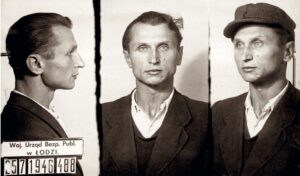
 the leader of the Underground Polish Army, sent an open letter to colonel Mazurkiewicz, in which he criticized him and called him a “traitor”. Sojczynski was executed by communists on 19-02-1947, age 26.
Mazurkiewicz established the Committee for the Care of the Graves of Fallen Soldiers of the Radosław Group. He was in constant contact with his former soldiers, whom he helped find in the difficult post-war years. Through his extensive contacts, he sought employment for his former soldiers – often war invalids. Later, the Stalinist authorities accused him that they were “secret underground meetings aimed at overthrowing the power of the Polish People’s Republic”.
On 04-02-1949, Jan was arrested again. Throughout the investigation, he was forced to testify incriminatingly against the first head of Kedyw, General August Emil Fieldorf, but his relentless attitude resulted in the resignation from attempting to use him as a prosecution witness in the political trial against General. On 16-11-1953, his main trial took place before the Military District Court in Warsaw. On the same day, based on crafted evidence, without admitting defense witnesses, he was convicted for life imprisonment. He served his sentence in Wronki Prison, 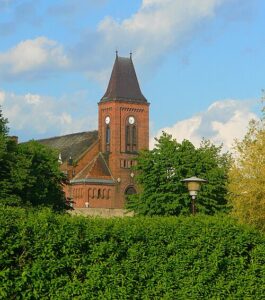 from where he was released as a result of amnesty for political prisoners in May 1956. In 1957 he was rehabilitated.
Commemorative plaque dedicated to Mazurkiewicz in Warsaw. 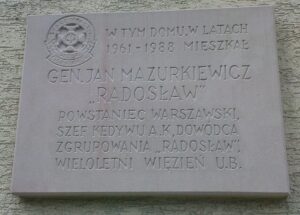
After being released, he took up craft. In 1958, he opened (formally registered to his wife) the “Wiklina” cafe, which he ran until the 1970s. Later he handed it over to the Trade Cooperative of Invalids. By resolution Polish Council of State in October 1980, he was promoted to the rank of Brigadier General. He solemnly received his general nomination in Belweder from the professor Henryk Jabłoński. 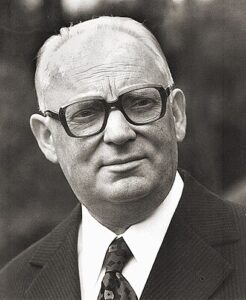
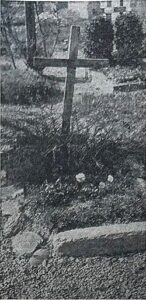
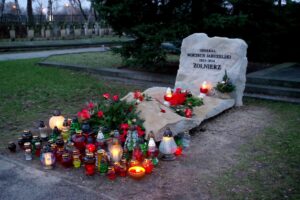
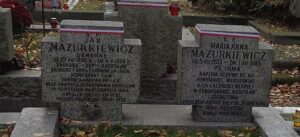
Death and burial ground of Jan Mazurkiewicz, pseudonym: “Zagłoba”, “Socha”, “Sęp”, “Radosław”
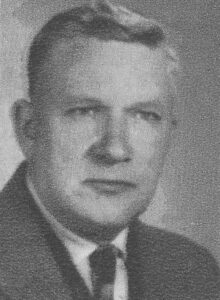 left
left 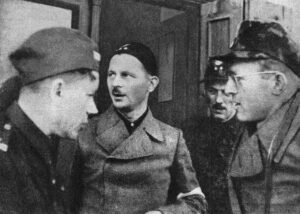 right
right 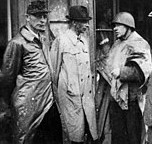
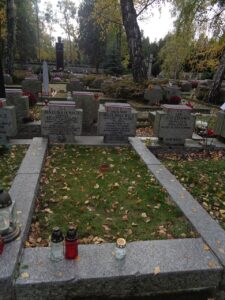
Jan Mazurkiewicz, pseudonym: “Zagłoba”, “Socha”, “Sęp”, “Radosław” passed away 04-05-1988 (aged 91) in Warsaw, Polish People’s Republic and was buried at Powązki Military Cemetery. His funeral was attended by representatives of the highest state authorities, including Generals Wojciech Jaruzelski
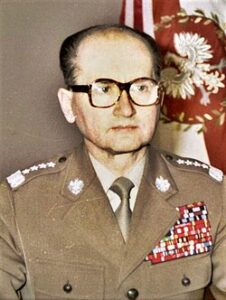
 and Florian Siwicki,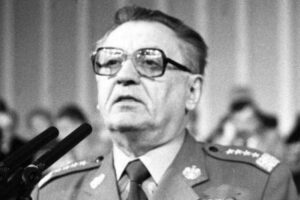
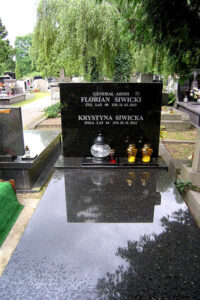 professor Henryk Jabłoński and Jan Antoni Dobraczyński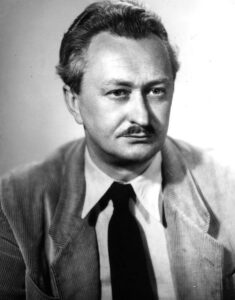
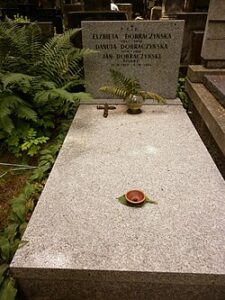
After 1956, he was active in the veterans’ right activism. From 1964 he was vice-president of Society of Fighters for Freedom and Democracy. His wife Marcella Mazurkiewicz Karnowski, born 31-12-1896, passed away 20-04-1948 (age 51).
Message(s), tips or interesting graves for the webmaster: robhopmans@outlook.com




Leave a Reply