


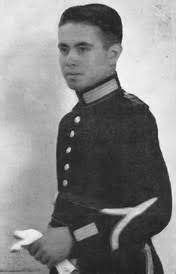
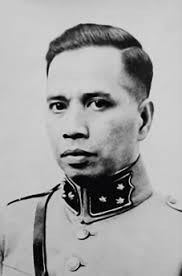
Makatita, Victor (Vic) Lucas, born on 30-04-1919, in Batavia 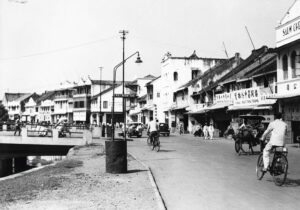
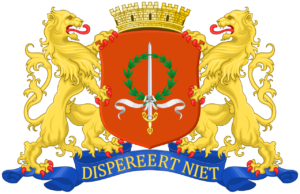 as the son of the Moluccan Lucas Makatita and the Indo Maria Francisca, born Kessler. His parents had 4 children. Anton Pieter, Catherina Elisabeth, Victor Lucas, and Jeanne Cornelia Louise Makatita. In 1927, the family moves to The Hague. They live at Zonnebloemstraat 64
  and he plays football for Quick. When he is 16 years old, he plays in the first team. At the same club, he also plays cricket. From 1938, he is a student at the Royal Military Academy in Breda
 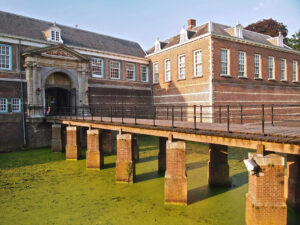 with 3 other Moluccans.
Royal Netherlands Indies Army (KNIL) 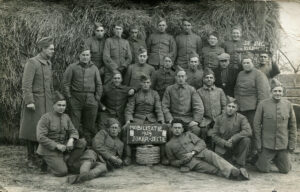
 to defend the Dutch East Indies against the Japanese occupation.
After the capitulation, the Royal Military Academy (KMA) is closed. Vic becomes the bodyguard of resistance fighter Gerard Dogger. 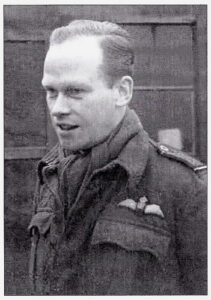 Dutch resistance fighter and naval officer Gerard Dogger survived the war and passed away on 09-03-1985, in Oxted, Surrey. About his time in the resistance, Dogger published the book ‘The Square Moon’
  in 1979. In it, he explains the ‘necessity of the murder of the 19-year-old traitor Hugo de Man’ and recounts his contacts with the involved resistance fighters, the Laga rowers Jan van Blerkom (alias Jan Verhagen)
 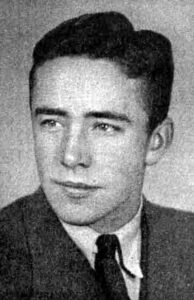 and Charley James Courtney Hugenholtz,
 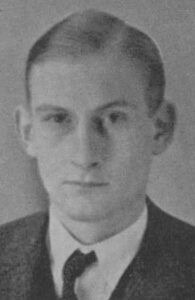 a Delft student, resistance fighter, and England sailor. After that, the Germans put a 5000-guilder bounty on his head. Hugenholtz escaped and in 1942 reached Spain, managing to board the Cabo de Buena Esperanza, a Spanish ship bound for Brazil, in Barcelona. He wanted to leave the ship in Gibraltar to enlist in the British Army. Once at Gibraltar, it turned out that leaving the ship was not allowed. He saw four Dutchmen jump overboard and be rescued by the British. When a British corvette arrived shortly after, he decided to follow that example. Together with Hendrik Christiaan (Henk) Kroes (May 6, 1916 – June 3, 1942), he jumped overboard. They were never heard from again.
Hugo de Man (Maassluis, 03-02-1922 – Delft, 14-08-1941) was initially a member of the Dutch resistance, who at the age of 19 was liquidated by fellow resistance members on 14-08-1941, on suspicion of treason. He was knocked unconscious by two students, bound in a burlap sack, and thrown into a pond. He, age 19, was murdered because after his arrest, he worked as a V-man for the Germans and had betrayed resistance fighters.
Van Blerkom further called himself Jan Verhagen and stayed in Delft for a while longer. On 14-11-1941, he decided to go to England by sea in a folding canoe with Dirk van Swaay. Both were experienced Laga rowers. Their canoe was hidden under the pier in Scheveningen. Van Blerkom’s body is never arrived.
On 24-05-1942, Van Swaay’s body was found on the beach of Noordwijk. The body of Jan van Blerkom was never found. Dirk van Swaay, age 20, is buried at the General Cemetery in Noordwijk aan Zee. 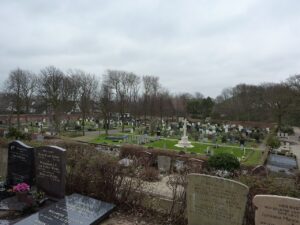
After that, the Germans put a 5000-guilder bounty on his head. He escaped and in 1942 reached Spain, managing to board the Cabo de Buena Esperanza, a Spanish ship 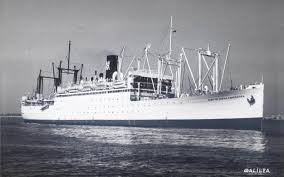 bound for Brazil, in Barcelona. He wanted to leave the ship in Gibraltar to enlist in the British Army. Once at Gibraltar, it turned out that leaving the ship was not allowed. He saw four Dutchmen jump overboard and be rescued by the British. When a British corvette arrived shortly after, he decided to follow that example. Together with Hendrik Christiaan (Henk) Kroes ( 06-05-1916 – 03-06-1942), he jumped overboard. They were never heard from again.
Thru the KMA, Vic became friends with Charles Jean Laurey. 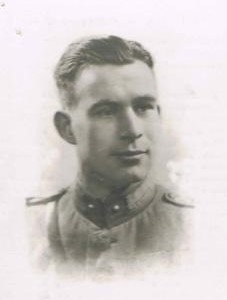
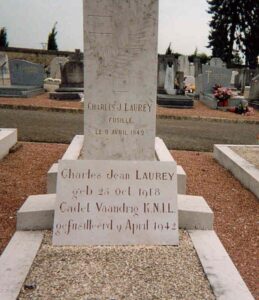 Together, they want to travel via Switzerland to England in 1942 and then continue on to the Dutch East Indies. They depart on 10-02-1942, and attempt in vain to cross the Swiss border. There is too much snow. On February 18, they make a new attempt at Pontarlier, but they are arrested by the Police collaboration in Vichy France.
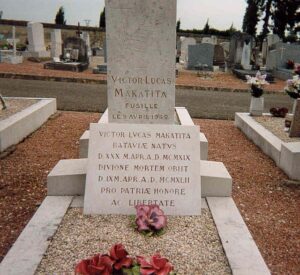
Death and burial ground of Makatita Victor (Vic) Lucas.
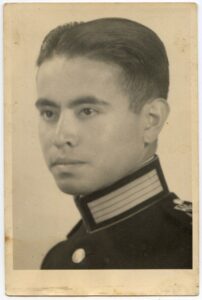
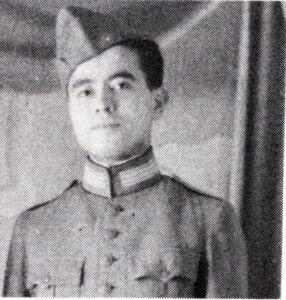
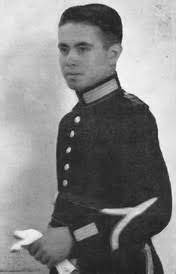
In November 1941, the ‘Keitel Erlass’ after Keitel, Wilhelm Bodewin Johann Gustav, “Lakeitel” Generalfeldmarschall der Artillerie, 
 was enacted: anyone attempting to go to England is considered someone who wants to harm the enemy, and the death penalty applies for this. On 07-04-1942, this sentence was pronounced over Makatita. He is allowed to write a farewell letter to his brother before he, age 22, is executed by firing squad in Dijon on April 9, along with Laurey and Hans Alexander de Beaufort (1915), better known as Hans de Beaufort,
 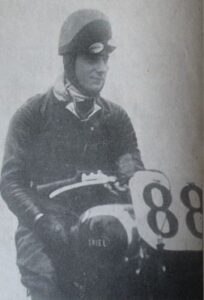 a Dutch motorcycle racer and resistance fighter during World War II.
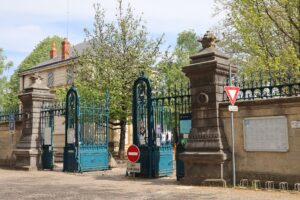
Vic is buried in Dijon at the Cimétière Polygone des Fusilliers, grave number 7. The name of Vic Makatita is on the wall plaque at the National Cemetery in Loenen.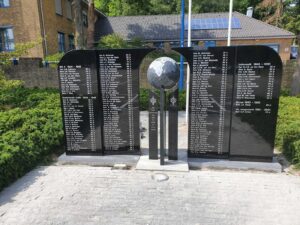 Nationaal Ereveld Loenen is an unusual cemetery. It is the final resting place of nearly 4,000 Dutch war victims: soldiers, as well as ordinary citizens: men, women, and children.
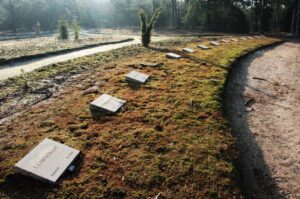
They all lost their lives during World War II or in violent conflicts afterwards—such as in former Dutch East Indies or the more recent (peacekeeping) missions. The graves are not in neat rows on a grassy field, but in the forest, scattered along winding paths. The graves are not in neat rows on a grassy field, but in the woods, scattered along winding paths.
Message(s), tips or interesting graves for the webmaster: robhopmans@outlook.com


Leave a Reply