

Koch, Oscar William, born 10-01-1897 in Milwaukee, Wisconsin, 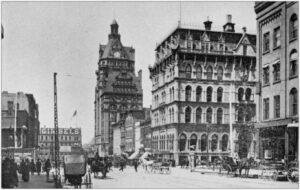 United States, a son of Oscar Koch Jr. and Emma (Zimmerman) Koch. Oscar attended the public schools of Milwaukee and graduated from North Division High School. In high school, Koch played center on the football team and was named to the 1913 all-city team.
Koch began his military career in 1915 with Troop A, 1st Wisconsin Cavalry Regiment 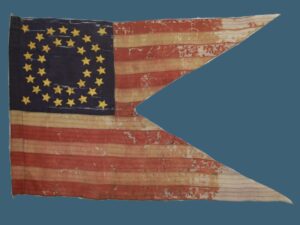 In 1916, the regiment was federalized during the Pancho Villa Expedition,
 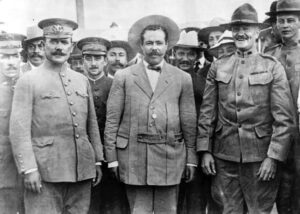 and Koch served on the Mexico–United States border. Enlisting as a private, Koch advanced to corporal and sergeant, and was appointed regimental sergeant major in 1917.
During World War I, Koch’s unit was activated as part of the 32nd Division. 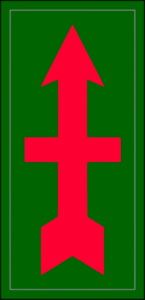 Koch was born Oscar Koch III, and his parents did not give him a middle name. Because the Army habitually asked for a middle initial when Koch completed forms and signed documents, he chose “W” at random and said his middle name was William. Afterwards he was known as Oscar W. Koch or O. W. Koch.
During the division’s organization and training at Camp MacArthur, Texas, 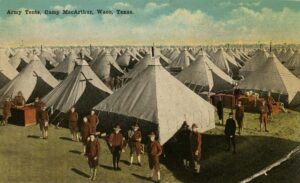 Koch played on its football team. While in France, he served with the 32nd Division’s 2nd Battalion, 120th Field Artillery Regiment. In April 1918, he received his commission as a second lieutenant of Field Artillery. He was then assigned as an instructor at the U.S. Army artillery school established in Saumur.
After the war, Koch returned to Milwaukee. One of the organizers of the reconstituted National Guard’s Troop A, 105th Cavalry Regiment, Koch was appointed to command the troop as a captain. In 1920, Koch was commissioned in the regular army as a first lieutenant of Cavalry, and was appointed to command Troop A, 8th Cavalry Regiment.  Oscar was a 1922 graduate of the Army’s basic course for Cavalry officers, after which he was assigned to the 14th Cavalry Regiment at Fort Des Moines, Iowa. He completed the course for Signal Corps officers in 1925. After graduation, he was again assigned to the 8th Cavalry Regiment at Fort Bliss, Texas.
In August 1924, Koch had married Nannie Caldwell (1898–1995), whom he met while he was participating in a horse show at the Iowa State Fair. They remained married until his death, and had no children.
In 1940, George Smith, “Old Blood and Guts” Patton


 was selected to command the 2nd Armored Division;
  having known Koch since being assigned as the Cavalry School’s director of instruction in 1937, Patton asked Koch to join his staff. Koch agreed, and served as his Intelligence officer (G-2). In 1941, Koch graduated from the United States Army Command and General Staff College. When Patton assumed command of I Armored Corps,
  Koch again served as his G-2.
During the North African campaign, Koch served as chief of staff for one of Patton’s subordinate task forces, Blackstone, which was commanded by Maj General Ernest Nason Harmon. 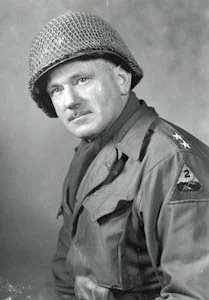
 Subsequently, Koch served as Patton’s G-2 as Patton commanded II Corps in North Africa, Seventh Army during the
 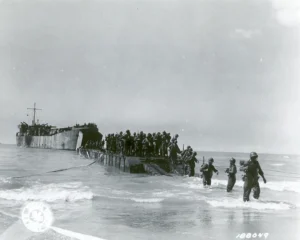 Allied invasion of Sicily, and Third Army
  during combat in France following the Normandy landing.
In December 1944, Koch warned Patton that intelligence indicators pointed to an imminent large-scale German offensive against First Army in the Ardennes, “Ardennes Offensive” to Third Army’s north. 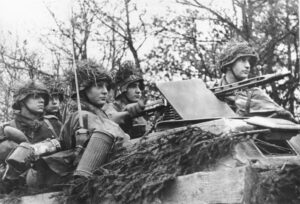 Though G-2s at other commands believed Germany incapable of a large scale offensive, Patton heeded Koch’s warning and incorporated emergency measures for aiding First Army into his subsequent plans. As a result, when Germany launched the offensive that became known as the Battle of the Bulge, “Ardennes Offensive” Third Army was prepared to reorient from attacking on a west to east axis to advance north towards First Army and immediately enter combat. Third Army’s effort helped end the German offensive and left the Allies prepared to enter Germany in the spring of 1945.
Koch remained in Germany after the end of the war. In 1946, he was appointed deputy commandant of the Army’s new Ground Forces Intelligence School at Fort Riley, Kansas. In 1947, he was named commandant. He completed his military education with graduation from the National War College. 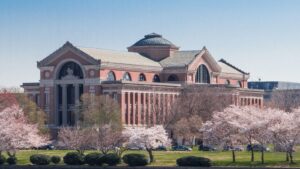 Koch next served as director of intelligence for the British Lieutenant Colonel Geoffrey Charles Tasker Keyes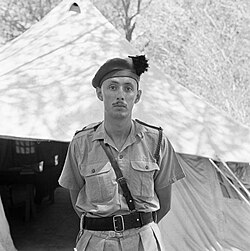
 during Keyes’ appointment as Allied High Commissioner in Austria. During this posting, Koch took part in transferring responsibility for intelligence gathering in Austria from the Army to the Central Intelligence Agency. Koch next served as deputy director of Training (Special) at the CIA, responsible for training of covert Agency personnel. He held this position until February 1952 and was succeeded by Rolfe W. Kingsely.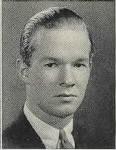
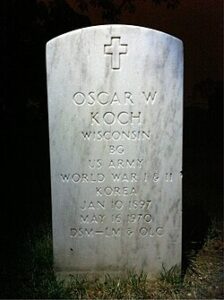
Death and burial ground of Koch, Oscar William.
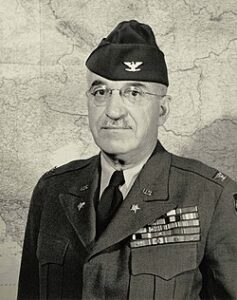
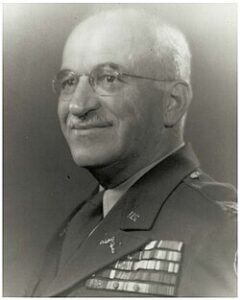
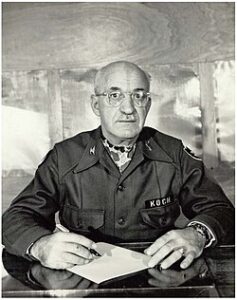
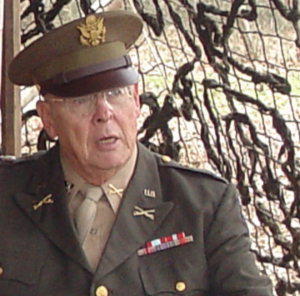
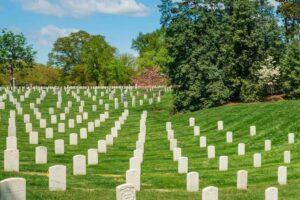
In his later years, Koch was treated for cancer. He passed away at the Veterans Administration hospital in Marion, Illinois on 16-05-1970. Koch was buried at Arlington National Cemetery. (Section 5, Grave 6).




Leave a Reply