

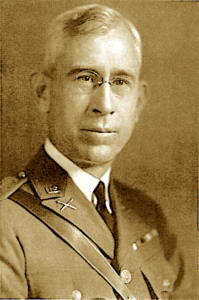
Karski Jan, born Jan Kozielewski, 24-04-1914, to a Roman Catholic family in Lodz Poland. 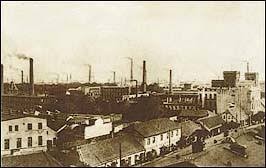 Before World War II, he completed law school and trained to be a diplomat. He also completed officer cadet school for the artillery reserve. During his studies and after, Karski held diplomatic and consular internships at posts in Romania, Germany, Switzerland, and Great Britain. In 1938, he joined the consular division of the Ministry of Foreign Affairs of the Republic of Poland.
Jan was the youngest of eight children, Karski was the son of Stefan Koziel- ewski, the owner of a small tannery and leather goods factory. He was deeply influenced by his mother, Walentyna, a supporter of Marshal Jozef Pilsudski, (1867-1935)
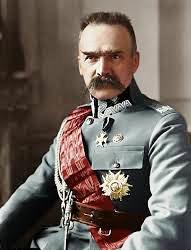
 the revolutionary leader who ruled Poland after the 1926 coup d’etat. The fiercely Catholic Walentyna also imbued Jan with a tolerance for others, particularly for Lodz’s large prewar Jewish population.
In spite of his mother’s political ambitions for him, Karski wanted to become a diplomat. After military service, in 1936 he was sent to the Polish mission in Geneva, where he perfected his French, before going to London in 1937.
He returned to Warsaw a year before the Nazis invaded Poland in 1939. A few weeks later, the Soviets invaded from the east, and Karski, by then an artillery officer, was captured and sent to Kozel’- shchina, a Soviet prisoner- of-war camp. 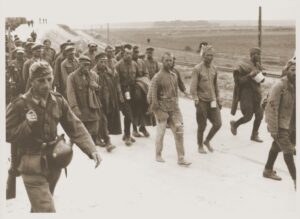 He managed to escape, disguised as a private; his fellow Polish officers were massacred at Katyn by the Soviets.
Karski’s courage, linguistic skills and photographic memory made him a valuable courier in the Polish underground. But in Slovakia, in 1940, he was betrayed, arrested and tortured by the Gestapo.  Eventually, after a suicide attempt, he escaped, helped by Polish partisans.
After recovering, he went back to work in the Information and Propaganda Bureau of the Headquarters of the Home Army.
In the summer of 1942, Cyryl Ratajski, 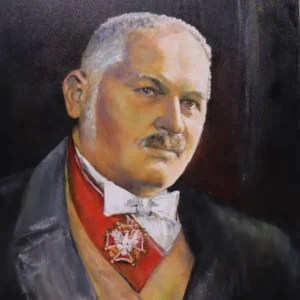 the Polish Government’s Delegate at Home, selected Karski to secretly visit Wladyslaw Eugeniusz Sikorski,
 the Polish prime minister, and other members of the government in exile in London, to tell him about Nazi atrocities taking place in Poland. To gather evidence, Karski was smuggled into the Warsaw Ghetto several times; he also disguised himself as a Ukrainian guard to observe what he believed at the time to be the extermination camp Belzec, but which more probably was the nearby sorting camp Izbica Lubelska.
Further politicised by his experience at the hands of the Gestapo, Karski was determined to tell the west what was happening to the Jews in Poland. Disguised as a Jew, in 1942 he entered the Warsaw ghetto to witness the horrors he had heard rumoured. Then, disguised as a Latvian guard, he was smuggled into Izbica Lubelska, a concentration camp 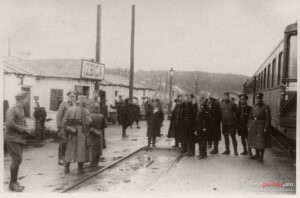 between Lublin and Belzec, where Jews were robbed before transportation to a death camp. He saw Jews being burned alive in quicklime.
By this time Karski had become known as “Witold”, Poland’s most famous courier. Leaders of all political factions – from anti- semitic Polish fascists to those who represented the Polish Jews – trusted him with messages for the Allies.
In London in 1942, and in Washington the following year, Karski briefed political and religious leaders, telling them of the extermination of Poland’s Jews. But Allied leaders, including the American president, Franklin Delano Roosevelt,  reacted with indifference or disbelief. “Maybe they did not believe, maybe they thought I was exaggerating,” he said in an interview in 1995.
Roosevelt, said Karski, “did not show any feelings, did not make any comment.” He told Karski to tell the Poles that the Allies would win the war, and that the criminals would be punished. To Karski, the Allies seemed more concerned with remapping Poland’s postwar borders than with the fate of Jews.
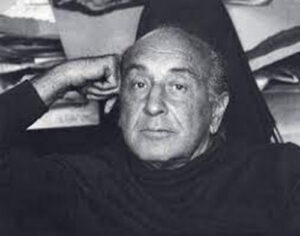
Alongside Roosevelt at Karski’s meeting in Washington were the president’s top Jewish advisers, among them Justice Felix Frankfurter, 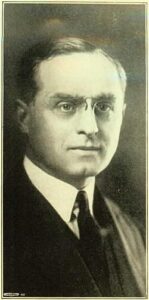 of the US supreme court. Having heard Karski’s testimony, he said: “I am unable to believe you.” Others, however, appeared to be more convinced. In London, Karski met the Polish emigré artist, Felix Topolski,
  and Arthur Koestler,
 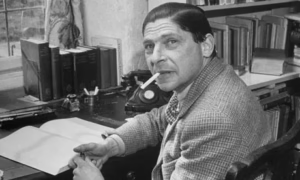 then a refugee from Hungary, whose novel, Arrival And Departure, is partly based on Karski’s experiences.
Karski remained in America and, in 1944, his memoirs, Story Of A Secret State, 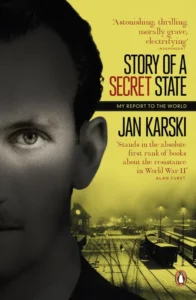 became a bestseller. After the war he became a US citizen and professor of international relations at Georgetown University. During the McCarthy period, he went on anti-communist lecture tours in Asia for the state department.
A Fulbright scholarship in 1974 resulted in his book, The Great Powers And Poland 1919-1945. 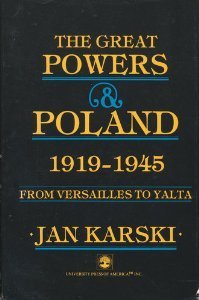 Yet however highly his academic writings on diplomatic history were considered, he was always, to his concern, better known as the man who brought evidence of the Holocaust to the west. He appeared in Claude Lanzmann’s
 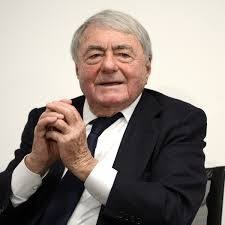 epic film Shoah and, when many Poles criticised Lanzmann’s portrayal of Polish anti-semitism, Karski stood by Lanzmann’s point of view.
In 1994, he was made an honorary citizen of the state of Israel. On Jerusalem’s Avenue of the Righteous, leading to the Holocaust musem, Yad Vashem, there is a tree planted with his name. 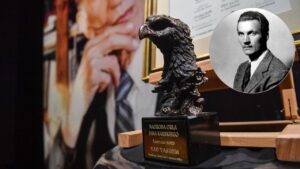 He received many awards; perhaps the most important was a medal honouring him as one of the “righteous among nations”. Engraved on the medal are these words from the Talmud: “He who saves one life rescues humanity.”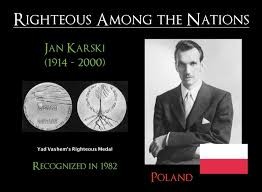
Karski returned to Poland for the first time after the collapse of the communist regime in 1989, thereafter dividing his time between Poland and his home in Maryland. He married the Polish Jewish dancer Pola Nirenska 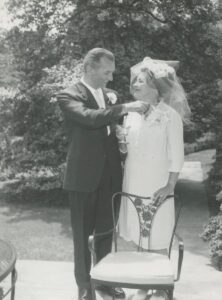
 in l956. She died in 25-07-1992, age 81.
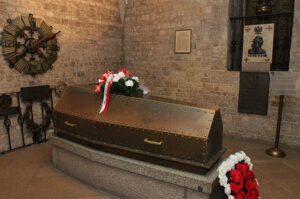
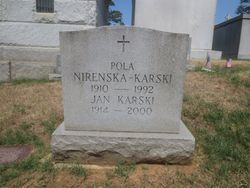
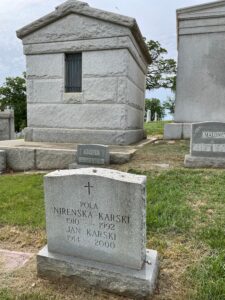
Death and burial ground of Karski, Jan.
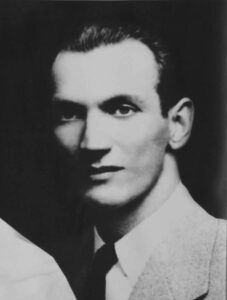
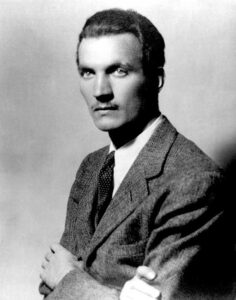
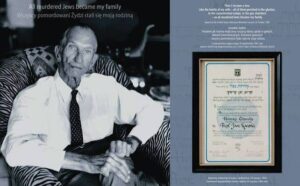
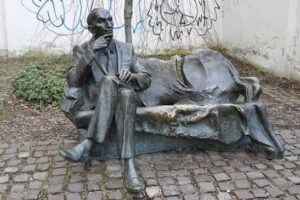
Jan Karski, diplomat and resistance hero, passed away 13-07-2000, age 86, in Georgetown, Washington, District of Columbia, Jan is buried at the Mount Olivet Cemetery, Washington, District of Columbia, United States. Section 40 Lot 69 Site 1.




Leave a Reply