

Jacobs, Kurt Richard, “Ritchie Boy ” born as Kurt Jacobson in November 1909 in Berlin,  Germany, and studied law, but eventually made a career in clothing and manufacturing. In 1936, at the age of 26, in order to escape increasing state sponsored antisemitism in Germany, he emigrated to Buffalo through the aid of an aunt: Cecilia Boasberg. With knowledge of English, he worked at Barmon Brothers, a women’s clothing outfitter, and was able to bring his mother, Bertha Heineman-Jacobsohn,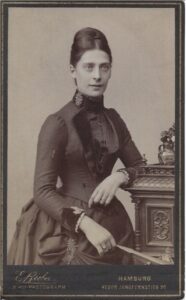
 born on 15-03-1859 in Lüneburg, Germany, 75 years old, to Buffalo in August 1939, just before the outbreak of WWII in Europe in September 1939. His father Jakob Jacobsohn was unable to leave in time and died on 15-09-1942 in Terezín (Theresienstadt) then within German occupied Czechoslovakia.
Theresienstadt (Terezín)  was a fortified town in present-day Czech Republic that was transformed into a concentration camp and ghetto by the Nazis
  during World War II. It served as a transit camp, primarily for Jews from the region, Germany, and Austria, who were often subsequently sent to extermination camps such as Auschwitz.
 The Nazis also used Theresienstadt as a propaganda tool to mislead the public, posing as a “Jewish settlement” for elderly or prominent figures.
A few months later, on 13-11-1942, Kurt volunteered for military service in the US Army,  identity number 12207399. He was inducted into the US Army Signal Corps,
  and as a native German speaker was selected for training in military intelligence at Camp Ritchie, Maryland. At the training camp he, and other native German speakers, were trained in interrogation techniques and intelligence collecting for service in the European Theater of Operations (ETOUSA). Nearly 2,000 German-born Jews were trained at Camp Ritchie and assembled into Interrogation of Prisoner of War (IPW) teams, that were attached to frontline units. Kurt Jacobs was assigned to the 106th Infantry Division. The “Ritchie Boys”
  is a term used for American soldiers who trained at Camp Ford Ritchie

 during World War II. At Camp Ritchie, military instructors taught intelligence-gathering collections and analysis to approximately 20,000 soldiers. Several thousand of these soldiers were Jewish refugees who had immigrated to the United States from Europe to escape Nazi persecution.
Death and burial ground of Jacobs, Kurt Richard, “Ritchie Boy”


On 20-12-1944 at Bleialf in Germany, during the Battle of the Bulge  (December 1944 and January 1945), several hundred soldiers of the 106th Infantry Division
  under command of Major General Alan Walter Jones,
 were captured by the 2nd Battalion, 293rd Volks Grenadier Regiment under command of Generalleutnant Karl Hermann Arndt,
 , and the 18th Volks Grenadier Division
  commanded by Hauptmann Curt Bruns
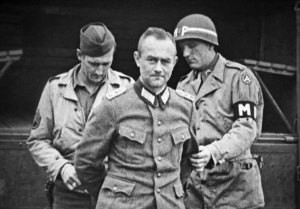


 Some of the German Prisoners of War informed Bruns that two of the American soldiers were German speaking and formerly “Jews from Berlin.” Bruns ordered the execution of Staff Sergeant Kurt Richard Jacobs and Technician Murray Zappler.
  Their bodies were recovered by American forces on 13-02-1945 and they were buried in Foy, at an American Temporary Cemetery.
 This cemetery was a resting place from 1945 to 1948 for the more than 2000 Americans killed in action in the Battle of the Bulge. In April 1945, Curt Bruns was tried for War Crimes, found guilty, and executed for the murder of the two Jewish soldiers.
Rosalind Pohl Jacobs, wife of Kurt Jacobs was initially told that her husband was missing in action on 16-12-1944, and then killed in Action in February 1945. On 14-03-1945, she was notified that her husband had been awarded the Purple Heart  posthumously. Kurt Jacobs was reinterred at the Henri-Chapelle American Cemetery and Memorial, Arrondissement de Verviers, Liège, Belgium, in Plot G, Row 4, Grave 36. His grave marker is maintained by cemetery sentinels, Robby Meers, and Franky Meers. A permanent yahrzeit is maintained for Kurt at Temple Beth Zion.
  .
.


Leave a Reply