



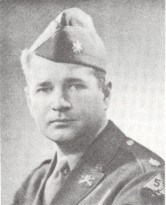
Hamel, Lodewijk Anne Rinse Jetse (Lodo) van, born 06-06-1915 in Nieuwersluis, 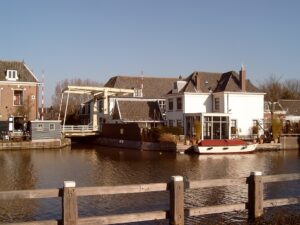 Netherland, the son of lawyer and criminal law expert Prof. Dr. Joost Adrian van Hamel,
 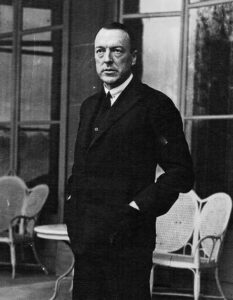 Joost was married to Maria Leocadie de Vries Feijens. The couple had three children: daughter Maria Laetitia, son Gerard, a member of the resistance, and son Lodewijk, also a member of the resistance. Van Hamel lived to the age of 84 and was buried in the New General Cemetery in Baarn.
Lodewijk attended the Royal Naval Academy  in Willemsoord and was appointed third lieutenant in August 1935. On September 12 of that same year, Van Hamel was assigned to the armored ship Gelderland,
 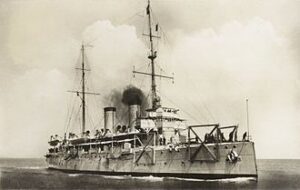 transferred to torpedo boat Z8, and placed on standby on 07-05-1937. He then sailed on the light cruiser Sumatra
 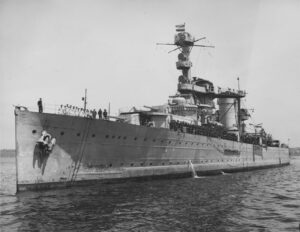 in Indian waters and was assigned to the submarine service in November 1936, where he was promoted to lieutenant commander. Hamel returned to the Netherlands from Batavia on 19-07-1939, aboard the ship Slamat.
 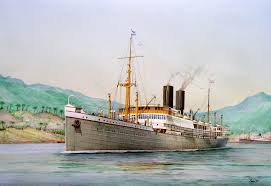 When World War II broke out in the Netherlands in May 1940, Van Hamel was an assistant naval officer at the fort in IJmuiden. He took part in the evacuation of the British army from Dunkirk
 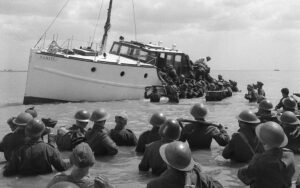 as commander of Hr. Ms. motorsloep M74. On 14-05-1940, he reached England.
François van ‘t Sant, 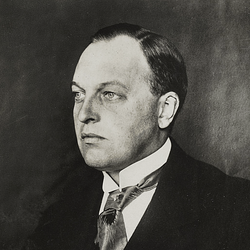 head of the Intelligence Service in London, asked him to return to the Netherlands as a secret agent in order to establish a reliable radio connection with London and set up a spy group. Van Hamel was the first secret agent to be dropped over the Netherlands, near Hillegom, on 27-08-1940. Lodewijk succeeded in gathering a group of collaborators, including a radio operator. He was allowed to set up an antenna in the house of former GS III employee Jo Allers, at De Perponcherstraat 94 in The Hague,
 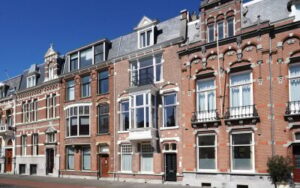 to send radio messages. Banker Emile Ernst Menten
 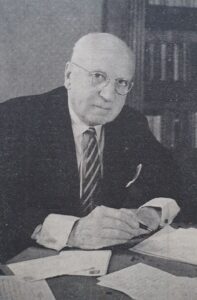 was willing to finance the activities, and there was even a German soldier who helped to obtain papers and transportation. Information about German ships in the port of Rotterdam, airports, and military depots, as well as information about “collaborating” Dutch companies, was passed on. Soon there were four spy groups operating side by side.
Van Hamel had now completed his task and, according to plan, he was to return to London and work for the intelligence service there. The forged passport he had been given was of poor quality and there was a high risk of arrest. On the night of 13-10-1940, he and four others were to be picked up by a seaplane from 320 Dutch Squadron RAF 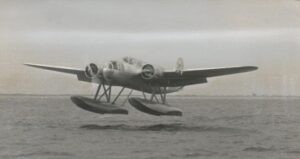 on Lake Tjeukemeer in Friesland. The group was disguised as ornithologists who had come to study bird migration in a small boat. They waited all night in vain, and the following night, pilot Heije Schaper
 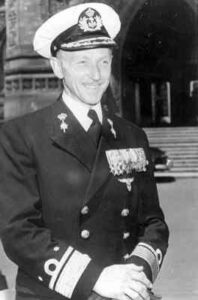 was unable to land due to ground fog. A suitcase containing espionage material was hidden on a small island in the lake. Back on shore, the group was arrested by two Dutch police officers. The group members tried to persuade the police officers to let them go, but one of them, a sergeant in the Marechaussee, had already informed his pro-German superior of the arrest and the Germans had been alerted. When Schaper tried to land on the Tjeukemeer again later that night, his Fokker T.VIIIw was fired upon by a machine gun and German anti-aircraft guns. Schaper barely managed to escape to England with the heavily damaged aircraft and two wounded crew members. A plaque commemorating Van Hamel has been placed in the village of Oosterzee on the Tjeukemeer.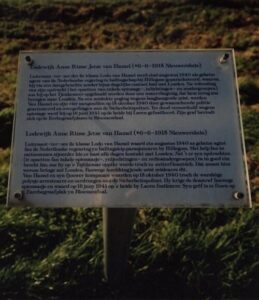
 The arrested group, consisting of Van Hamel, Johannes Floris Philippus “Hans Hers”
 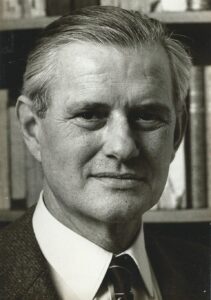 Jean Claire Adrien Mesritz,
 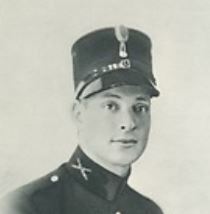 Marion Smit, and Professor Lourens Gerhard Marinus Baas Becking,
 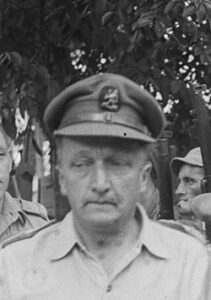 was transferred to the detention center in Leeuwarden and from there to the Oranjehotel in Scheveningen.
 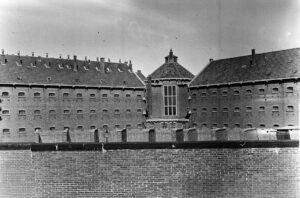 Van Hamel was the first secret agent to be arrested in the so-called Englandspiel. The hidden suitcase had been found by the police and handed over to the Germans. This meant that all of Van Hamel’s activities were now known. In the papers, the Germans found the name Johannes Hendricus Karel “Jo” Allers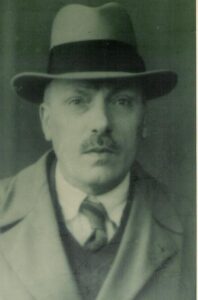
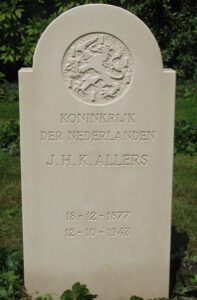 which led to the arrest of the Allers family after further investigation. The Germans found several coded messages in their home. Van Hamel was interrogated for weeks in the Oranjehotel by, among others, Joseph Schreieder,
 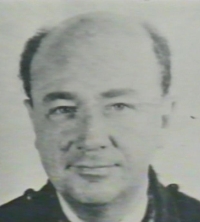 head of the Abwehr IIIF (military intelligence service).
  Van Hamel was severely tortured, but revealed nothing about his clients or transmission code. The Germans then arrested Dutch code specialist Henri Evert Koot,
 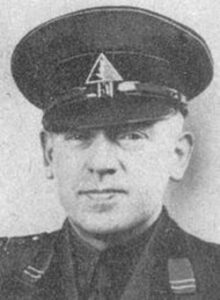 but he declared himself unable to decode the messages.
Only when the Germans threatened to arrest his parents did Van Hamel reveal that he had been dropped near Hillegom. The Germans only believed him when he showed them where he had buried his parachute. [source?] Lodewijk did not mention any further details or names. Van Hamel and his fellow resistance fighters were tried in early April 1941 in the Supreme Court building in The Hague. 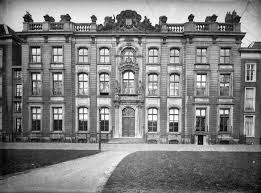 Before that, he had tried twice to escape from prison, but without success. During the trial, he remained steadfast and refused to reveal any information. He said: “As a good Dutch officer, I demand the right not to disclose to the enemy anything that could harm the country.” Van Hamel was sentenced to death; his closest colleague, Hans Hers, received life imprisonment. Johannes Hendricus Karel “Jo” Allers was sentenced to 10 years; Jean Mesritz to 3 years; Smit and Baas Becking were acquitted. Jo Allers after staying in the Münster prison and in the Brual Rhede concentration camp just across the border with Groningen, finally died in 12-10-1943, age 65, in the Hameln prison.
Death and burial ground of Hamel, Lodewijk Anne Rinse Jetse (Lodo) van.

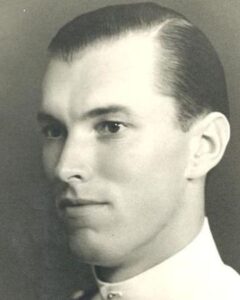
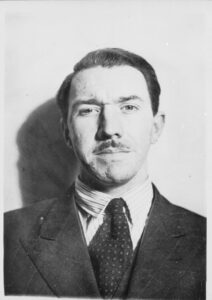
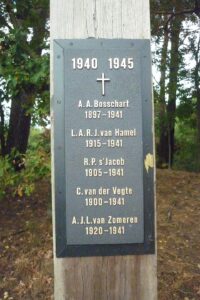
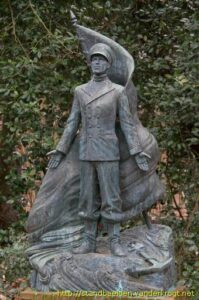 In memory of his sons, Professor Van Hamel commissioned the monument ‘De Marinier’ (The Marine). Located on Gerrit van der Veenlaan in Baarn, it has been adopted by the Nieuwe Baarnsche School.
Van Hamel’s father, Prof. Dr. Joost Adrian van Hamel, was a lawyer and criminal law expert and attempted to obtain a pardon for him. He appealed to the College of Secretaries-General (the highest Dutch civil servants), but to no avail. Through the Swedish embassy in Berlin, which represented Dutch interests, the Dutch government then attempted to arrange an exchange with a German agent who had been arrested in England, but this was blocked on Adolf Hitler‘s orders. On 16-06-1941, 10 days after his 26th birthday, Van Hamel was executed by firing squad on the Bussumerheide and his remains were cremated in Driehuis-Westerveld. The obituary appeared in De Telegraaf on June 21. 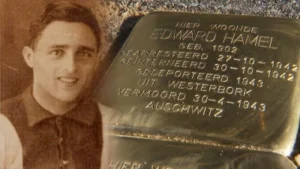 Eddy Hamel was one of Ajax’s best players in the 1920s.
 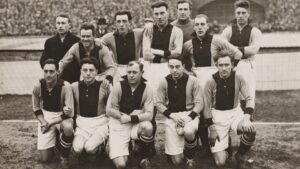 Eddy Hamel, bottom row left, in Ajax 1.
At the end of June, various Dutch newspapers, including De Telegraaf on June 29, reported on the authority of the ANP: “A former Dutch officer, who had secretly returned to the Netherlands, stayed here under a false name, gathered military intelligence and passed it on to enemy countries, was sentenced to death by a German military court. The sentence was carried out by firing squad.”
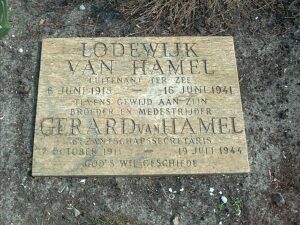
After his death, Van Hamel’s work was continued by his older brother Gerard Anton van Hamel (1911-1944). He contributed greatly to the financing of various resistance activities. However, on 10-08-1942, Gerard was arrested at his parents’ house in Baarn. At that time, a large part of the spy network set up by his brother and expanded by him was also dismantled. After the war, the urn containing his ashes was found at the Hegerfriedhof cemetery in Osnabrück. In 1952, it was reburied at the Cemetery of Honor in Bloemendaal, together with his brother Gerard..
In the spring of 1943, Gerard Anton Hamel, was tried along with about thirty fellow resistance fighters, but Gerard was not convicted because a friend of his had good connections with the German military commander in the Netherlands, General Friedrich Cristian Christiansen. 
 He became a Nacht und Nebel prisoner. His family did not know where he was or what would happen to him. Van Hamel was imprisoned in the Natzweiler-Struthof concentration camp in Alsace, where he died on 19-07-1944, at the age of 32 from exhaustion and tuberculosis.




Leave a Reply