

Farouk, Al-Awwal, Muhammad Ali, born 11-02-1920, in Cairo, 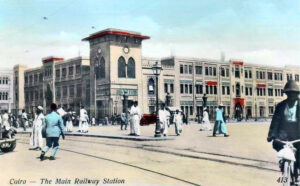 Al Qahirah, Egypt, to King Fuad I (1868–1936)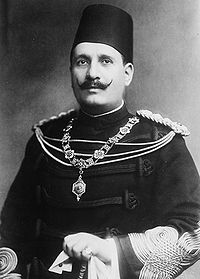
 and his wife Nazli, born Fouad (1894–1978)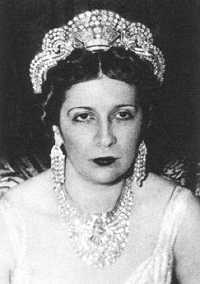
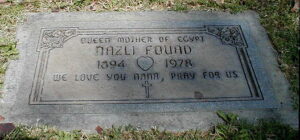 Farouk had three sisters, Fawzia Fuad (1921–2013),
 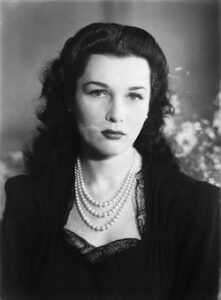 Faiza “Princess Faiza of Egypt” Foaud Rauf (1923–1994)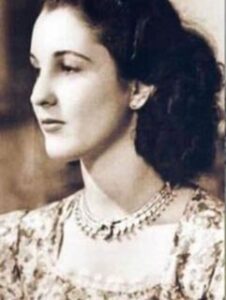
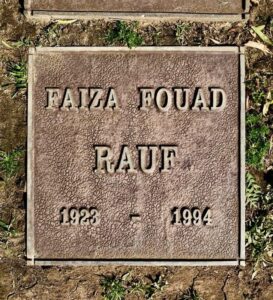 and Fathaya Ghali (1930–1976).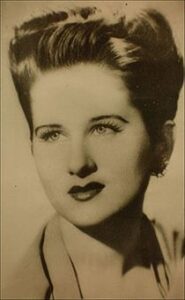
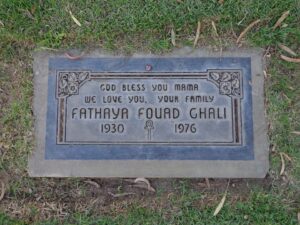 . Farouk was married twice, Farida Safinaz Zulficar Of Egypt (1921–1988),
 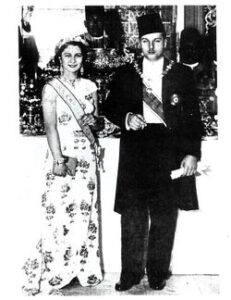 they married in 1938, they divorced in 1948 and Farida passed away on 16-10-1988 (age 67), and Nariman Sadiq (1934–2005)
 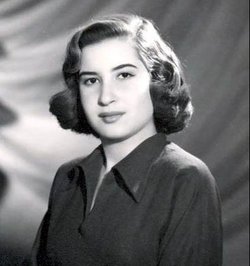 Their marriage faced problems because Queen Farida did not have a son, which Farouk wanted for the throne. With Farida he had three daughters, Farial Farouk Of Egypt (1938–2009),
 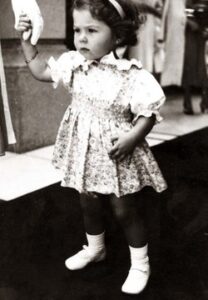 Fawzia Farouk of Egypt (1940–2005) and Fadia Of Egypt, (1943–2002).
In 1950, Farouk met Narriman Sadek (1933–2005). They married in 1951. She was eighteen years old. Farouk hoped she would give him a son, and she did. Their son, the future King Fuad II, was born on 16-01-1952. However, months after their son’s birth, the king and queen were forced to leave Egypt. They divorced in 1954.
Farouk also had other relationships. In exile, he was with Irma Capece Minutolo, 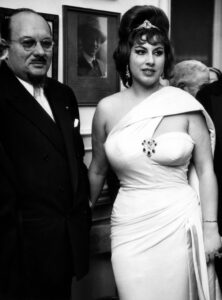 an opera singer. She claimed they married in 1957.
His full title was “His Majesty Farouk I, by the grace of God, King of Egypt and the Sudan”. As king, Farouk was known for his extravagant playboy lifestyle. His reign saw Egypt gain its independence from the United Kingdom, which had large amounts of influence in the country even after the Protectorate officially ended in 1922. Egypt furthermore was allowed to annex Sudan and administer it as an integral portion of its own territory, ending the Anglo-Egyptian Sudan condominium that had existed since 1899.
Farouk grew up in the royal palaces and was very protected. He did not visit the Great Pyramids of Giza until he became king, even though they were close to his palace. He had a very spoiled childhood. He did not have friends outside his family because his father did not allow it.
His father, Fuad, wanted Farouk to learn Arabic so he could speak to his people. Farouk became good at classical Arabic, the language of the Quran. He also learned English, French, and Italian. These were the only subjects he was good at in school. Some of his teachers wrote that he needed to study more and improve his handwriting. Others praised him, even for simple essays. Farouk liked playing jokes, even as an adult. For example, he once used an air gun to shoot windows at the Koubbeh Palace.
Farouk’s closest friend was Antonio Pulli, on the left, 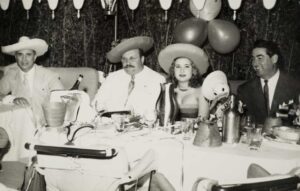 an Italian electrician at the Abdeen Palace. Pulli became an important person during Farouk’s reign. Farouk tried to go to the Royal Military Academy, Woolwich, in England,
 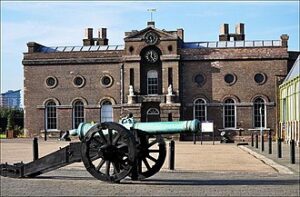 but he failed the entrance exams. Before his father died, he was studying there. His father wanted him to study at a military academy in Italy, but British officials did not agree.
In October 1935, Farouk went to England to attend the Royal Military Academy. 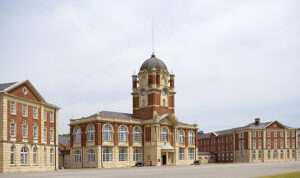 He went to classes sometimes but still failed the entrance exam. Instead of studying, Farouk spent time in London. He went shopping, watched football games, and visited restaurants. When King George V died in January 1936, Farouk represented Egypt at his funeral.
On 29-06-1937, Farouk turned 17 by the Islamic calendar, which meant he was considered 18 and old enough to rule. The council that had been helping him rule was dissolved. His coronation in Cairo on 20-07-1937, was a huge event with large parades and fireworks. Many ordinary Egyptians traveled to Cairo to see it. In his coronation speech, Farouk spoke about helping the poor. This speech was written by his tutor, the poet Ahmed Hassanein, 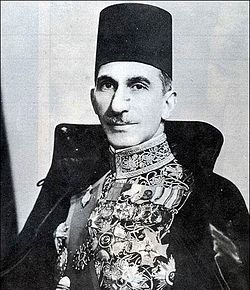 to make the king seem like a friend to the common people.
Egypt stayed neutral during World War II, but under British pressure, Farouk ended diplomatic relations with Germany in September 1939. On 07-04-1940, Queen Farida gave birth to a second daughter, Princess Fawzia, which again upset Farouk. He wanted a son for the kingdom’s future, as daughters could not inherit the throne under Egyptian law at the time.
Under a 1936 treaty, Britain could defend Egypt from invasion. When Italy declared war on Britain in June 1940, the Western Desert of Egypt became a battlefield. Egyptians were supposed to help the British, but Prime Minister Maher 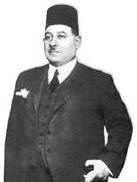 made it difficult by appointing officials who asked for bribes. Farouk dismissed Maher in June 1940, but refused to appoint Nahas Pasha,
 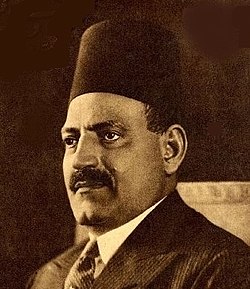 whom the British wanted.
By 1941, German forces arrived in Libya and pushed the British back into Egypt. Farouk secretly wrote to Adolf Hitler, promising to join the Axis side if German troops reached the Nile. However, historians note that Farouk did not seem to understand that Axis rule would be much harsher than British rule.
During the war, people criticized Farouk for his lavish lifestyle. He kept the lights on at his palace in Alexandria even when the city had blackouts due to bombing. This was different from the British royal family, who also faced bombings. Many Egyptians, including Farouk, were sympathetic to Germany and Italy because of the British occupation.
In January 1942, the British ambassador, Sir Miles Lampson, 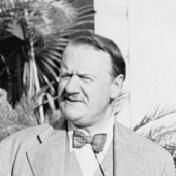 forced the Egyptian prime minister to break ties with Vichy France without consulting Farouk. Farouk used this as an excuse to dismiss the prime minister and planned to appoint Maher again. Lampson then threatened to remove Farouk from the throne.
On the night of 04-02-1942, British soldiers surrounded Abdeen Palace in Cairo. 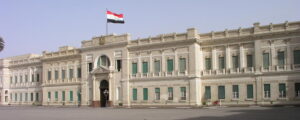 Lampson presented Farouk with a paper to sign, which would make him give up his throne. Farouk was about to sign, but his advisor, Prince Hassanein, spoke to him in Turkish.
 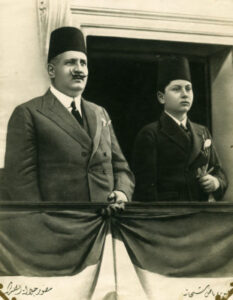 Farouk then agreed to appoint Nahas Pasha as prime minister. This event, known as the Abdeen Palace incident, greatly humiliated Farouk. It also made many Egyptians, especially in the military, lose trust in both the British and the Wafd Party.
He was infamous for a lavish lifestyle & for an extensive collection of gold, silver and platinum coins and medals. He owned thousands of acres of land, dozens of palaces and hundreds of cars. He supplemented this with periodic massive shopping sprees in Europe. Wide criticism for enjoying this luxurious lifestyle while the people endured privations during World War II, as well as Egypt’s defeat in the 1948 Arab-Israeli War coupled with the King’s alleged corruption resulted in a military coup in 1952. The deposed King maintained a lifestyle of excess even in exile. The Royal coin collection included the rare 1913 Liberty Head Nickel 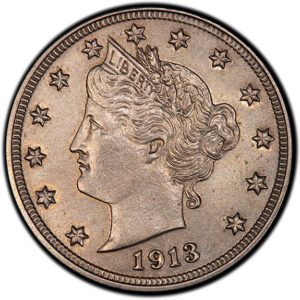 and the legendary 1933 Gold Double Eagle.
 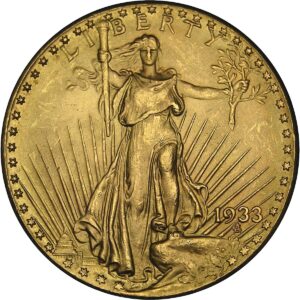 The military dictatorship auctioned off the collection at Sotheby’s after the King was deposed.
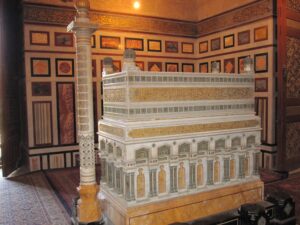
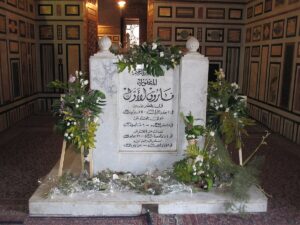
Death and burial ground of Farouk, Al-Awwal, Muhammad Ali.
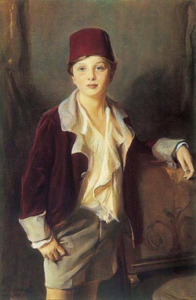
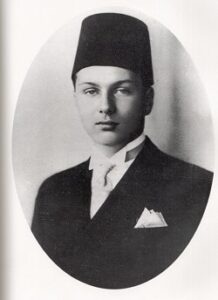
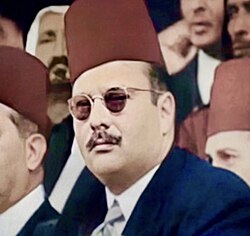
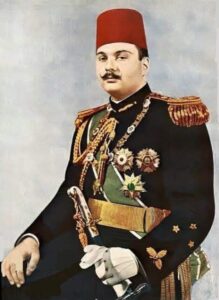
Farouk died on 18-03-1965, age 45, after a dinner in Rome. Some people believe he was poisoned, but no official autopsy was done. His will stated he wanted to be buried in the Al Rifa’i Mosque in Cairo. However, the Egyptian government at the time refused. He was first buried in Italy. Later, during Anwar El-Sadat’s presidency, his remains were moved to Al-Rifa’i Mosque, where other members of his family are buried.
Message(s), tips or interesting graves for the webmaster: robhopmans@outlook.com


Leave a Reply