

Dirlewanger, Oskar Anton Paul, “Gandhi” or “Butcher of Warsaw”, born 26-09-1895, in Würzburg,  Kingdom of Bavaria, German Empire, the son of August Dirlewanger, an attorney and a merchant, and his wife Pauline Dirlewanger, born Herrlinger). Dirlewanger’s paternal grandfather worked in Stuttgart as a surgeon and vaccinator, and his maternal grandfather as a primary school teacher. The Dirlewanger family was of Swabian origin. In December 1893, August and Pauline married in Esslingen am Neckar on December and shortly before the birth of their first daughter, they moved to Würzburg. Their first daughter, Mathilde Dirlewanger was born on 07-06-1894. On 26-09-1895, the second child of the family, Oskar Paul Dirlewanger was born. Three years later on 28-12-1898, their second daughter, Elfriede Dirlewanger was born.
Dirlewanger had an impressive career as a junior officer during World War I. He fought in the post-World War I conflicts in Germany as a minor commander in the Freikorps militia movement, 
 with the troops he, on the photo in the middle, led then also characterized by excessive violence, and participated in the Spanish Civil War. Through his service with the Condor Legion
  a military unit of volunteers from Nazi Germany to provide military aid to the Spanish nationalists of Generalissimo Francisco Franco
 during the Spanish Civil War. By the end of World War I, Dirlewanger was described in one police report as “a mentally unstable, violent fanatic and alcoholic, who had the habit of erupting into violence under the influence of drugs.” The fact that he had succeeded, even after the ceasefire, in fighting his way back from the front in Romania to Germany with his men became for him the defining experience. Henceforth, he adopted an unrestrained mode of life, characterised by contempt for the laws and rules of civil society.
Dirlewanger was politically rehabilitated despite his criminal record, allowing his return to favor within the Nazi Party  . He was a habitual offender, convicted in interwar Germany for illegal weapons possession and child molestation. During World War II, he was appointed and headed a special Waffen-SS
  unit that was officially named after him and was composed for the most part of conscripted convicts and other prisoners.
Dirlewanger served as an infantry officer in World War I and was awarded the Iron Cross, 1st and 2nd Class.  He was wounded twice at the front,
 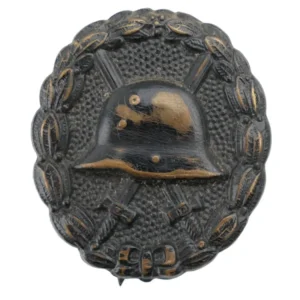 resulting in a 40% disability. He was fiercely opposed to communism and joined the National Socialist German Workers’ Party in 1922. From 1936 to 1939, he served in the Spanish Civil War as a member of the Condor Legion. He was awarded the Spanish Cross.
  He joined thr NSDAP on 01-03-1922, and was expelled from the party because of a rape case); rejoined 01-03-1932, number: 1 098 716 SS number: 357 267, which he joined 01-07-1940.
At the beginning of World War II, Dirlewanger joined the Waffen-SS and received the rank of SS Obersturmführer.  Dirlewanger became notorious for leading a unit that committed large-scale war crimes in Belarus and during the Warsaw Uprising. He had already built a notorious reputation in the fight against partisans in Russia. Then he became commander of his own Dirlewanger Brigade, The 36. Waffen-Grenadier-Division der SS.
When Dirlewanger’s bloodthirsty brigade marched thru the streets of Warsaw in 1944, thousands of civilians lost their lives.
Even the most seasoned German soldiers stopped and watched in amazement. The new SS unit that had arrived to fight the Polish partisans was different from the others. These SS soldiers, who belonged to the so-called Dirlewanger Brigade, were overflowing with energy. They had no rank insignia on their uniforms and smelled of alcohol. 
Without hesitation, the SS officers charged forward, even tho they were under heavy fire. They let out animalistic cries. Dozens had to bite the dust, but the brigade refused to budge. The drunken, overconfident soldiers of the Dirlewanger Brigade fit in well with the chaos that reigned in the streets of Warsaw in 1944.
A revolt had just broken out, and Polish resistance fighters were fighting for every house against the hated occupying force. It was a brutal, bloody battle: fighting took place even in the city’s sewers and the dark cellars of the houses.
Among the German troops in Warsaw was 18-year-old sapper Mathias Schenk, 
 a German-speaking Belgian, who served as Sturmpionier (assault engineer) in Wehrmacht during the suppression of the Warsaw Uprising in 1944. Members of his unit were assigned to various SS-Sturmbrigade Dirlewanger platoons as demolition engineers..
His unit had to capture a street in the center of Warsaw, but they failed to do so. The Polish resistance fighters seemed unbeatable – until the Dirlewanger Brigade appeared and launched their attack.
When the Poles blew up tanks from the brigade, the SS forced civilians to sit on the remaining tanks as human shields. A mother dropped her little girl, and the child ended up under the tracks. An SS officer shot the screaming mother in the head to silence her. Burgers who fled were shot in the back.
Mathias Schenk later said he had seen a tall, thin man in a black coat  shouting orders to his SS unit. The man had a mustache and a thin face full of scars that resembled a skul, named Oskar Dirlewanger.
Amidst all the gunfire and explosions, Mathias Schenk heard the thin man order his soldiers to kill the Poles. Women and children too.
Long after the war, Mathias Schenk discovered that the man with the skull was Oskar Dirlewanger, a notorious sadist who led an SS brigade named after him – a gang of violent criminals and antisocial soldiers who had been expelled from other SS units due to their misconduct.
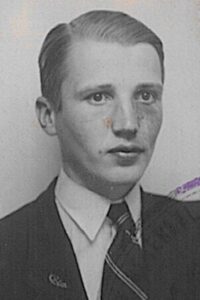
On 01-06-1945, Oskar Dirlewanger was arrested by the French occupation zone authorities near the German town of Altshausen in Upper Swabia. At the time of his capture, Dirlewanger was wearing civilian clothes,  here on the right, using a false name, and hiding in a remote hunting lodge. He was recognised by a Polish Jewish former Stary Dzików concentration camp inmate
  and brought to a nearby detention center.
Death and burial ground of Dirlewanger, Oskar Anton Paul, “Gandhi” or “Butcher of Warsaw”.


Dirlewanger reportedly died around 5–7 June 1945 in a prison camp at Altshausen as a result of ill treatment (officially from natural causes). There are numerous conflicting reports of the nature of his death: the French said that he died of a vascular collapse and was buried in an unmarked grave; or he was beaten to death by armed Poles, presumably former forced laborers or former French military prisoners (of Polish origin); or Polish soldiers in French service (29e Groupement d’Infanterie polonaise);  under command of Commandant Bolesław Jeleń
  , or former inmates and prison guards.
Dirlewanger was beaten to death by Polish guards while in French captivity in revenge for his actions in Poland. He was buried in Altshausen, Württemberg-Hohenzollern, Germany. However, reports periodically surfaced that he was still alive. He was said to have fled to Egypt and trained Nasser’s troops. He was believed to have served in the French Foreign Legion. He was believed to have escaped to South America with the mass influx of Nazis. In 1960, the West German government had the grave opened. A report by experts that the body in the grave was that of Dirlewanger did not convince everyone, and the rumours continued to circulate.

Message(s), tips or interesting graves for the webmaster: robhopmans@outlook.com




Justyna PL
Thank You, Rob.